Disney Minus Intimacy; Universal’s Grit; Epic Universe is… Epic;
Today, I’m talking theme parks.
My fiancée is a huge Disney fan, as in, she’s been to every Disney and Universal park worldwide. She says things like, “Tron first opened in China,” and analyzes wait times on thrill-data.com like she’s a data analyst getting paid for predictions.
Before we met, if you told me I’d one day date a Disney adult, I wouldn’t have believed it. In 2026, I finished going to all of the Disney and Universal parks in Orlando, admittedly loving it, and am now writing about it. I’d argue my non-expertise is why I’m the perfect author on a Disney and Universal review.
This is a three-part essay. Part 1 is a particularly long rant at seven pages, while the other two are one page each. So fasten your harness before I walk around and ask you to pull on the strap so I can check it’s secured tight.
Disney Minus Intimacy
Intro to Disney World: The Happiest Place on Earth
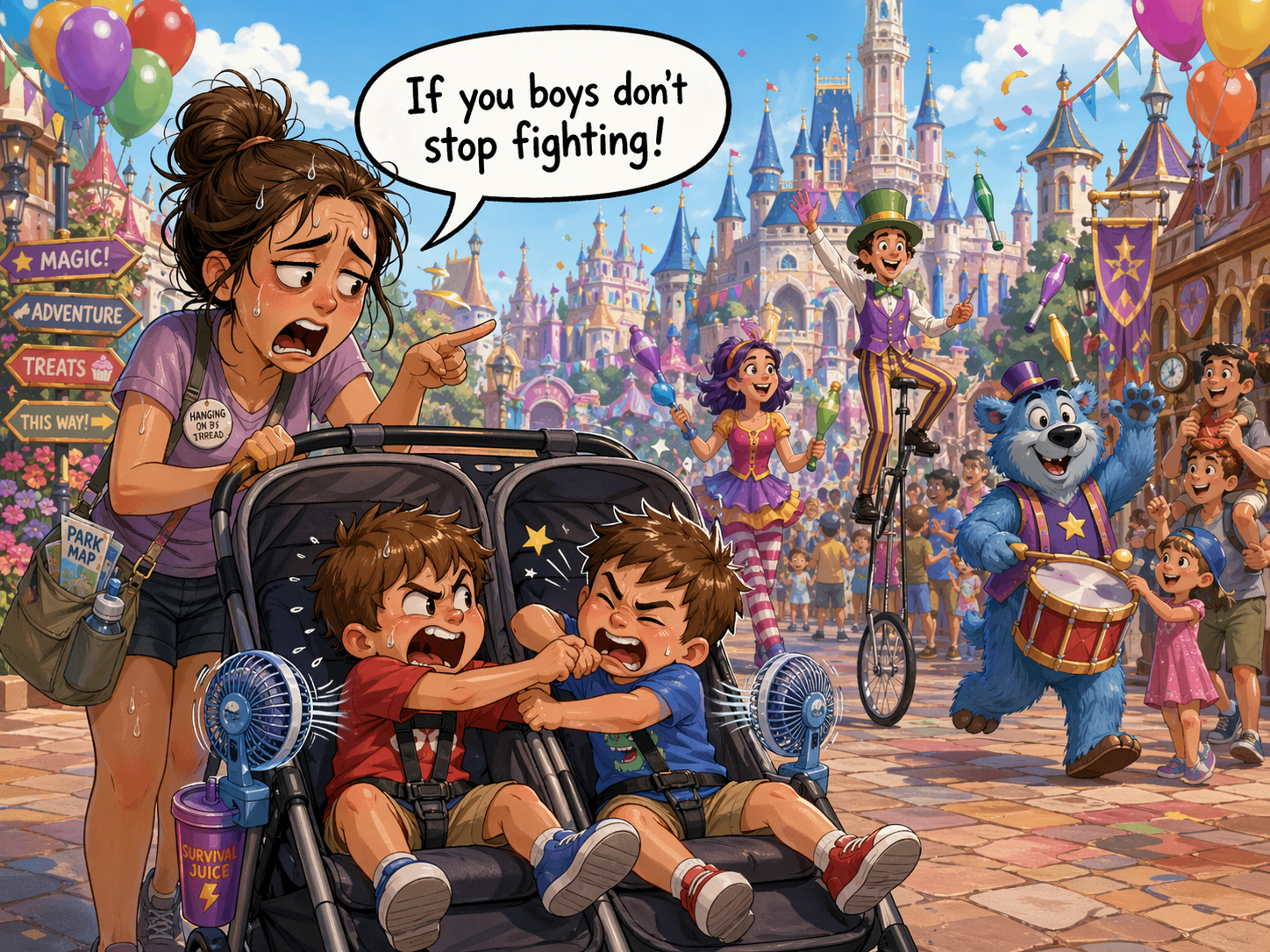
When I imagine Disney World, I imagine a defeated parent taking their children aside and shouting, “If you don’t stop fighting, I’m going to take you back home.” At Disney, you see that roughly once an hour if you look for it, twice if you’re at Magic Kingdom.
My memories of Disney, few and far between, involve jealousy as I watched other families buy lavish meals, turkey legs, and souvenirs, knowing we had no chance of getting them, nor any chance of riding most rides. Maybe, deep down, I was also jealous of the more intimate families, wearing custom-made matching tees, mom and dad showing PDA, politely debating which ride to go on next or who rides in front.
For most people, Disney was never just castles, rides, and sweaty teens in mouse costumes. It was Florida or California heat, exhaustion, long lines, sugar, families trying to hold themselves together long enough to justify the price of admission, and, of course, more sugar.
My family, a frugal one, dealt with hunger at the parks too. My parents were by no means broke, just stingy and poor planners. Meaning they didn’t plan on bringing food to the park, but boy, did they plan to complain about the prices of everything.
And so I never particularly liked theme parks, even as a roller coaster and thrill ride enjoyer. I thought Disney was more for girls dreaming of being a princess, while Universal and Busch Gardens were for us tough boys who just wanted to feel something. It didn’t even need to be a good feeling. Fear and dizziness would do.
That went on until I met my fiancée.
My fiancée is a Disney adult. I never got it until I went to the parks with her parents. That was enough to see what her rosy memories of Disney World were like. Those memories are softer and more adorable, replacing meltdowns over melted Mickey ice cream with everyone in the family getting their own Mickey ice cream. They replaced long waits with Lightning Lanes.
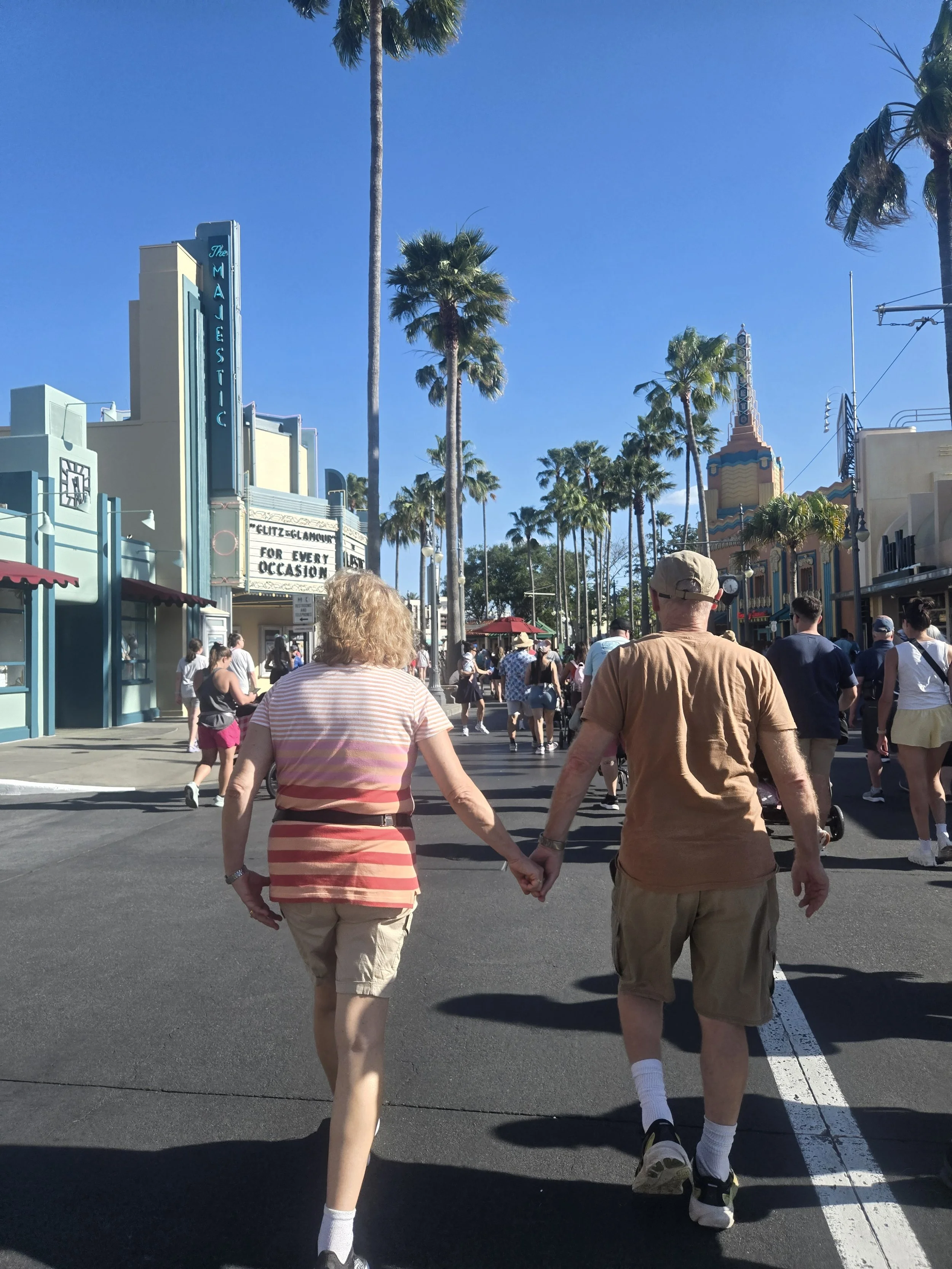
In my fiancée’s, Maru's, memories, her parents were affectionate, holding hands between rides, treating the park like a romantic family outing rather than The Lottery (that short story where people are killed if they win the lotto). Her parents didn’t just bring sandwiches, each different based on the child’s tastes, which they knew without asking. They also bought treats and souvenirs.
Can you imagine your parents packing you a lunch and offering to buy lunch, as if any child would say, “No, don’t buy that Frozen reindeer sandwich. We can save money”? I can’t.
In Maru’s memories, Disney World had her favorite movies and characters, fun rides, great food, and, most importantly, a playful family. Maru could nerd out about changes to rides or the newest attraction to a family excited to listen.
Your personality and circumstances will play more into your Disney fantasy than any tip or discount. At the end of the day, it is all a fantasy. My parents fantasy involved Disney World costing $500/person, about $300 over their actual cost, while my fiancée’s fantasy involve everyone loving Disney World, despite many families there just trying to survive it.
You can’t change whether the lines are extra long or the rides break down. You can only keep a good or bad attitude. And I hope that my future wife and I keep a great one, so that when our kids eventually go to Disney, they enjoy it more than any generation before.
Trending Away From PDA
There’s been a remarkable change in my life from post-9/11 patriotism, PDA, and “the good guy always wins” to post-Obama “everything is complicated, and you’re racist if you don’t agree.” It’s not a good or bad change.
Disney is the perfect segue into seeing how this change has played out.
At Disney parks, the love is the same as twenty or fifty years ago, but it’s more colorful and less touchy. Intimacy is gone. And when I say intimacy, yes, I mean kissing and holding hands, teen couples giving each other a light spank on the tuchus, and comments about how sexy your partner looks in mouse ears or Minnie Clogs.
Virtually every Disney classic has two elements: parents dying early in the movie, a detail they kindly omit from the child-friendly parks, and a loving kiss. Yep, that’s all. Basically, our hero has their parents die, gets thrown into a cruel world, somehow meets the exact right people to become their true self, and the story ends with a heterosexual kiss.
The parents die in: Snow White and the Seven Dwarfs (1937), Bambi (1942), Cinderella (1950), The Fox and the Hound (1981), Beauty and the Beast (1991), Aladdin (1992), The Lion King (1994), Tarzan (1999), Atlantis: The Lost Empire (2001), Brother Bear (2003), Chicken Little (2005), Meet the Robinsons (2007), Frozen (2013), Big Hero 6 (2014), Onward (2020), Strange World (2022), and Wish (2023). Note that many of these are recent.
But only older Disney films center heterosexual romance and a kiss as the emotional climax: Snow White and the Seven Dwarfs (1937), Cinderella (1950), Sleeping Beauty (1959), The Little Mermaid (1989), and Beauty and the Beast (1991). Then we got the post-PDA era. No more smooch.
Today, many note that post-tonal shift. Those perfectly timed kisses are gone throughout the IP. Newer Disney animated hits have their emotional climax in family, friendship, or self-realization. Frozen (2013), Zootopia (2016), Moana (2016), Raya and the Last Dragon (2021), and Encanto (2021) don’t feature a final kiss.
In modern Disney, the parents or characters still die, because Disney is low-key twisted, but the heterosexual procreation undertone is absent. I’m not making a value call on whether that’s good or bad, just that this tonal shift is evident.
The parks have crammed this tonal shift into adaptations of classic fairy tales, which might annoy a Disney Princess purist. The emotional payoffs went from two actors lovingly kissing, making you wonder if they’re really dating or quietly uncomfortable, to what amounts to couples high-fiving. Disney went from showing tenderness to reminding us of it, even with the animatronics and video content. The lips never lock.
Meanwhile, the gluttony and capitalism have skyrocketed, to the point that the rides joke about it. Disney always had giant desserts and novelty foods, but now it also has endless souvenirs baked into the food, more ECVs and scooters than a diabetes expo or Walmart entrance (or whatever joke works here), and streamlined ways to shove junk down your flunk.
Disney has 10x’d its revenue streams so hard that people forgot they can bring food in. And that’s a bummer, because I don’t love saying, “Let’s kiss by the obese couple with their cognitively impaired kids on leashes, next to the giant ads for Hulu+ and Starbucks.”
Don’t get this part twisted: I’m very, very glad that the parks feature more biracial and LGBTQIA+ couples, throuples, and polycules. And less smoking. I love the cute dads with their little kids, the dual strollers with one black baby and one white baby, the butch lesbian Disney adults with whole sleeves of villain tattoos. It’s a great addition to the once very, very vanilla parks. Yes, I’m glad nonbinary guests have a place to be comfortable.
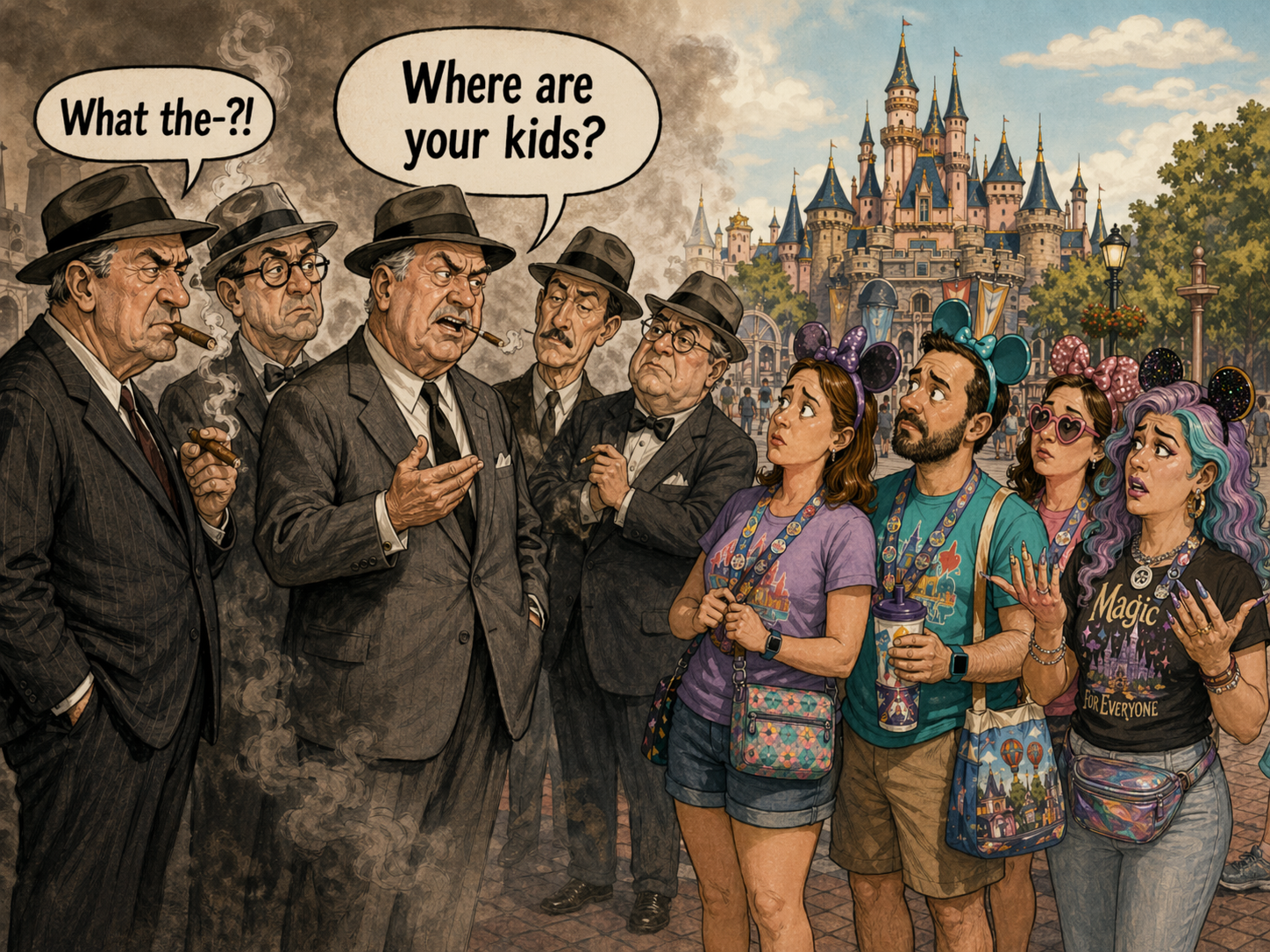
But you have to remember: this isn’t the fantasy Walt Disney and the dated conservative Disney execs imagined. Those men were not cuddly postwar pluralists creating DEI brochures, checking that each new movie had Pacific Islander representation, or making a mermaid black even if it causes the movie to flop, because fish are white or something. I imagine these execs chain-smoking between meetings, grumbling about Jews and black people. I imagine that if the old execs were still around, they’d ask the Disney adults, “Where are your kids?” and try to send roughly a quarter of the staff to conversion camp.
The softening of intimacy and rise in DEI theater mirrors a larger trend in media.
Modern storytelling is increasingly uncomfortable with straightforward romance and uncomplicated moral polarity. The old “good guys” are now smug settler-colonialists affirming the patriarchy. They are no longer allowed to be simply good, because that is naive and apparently too emotionally legible. Meanwhile, the old bad guys are complex, not wicked. Every monster is misunderstood and deserving of a second chance. Relationships are complicated.
Clean-cut heroes are out, and rugged girlbosses are in. Check your privilege!
I’m not sure that really adds value to society, but it’s inescapable. Even the news has adopted this modern approach, where a school shooting or terrorist attack is followed by, “Hurt people hurt people,” and an explanation that we should think more about someone’s trauma before judging them for unloading their gun on random infants.
At Walt Disney World, the current Disney Villains: Unfairly Ever After show is literally built around the premise that famous villains are “feeling unfairly treated” and want to prove who has been judged most harshly. The audience gets to blow off the premise, but it’s there to remind us of the broader pop culture appetite for revisionist villainy: Wicked turns the Wicked Witch into a figure to be “seen” with empathy, Cobra Kai reopens the old Karate Kid rivalry from Johnny Lawrence’s side, and Marvel has spent years turning villains into “damaged antiheroes,” from Loki and Agatha to the explicitly “unconventional team of antiheroes” in Thunderbolts.
Our dumbed-down culture in a nutshell: “What if the bad guys are the good guys and the good guys are the bad guys?” It’s just so lazy.
This trend brought us Cruella, Maleficent, Descendants, Once Upon a Time, Venom, Harley Quinn, Joker, Megamind... and I could easily go on, with or without ChatGPT assisting. The list of recognizable names is in the 100s. You’d think people would get tired of this same turn, which was never really a twist. At least I think so, because I’m oh so very tired of it. Oh so tired. Please, please, just stop. Just write a new story instead of destroying Star Trek/Wars. What are we paying you for?
As South Park jokes about modern Disney, “Put a chick in it and make her gay!”
A New Hope: Japan
Other than that dramatic drop in intimacy and the rise in more diverse couples attending the parks, the parks are the same. They’re always trying to push boundaries with new technology, which unfortunately means some of your favorite rides are long gone. They’re always hustling. Vendors are hawking, lines are getting skipped, mobile ordering and AI let you buy things faster, and parking now costs $35 per car, per day, unless, of course, you stay at a $600+ Disney hotel to use their buses. [And, yes, offended Disney Adults, I’m exagerating the hotel prices…. a tiny bit.]
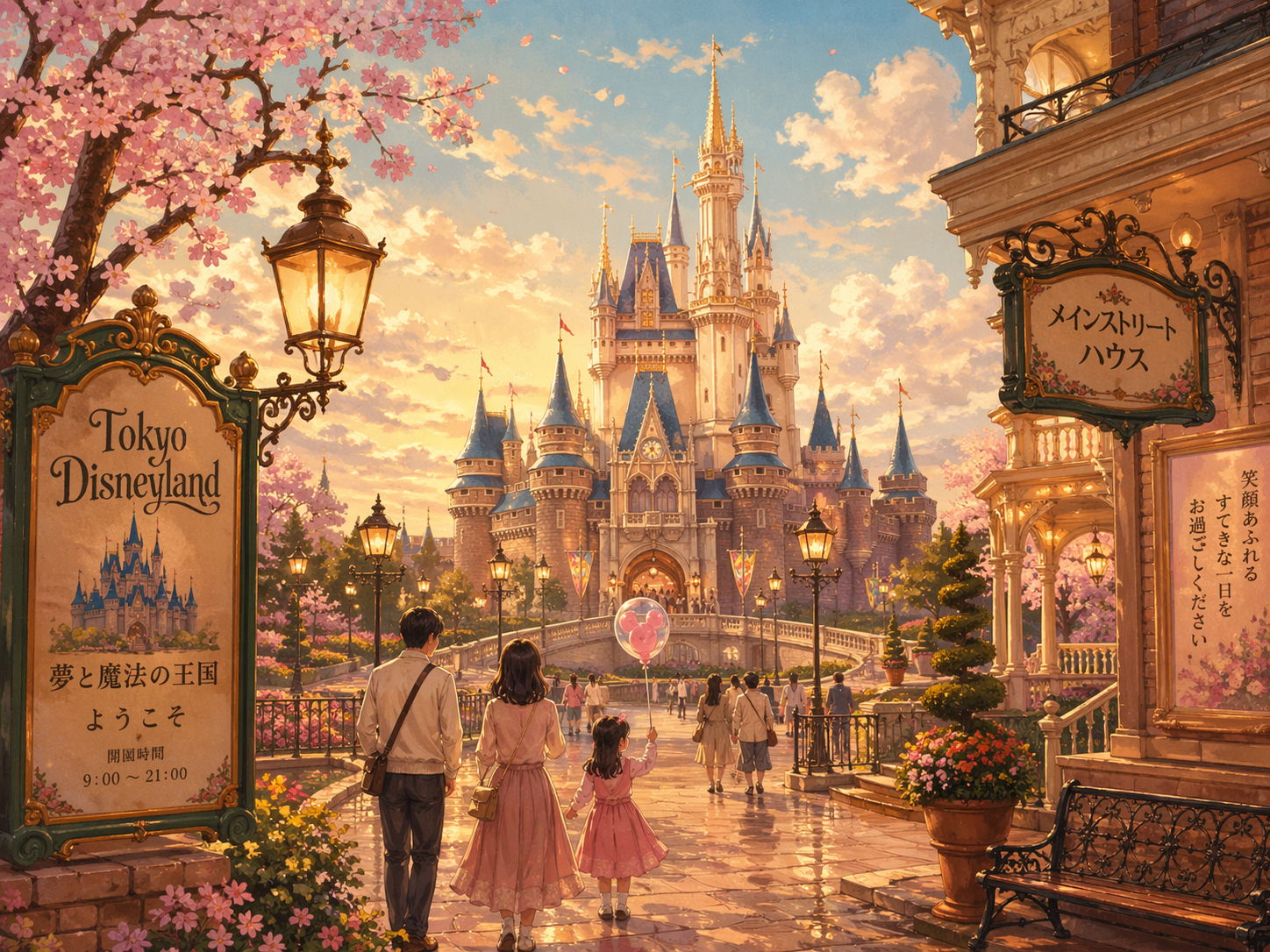
That is part of why Japanese Disney fascinates me, enough to agree to go next year despite being pretty tired of theme parks. Maybe it’s just in my fantasy, but Tokyo Disneyland feels like it might be one of the last bastions of old Disney, not because it is frozen in amber, but because Japan is a more homogeneous culture than the U.S., one still trying to reject some American cultural traits we aren’t too proud of (cough cough, severe obesity).
For example, Tokyo Disneyland still operates Snow White’s Adventures, an older-style dark ride based on the classic fairy tale, while Florida long ago lost Snow White’s Scary Adventures. In other words, Japan still has a ride with a final kiss, while Florida and California long ago traded their kiss in for dwarfs, no, little people, no, coal miners, no, miners, no, “bandits.” Yes, “coal miners” are not PC enough for Disney and ChatGPT these days.
I’ll take a safe bet that Disneyland Abu Dhabi won’t feature kissing, if it ever opens.
Eventually, modernity will win, and Japan will replace the old with the new, as guests film their mukbangs for an audience watching through virtual reality on their favorite toilet. But for now, Japan might be a little closer to the fairy-tale template I’d want at Disney. I hope to find out soon, or as my fiancée and I say, “Next year in Japan!”
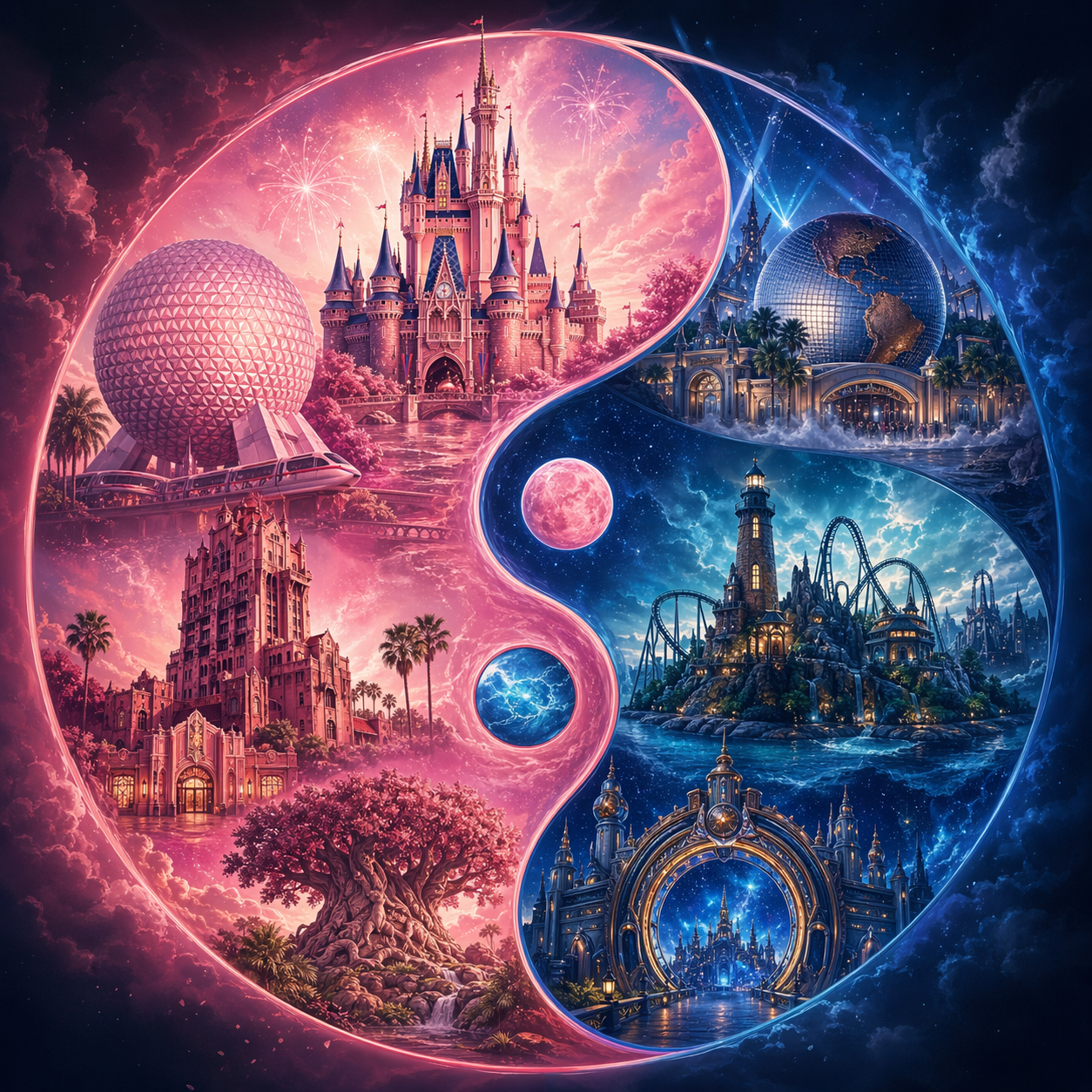
Are you still with me? Let’s drive 30 minutes East to Universal Parks.
Universal’s Grit
Florida residents are less inclined to go to Disney World than Florida foreigners. A major reason is that Floridians are cramming the drive into their one day off in six months. Also, Floridians are more likely to have already done the Disney parks, which offer one to two steel coasters each. Universal parks, and Busch Gardens, have always had more appeal to the average Florida Man, offering one day to binge three or more coasters, avoid the sap, then load up on caffeine and stimulants before a sleepy ride home.
Many middle and high schools have opted for joint Universal and Islands of Adventure theme park days for graduates (Grad Bash), making it more nostalgic for many Floridians too. Children would run between the OG Universal parks, which is arguably better than having those monsters terrorize Disney families and nerdy band camp trips.
Universal parks feature more teen-friendly playfulness, like their focus on roller coaster thrills over shows, carnival games to show off to a prospective girlfriend, behind-the-scenes focus over magic, and what I’ll refer to as grit: the lack of polishing and the high chance of error we expect from Universal parks. Universal is less “fun for the family” vibe. Maybe grandpa actually has a pretty bad time there because he can’t ride VelociCoaster or watch his dang bird show.
While Disney is the park of polish, fantasy, courtship, and controlled nostalgia, Universal is the park of grit, velocity, monsters, and chaos. Disney is the perfect couple, the prom king and queen, enamored with each other, dressed in fine clothes. Universal is the brute who doesn’t ask when he goes in for a kiss, then spanks her butt, problematic as that might be. [And, I’d guess, Busch Gardens is the redneck alcoholic cousin of Universal who got knocked up at sixteen.]
Both brands do best when leaning into their identities instead of drifting toward the same middle. I’m no theme park exec, so I haven’t crunched the numbers. Still, I hope Disney stays Disney, and Universal stays Universal. If something goes wrong at Disney, it’s a tragedy. If something goes wrong at Universal... oh well. It’s Universal. Yes, it’s annoying when your favorite ride is down all day, but it shouldn’t be surprising. My favorite rides have been down for fifteen years.
Let one park family specialize in enchantment, romance, musical fantasy, and emotional softness. Let the other specialize in menace, sarcasm, monsters, boss battles, and kinetic spectacle. That separation is not a weakness. It is the whole point. A real theme park ecosystem needs contrast. Once every park is chasing the same crowd with the same tone, the whole industry gets flatter, safer, and more boring.
Over stimulated in Nintendo World
Which brings us to the newest addition to the family (and my worst-named essay).
Epic Universe is… Epic
The celestial stars aligned, so I finally visited Epic Universe in April 2026 for a perfect park day, granted, an expensive one. Now I’m a believer in this park.
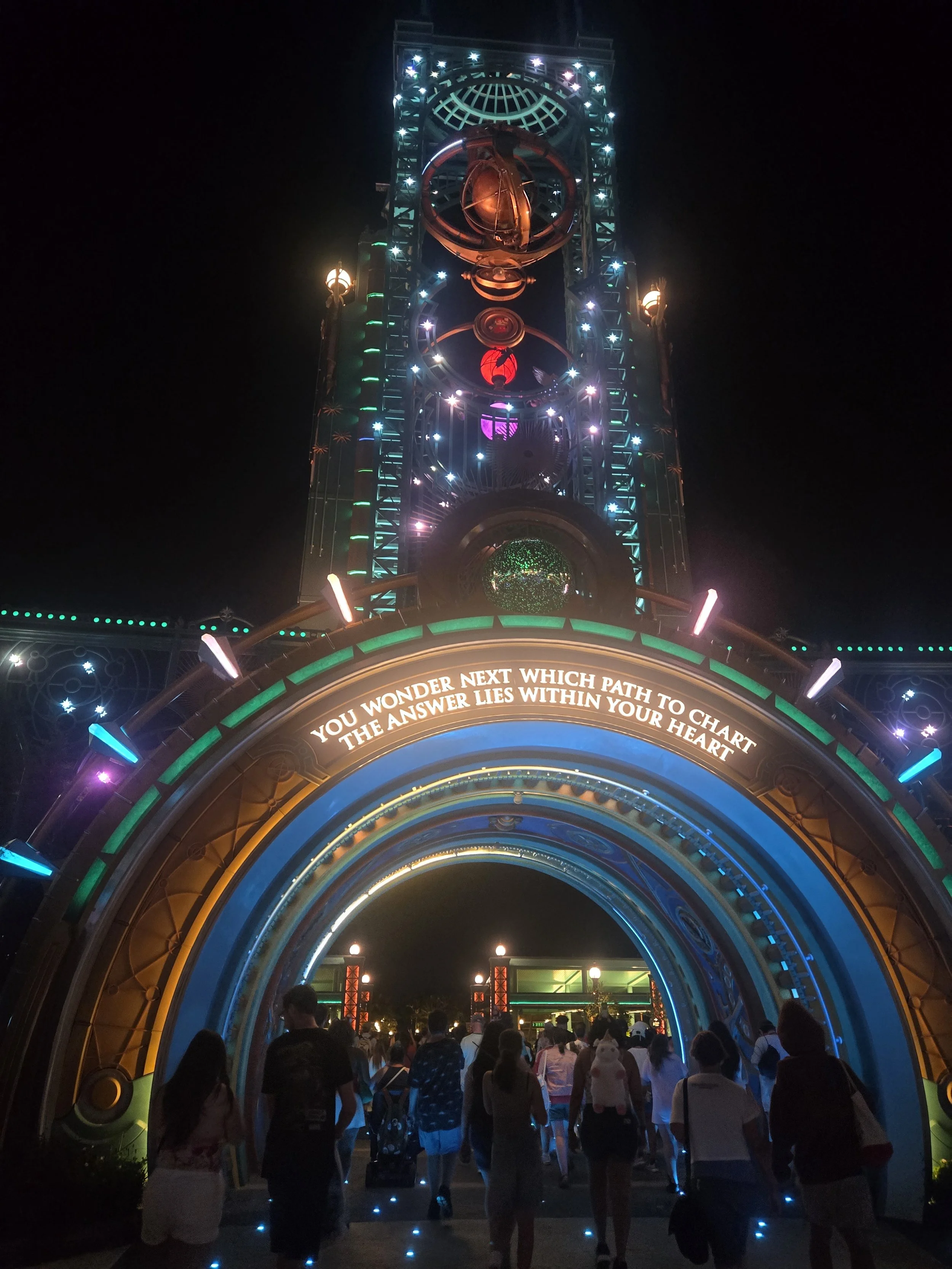
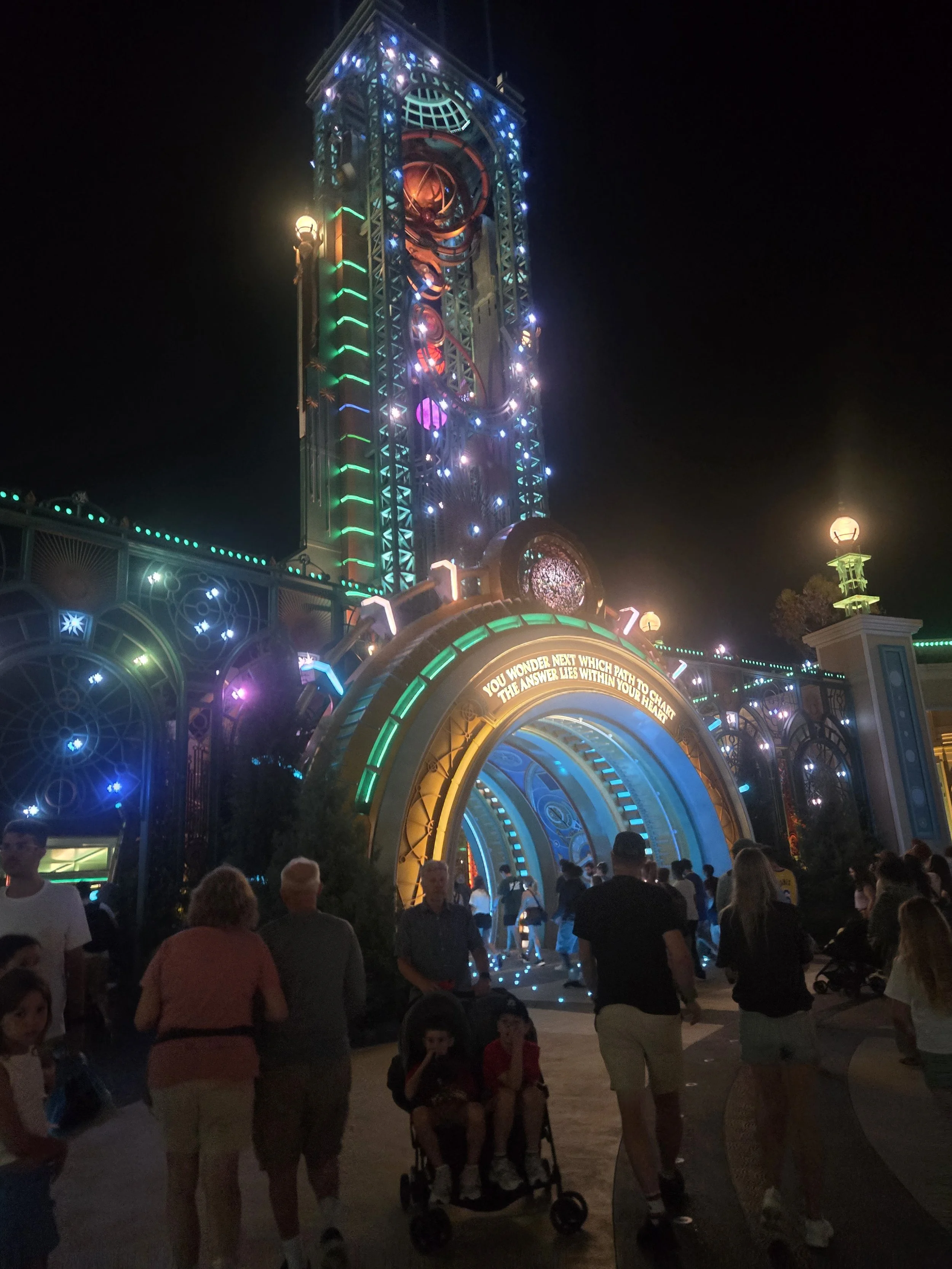
Universal’s newest park, Epic Universe, is really five worlds, each themed around one steel coaster and lots to look at. It’s pure grit, no polish. Like, the park is noticeably absent of shaded areas, as if they just forgot to put them in, or wanted to say, “No sissies. Put on some sunscreen and get a third-degree burn anyway. This isn’t Disney!” Of the only two live shows, only one has singing, and it is remarkably less polished than Disney’s musicals, but in a great way.
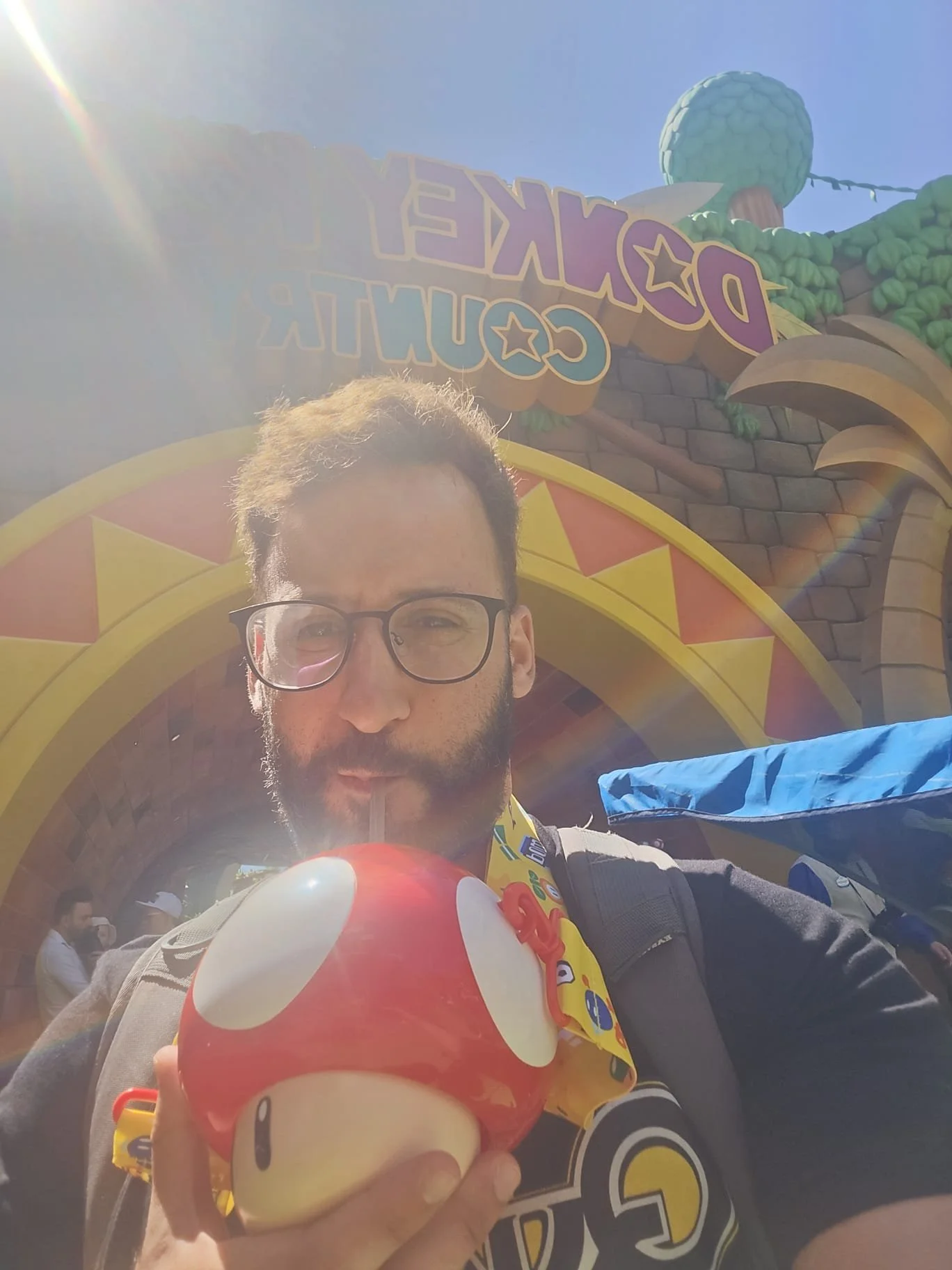
To add to the grit, classic monsters roam Dark Universe. Super Nintendo World—which is really just Mario’s galaxy—features rides about Bowser, Bowser again, and Donkey Kong, who isn’t really a villain anymore but started as one.
In keeping with the Universal focus on kiddie shenanigans, they offer game bracelets for $45 per person to get extra competitive. I didn’t get one and would need to win the lottery (the good kind) to. Plus, they kept the fairy-tale romance to a minimum, with more human-dragon affection than human-human affection.
As Disney once offered princesses, kisses, and beautiful memories, Universal offers monsters, high scores, and either adrenaline or a headache, depending on your coaster tolerance. One park slows you down, while the other has you overstimulated like a fat kid in a candy factory.
Universal parks are pricey, but the technology makes them more seamless, so you don’t think about the money you’re blowing away. AI is used to scan your face if you drop the big bucks to skip the lines. Cups have RFID chips so they know whether you’re authorized for a refill and when you can refill. You order from your table instead of going to a counter and then hoping to find a table. It all makes sense for the 21st century. You wonder why Disney didn’t do it first.
All that is to say, in the same way I see Disney losing it’s magic, I see Universal gaining it’s character development.
Yes, each park is a bit smaller than you’d hope. But you see the potential. The park has you imagining what’s next, dreaming of the next addition to Nintendo or Harry Potter World. [IMO Zelda is great IP, but Star Fox lends itself to a better ride, and Pokémon lends itself to a more expansive world. And why no zombie-shotgun shooting game?]
Ignore the rumors about the lines, because we didn’t have substantially longer ones than at Disney World. Instead, we found many options to fill the day from start to end. And it’s incredibly exciting to have an addition to Orlando’s parks when the last one was Islands of Adventure in 1999, and who knows when Magic Kingdom will finish its new section for Animal Kingdom to compete. They’re still working on destroying Hollywood Studios.
Now go over to Guidance Space to read some tips about Orlando theme parks. Or drop a comment.