REPOST: Serious Eats, “Is MSG Actually Bad for You?”
Why I’m Reposting
I was listening to This Is Important, the Workaholics guys’ podcast, when they got talking about how American grocery-store spice racks have the best stuff. That resonated / struck a chord: on my last few U.S. visits, I’ve brought home lemon pepper, ranch and rubs from brands that seemed made up. There’s just something unique about that spice you find on the sale rack for $2 and go for anyways.
This conversation pivoted to a seasoning people spent decades treating like a toxin: MSG. I love food and never covered this one. MSG panic began with flimsy evidence, became tangled up with suspicion of Chinese food, and outlasted the science.
I’m pretty sure I’ve blogged my rants about dietacians, so will get to the repost a minute earlier.
I wasn’t familiar with Serious Eats before finding this piece. It’s a food site with cooking advice, food-science articles, and, of course, recipes that most prefer to turn to Chat GPT for today. I like using these reposts to introduce myself, and hopefully readers, to websites we may not know. Here’s J. Kenji López-Alt on whether MSG is actually bad for you.
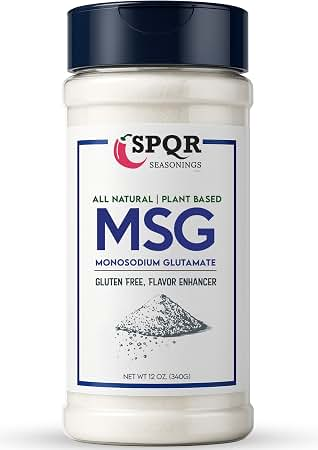
I substituted the original article image for one of an MSG packaging from Amazon.com . Add a bit of unwanted rants, edit for 30 seconds, and you have a GuySpace Repost.
Is MSG Actually Bad for You?
What is MSG? Will it really give you a headache? Should you be cooking with it? We look to science for the answers.
J. Kenji López-Alt; Jun 2, 2023; First pub’d Jan 2019
Chances are, you've eaten some Monosodium Glutamate (MSG) within the last 24 hours. It's in nearly all prepared foods, and the glutamate present in MSG is chemically identical to the glutamate naturally found in all kinds of foods, like Parmesan cheese, green peas, and tomatoes. There's no denying its transformative culinary power. In its pure crystalline form, MSG can be added to soups, stews, sauces, and stocks to add a rounded, savory flavor. Like regular table salt, MSG can also help boost our perception of other existing flavors. Tomato soup with a pinch of MSG tastes a little more tomato-y. Add a dash to beef stew to make it taste beefier. I, like my mother, and her mother before her, keep a small jar of it right next to the salt in my kitchen.
For some readers, this may come as a surprise. I can hear you now: But Kenji, MSG is terrible for you! You’ll get migraines and asthma and numbness and 17 other symptoms, each more horrid than the last!
For others, you may have the opposite reaction: Yesssssss, validation at last! MSG reactions are all in your head and all those studies have proven it. MSG headaches are imaginary!
Hold up. Because both of those reactions are out of line with reality. First let's take a brief look at the history of MSG use, then let's talk about what those studies really have to say.

Credit: Serious Eats / Vicky Wasik. Don’t forget to add sources to your images while preparing the article. For GuySpace articles, the images may be moved before titles to make reading more fluid. Publish dates are truncated.
What Is MSG?
MSG is a sodium salt of glutamic acid (an α-amino acid). It was first isolated in 1908 by Japanese biochemist Kikunae Ikeda, who was trying to discover exactly what gave dashi—the Japanese broth flavored with kombu (giant sea kelp)—its strong, savory character. Turns out that kombu is packed with glutamic acid. It was Ikeda who coined the term umami, which roughly translates as "savory," to describe the taste of glutamic acid (and other similar amino acids). Until that point, scientists had only discovered the other four flavors sensed by the tongue and soft palate: salty, sweet, sour, and bitter.
By 1909, pure crystalline MSG extracted from the abundant kelp in the sea around Japan was being sold under the brand name Aji-no-moto (roughly, "element of flavor"). The company exists to this day, though with the current high demand for MSG, the chemical is synthesized rather than extracted. Pure MSG powder is available under a number of brand names (like Ac’cent), and glutamic acid–rich ingredients are used extensively in packaged foods, typically in the form of autolyzed yeast extract or hydrolyzed soy protein.
All well and good with MSG until the late 1960s.
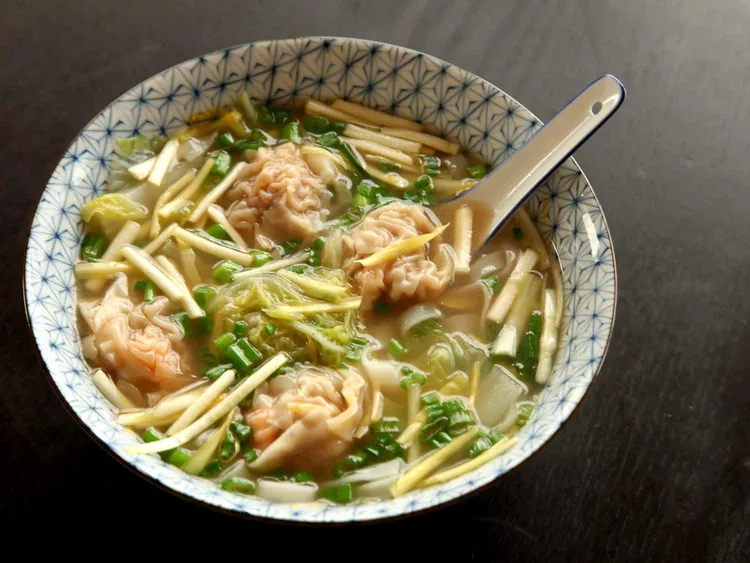
Credit: Serious Eats / J. Kenji López-Alt. Images are stretched out for better mobile appearance. Sometimes carousels are used.
The Myth of "Chinese Restaurant Syndrome"
The term "Chinese Restaurant Syndrome" started getting thrown around in 1968 when a letter, written by a reader named Dr. Robert Ho Man Kwok, was published in the New England Journal of Medicine. In it, he speculated that the numbness and palpitations he experienced after eating in Chinese restaurants may be linked to the liberal use of powdered monosodium glutamate (MSG) in Chinese food. Though no actual evidence was presented, the idea took off and went viral (even before the internet!), and for decades MSG was blamed for everything from migraines and numbness to bloat and heart palpitations. MSG-phobia was born, and it exists to this day, though the racially-tinged pejorative "Chinese Restaurant Syndrome" has since been swapped out for "MSG Symptom Complex."
More recently, there's been a wave of anti-anti-MSG backlash. Article after article claims that science has proven that MSG has no ill effects. These articles are as guilty of misrepresenting scientific data as those who spread the idea of Chinese Restaurant Syndrome in the first place. Let’s take a look at the actual science.
The Studies
A 1970 study by Dr. John Olney published in Nature 1 found that injecting high doses of MSG under the skin of infant mice caused retinal damage, brain damage, and obesity as adults. We’re talking huge doses of MSG injected directly into baby rodents here, a far cry from the small amounts ingested orally by humans. An April 2000 meta-study in the Journal of Nutrition 2 found that in 21 studies of MSG conducted on primates, only two identified links between oral consumption and neurotoxicity. Both of these studies were done by Olney’s laboratory, and nobody has been able to repeat those results since. Moreover, even in mice (the experimental species most sensitive to MSG), the oral dose of MSG required to produce brain lesions was one gram per kilogram of body weight, an absolutely massive amount equivalent to a 170-pound person eating a third of a cup of pure MSG in a single sitting, with no food, on an empty stomach. This is about the amount of added MSG an average adult consumes in half a year.
Both the Federal Drug Administration (FDA) and the Federation of American Societies for Experimental Biology (FASEB) have done meta-studies on available experimental data 3. The conclusion was that while very large doses of MSG can cause both degenerative nerve cell damage and disrupt hormonal function in animal tests, there is no evidence to suggest any kind of long-term damage to humans in ordinary doses.
So far, so good. Seems like the anti-anti-MSG folks are right. But what about short-term effects, i.e. MSG Symptom Complex? Surely not everyone who feels the short-term symptoms of consuming MSG can be hallucinating, can they? A 1993 study from the journal of Food and Chemical Toxicology 4 found that in a normal cross-section of the healthy population, there was little to no correspondence between MSG consumption and MSG Symptom Complex, especially when MSG consumption was paired with food. In fact, the effects were no greater than that of a placebo.
Doesn’t sound so good for the MSG-haters.
But not so fast. What about in people who specifically self-identify as being sensitive to MSG? Here things get more interesting. In a November 2000 study from the Journal of Allergy and Clinical Immunology 5, scientists administered increasing doses of MSG and a placebo to 130 adults who self-identified as MSG-sensitive. While responses to MSG were not completely consistent with repeated testing, testing subjects generally showed more reactions to actual MSG (38% of respondents) versus a placebo (13% of respondents).
The conclusion of the study was that MSG does, in fact, elicit adverse responses from a particularly sensitive subgroup of the population when administered in large doses (greater than three grams) on a mostly empty stomach. The existence of MSG Symptom Complex is concrete scientific fact.
Turns out the dizziness, flushed face, and numbness in the chest and arms that I always insisted was just in my older sister's head is real after all. (Sorry, Aya.)
What About Glutamic Acid in Other Foods?
Kombu isn’t the only food rich in glutamic acid, though it may be the richest. Many commonly eaten foods are loaded with the stuff:
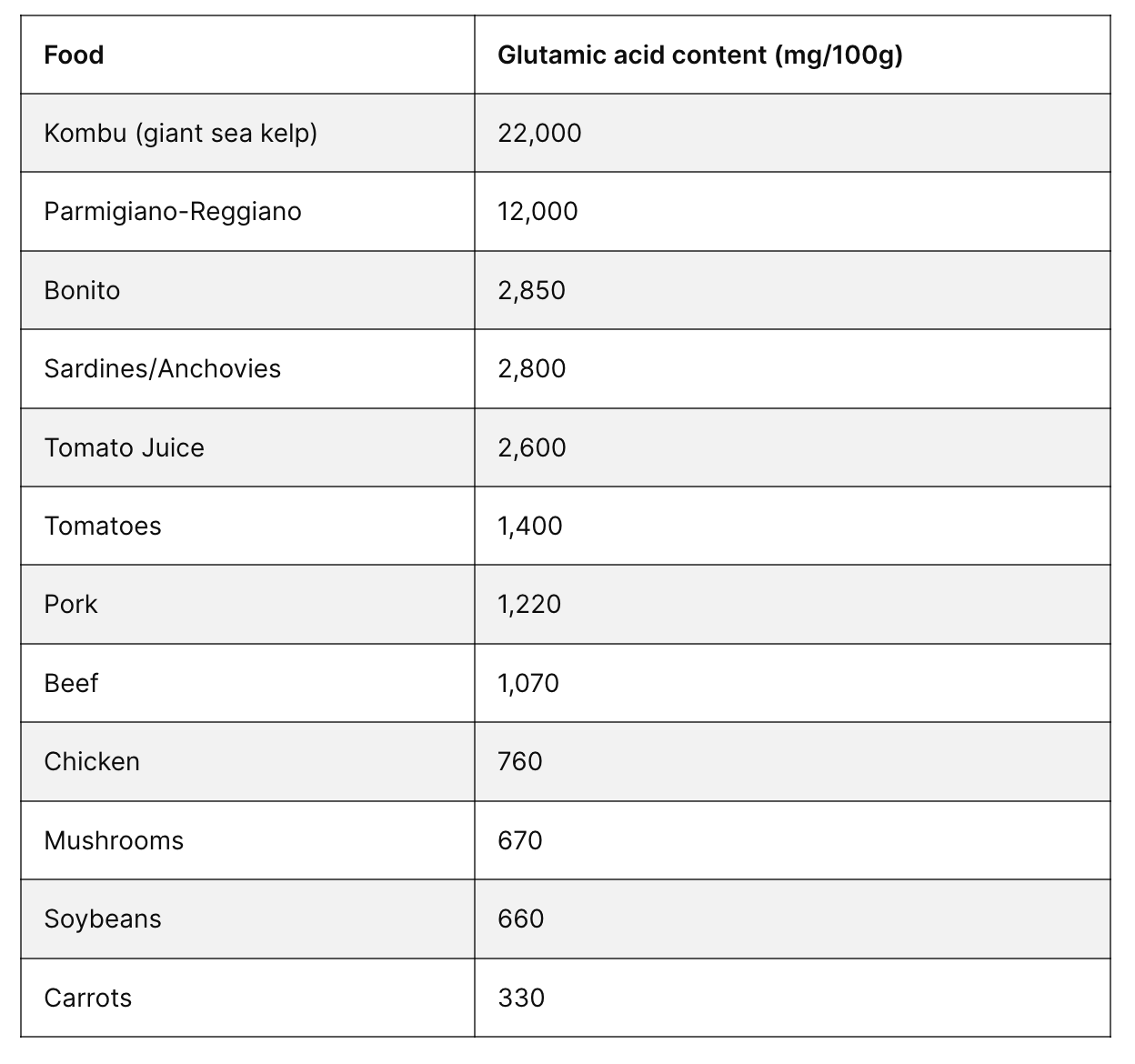
Tables are a pain so this was substituted with a screenshto
According to the FDA, the average adult consumes about 13 grams of glutamate each day from natural sources, plus an additional 0.55 grams of added glutamate from MSG or other sources. This leads to an obvious question: Chemicals don't really care what source they come from. Glutamate is glutamate, whether extracted from seaweed, synthesized in a lab, produced by the body, or consumed in your Parmesan cheese. So why aren't folks sensitive to MSG also sensitive to glutamic acid-rich foods? Why can my sister eat as much Parmesan cheese and as many anchovies as she wants?
It’s important to remember that in virtually every study, it was only when glutamic acid was consumed on a nearly empty stomach that adverse reactions manifested. When paired with enough food, symptoms virtually vanished.
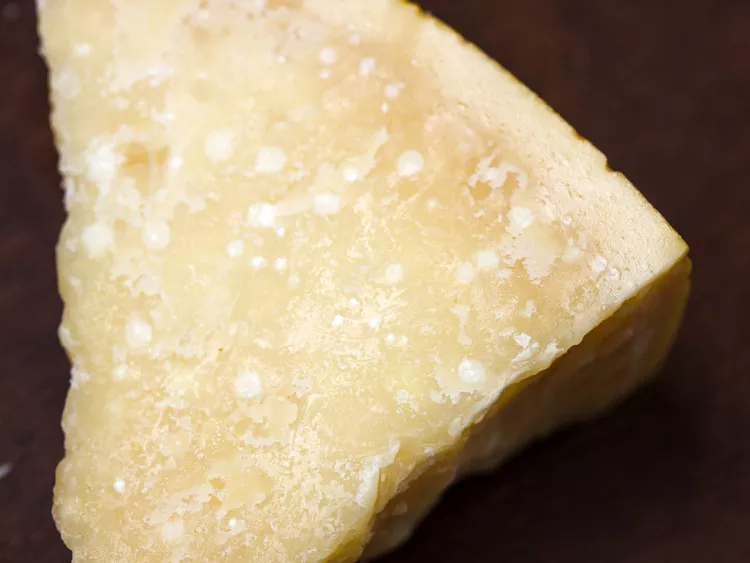
Serious Eats / Vicky Wasik. I think that’s Parmesan cheese. I’m used to it coming in the shredded form, where they literally add pieces of wood to enhance the texture.
Jeffrey Steingarten, Vogue magazine’s long-time food correspondent, has suggested that the rash of people claiming MSG sensitivity in the '70s and '80s might be due to the fact that in those days, many Chinese-American restaurant meals started with a bowl of MSG-rich wonton soup consumed on an empty stomach before the rest of the meal. This theory seems to fall in line with scientific data. Even though Parmesan cheese is packed with glutamic acid, it’s got plenty of other "stuff" in it, too, and most likely you’re pairing that cheese with pasta or pizza.
One final note: some have hypothesized that when it comes to Chinese restaurants specifically, MSG-rich broths consumed on an empty stomach may be part of the culprit, but there’s also a good possibility that some folks who claim sensitivity to MSG may, in fact, be experiencing reactions to other ingredients common in Chinese food that are not as common in other restaurant cuisines; these include the peanut oil frequently used for stir-frying, the shellfish extracts used for flavoring, or herbs like cilantro. As far as I am aware, there is currently no scientific data that would elevate this hypothesis to theory.
So Should I Cook With It?
So where does that leave us in terms of using it for cooking? In the end, it seems that the subgroup sensitive to MSG is small enough and the adverse reaction rare enough that in all likelihood you’re gonna be just fine using it in your own food, especially if you make sure to eat a little MSG-free stuff to lay down a bed in your belly before getting to the goods. Moreover, all evidence suggests that the effects are at worst a short-term discomfort with no long-lasting consequences.
If you do, however, feel that you have a sensitivity to MSG, by all means avoid it! And you can tell anyone who says, "You’re just imagining it!" to buzz off, because they are wrong. Your ally is science, and a powerful ally it is.
1. John W. Olney & Oi-Lan Ho, Nature, Volume 227, pages 609–611 (August 1970)
2. Ronald Walker, John R. Lupien, The Journal of Nutrition, Volume 130, Issue 4, Pages 1049S–1052S (April 2000)
3. D. Ralton, J. Talbot, K. Fisher, The Journal of Nutrition, Volume 125, Issue 11, Pages 2891S–2906S, (01 November 1995)
4. L. Tarasoff, M.F.Kelly, Food and Chemical Toxicology, Volume 31, Issue 12, Pages 1019-1035 (December 1993)
5. R.S. Geha et al, Journal of Allergy Clinical Immunology Volume 106, Issue 5, Pages 973-980 (November 2000)
Read More
Thoughts?
Do you keep MSG in your kitchen? Or are you still afraid of it, even after reading this?
I might buy some… if I ever lose weight and decide food gets to be even tastier. I mean, c’mon. It’s organic. The only danger are if 1. You eat it with nothing else like a weirdo 2. You have some real insensitivity. And it was banned on racist reasons, so the good anti-racist thing is to eat more of it and be the annoying guy who reminds everyone it’s OK to eat.