Reverse Turing Test; Three Reposts
One of My Most Discussed Topics + Three Previously Paywalled Articles I Swore I Reposted But Didn’t. I’m talking all the things I thought I posted to my blog but hadn’t.
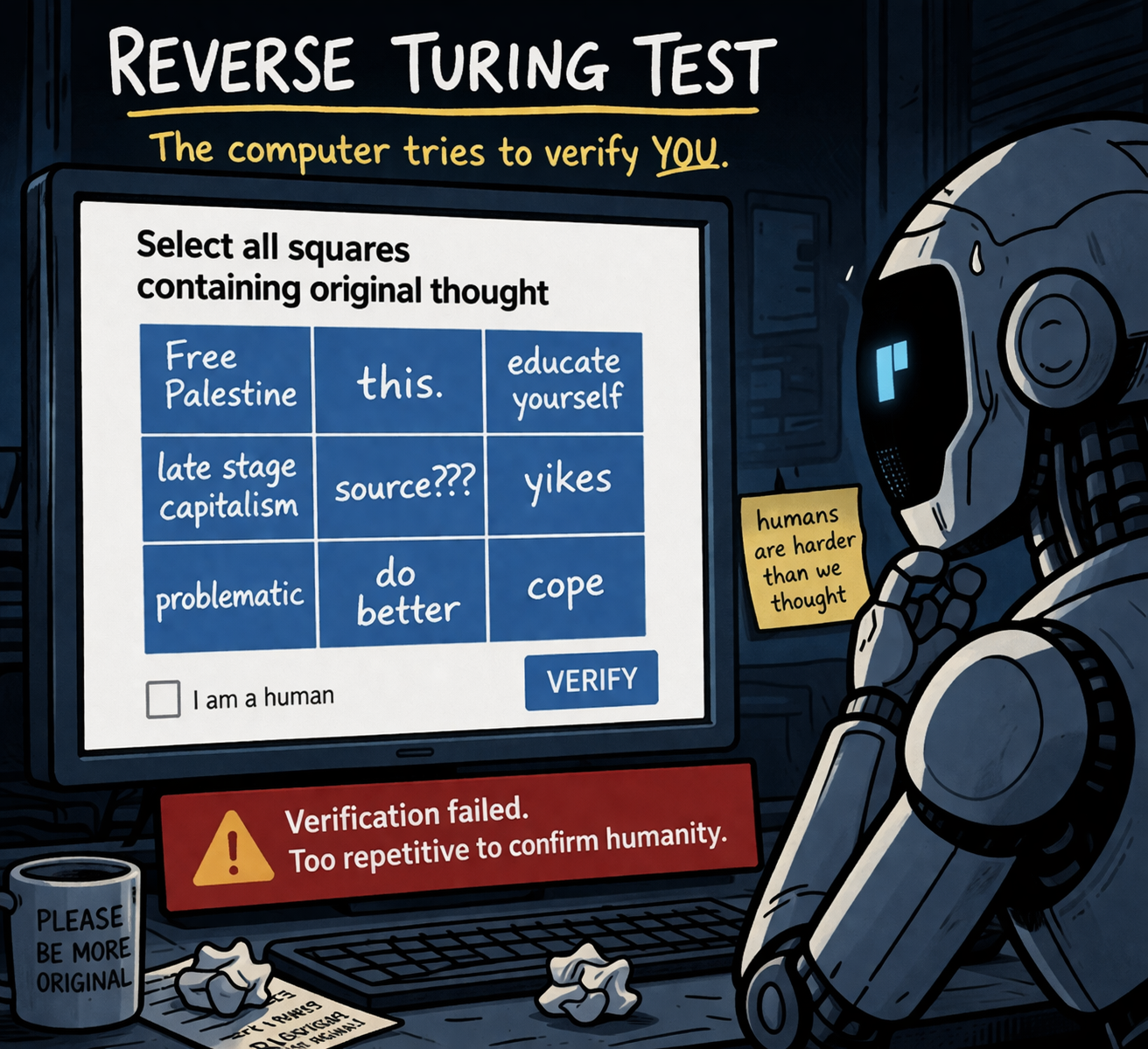
Yes, I asked Chat GPT to describe the text below in a cartoon. It did a great job. Thank you, Chat GPT!
1. Reverse Turing Test
I could have sworn I already wrote this post. “Upon closer inspection, these are loafers.”
Apparently I just always talk about it and assume others know what I’m talking about. “I’ve been making an IDIOT out of myself!!”
I am not a machine. I make mistakes and corrections like one, but I don’t require a prompt for my hallucinations. so let me fix this, finally divulging an idea that has been rattling around in my head for a decade and only gets more relevant as we hurl toward singularity, and every day we see more and more of what might be a bot, might be bot-adjacent, and might, sadly, be humans who are such basic bitches they sound like a bot / auto-reply away message.
The Reverse Turing Test is the only way to name this phenomenon of not telling if a real human is a bot. You should know what I’m talking about... unless you’re really a machine [cuts arm for reveal] [Twilight Zone music intensifies].
The original Turing Test was that machines would become so advanced, so subtle, so human-like, that we would mistake them for people. Boy, did that mistake a time when people read in bed for the future, where people binge-watch reality TV in bed. Love that optimism, long gone from sci-fi.
[Note: You can play a Turing Test game here: https://turingtest.live/ ]
The world went the other, more ridiculous, route: humans got so predictable, so repetitive, so cult-y, so predictably input-output brained, that they start sounding like primitive programs and spam bots. You write a nuanced comment about a thing, and you know the non-nuanced reply you will get before it comes in. You write something with empathy on Facebook, and you know it will get laugh reacts from identity-less profiles which may or may not be human.
You know the dumbest comment will get the most likes.
You know slogans get upvotes, and long analyses get downvoted.
You know people are making the same jokes over and over, despite once being enough.
Instead of metallic automatons we could use to do dangerous jobs, or AI that could help us get to Inbox 0, we got stupid people who genuinely sound like programs a person would write on day 1 of developer boot camp.
Psychologically speaking, if you feed people the same material, day after day, and reward them for repeating approved phrases, punish deviation, and surround them with others doing the same thing, many of them will eventually start sounding like bots. When you punish nuance, it dissipates, and you end up with “FREE FREE PUBLICITY!” shouted into megaphones by people who don’t even understand what they’re screaming at you, or why, but are sure it’s the right thing to say.
Modern discourse is just call-and-response with better branding. It’s like when my friend’s kid, just learning to talk, stopped the adults conversing to say, “Please like and subscribe.” Poor Caden!
Philosophically, tech-bros who aren’t obsessed with things easily passed off as autism-adjacent might tell you this is a sign of incoming singularity. We are so close to this grand machine threshold, this singularity-adjacent horizon where we’ll all have to rethink consciousness and personhood.
I bet you have experienced our nearing of the singularity. Maybe you had a dream about something, then the first thing on your phone was that thing. You had something happen that seems to be statistically impossible, unless algorythms are reading your brains, or, worse, shaping your dreams.
In Eamon Healy in Waking Life terms, we are seeing the end of the telescopic nature of evolution.
I’ll reword him, modify it to my liking, and shorten it for your 2026 attention span:
“We went from biological, anthropological, and cultural to technological. Look at the time scales that are involved. Biological: two billion years for life, six million years for the hominid, 100,000 years for mankind as we know it. Anthropological: 10,000 years for agriculture, 400 years for the scientific revolution, and 150 years for the industrial revolution. Cultural: from decade-long trends, to day-long memes. And technological—the part I’m changing from Healy’s talk, sort of extrapolating from a brilliant chemistry professor’s speech in a super psychedelic movie—you can get updates on your phone every week, and soon it will be every day, then your body might even update as tech trains tech and we get deeper into biohacking. It’s no longer generations. We see the evolution.”
So the weirder question is not when machines become more human, it’s when humans become non-distinct from machine. People are already so mechanized, with their phones and smart watches as extensions of their bodies. They’re so basic, we can easily finish their... sandwiches. And they’re so easily programmable, if you happen to have the money to mass manipulate social media.
We like to differentiate humanity from robots, but I bet my audience says thank you to their AI software, if not also their toasters and sex toys. There’s already emotional investment in machine, even if you aren’t f-ing your computer.
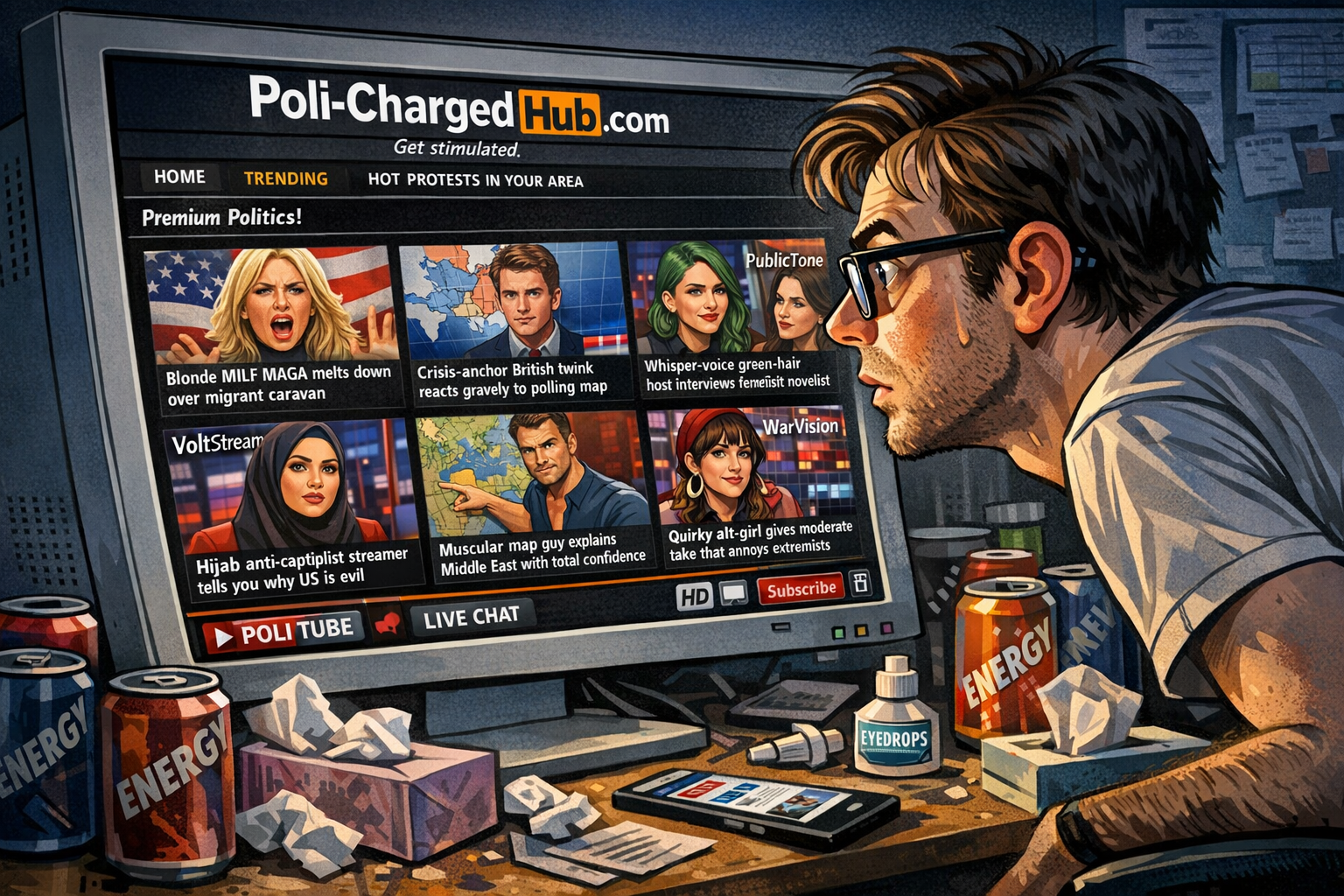
Someone teach me how to go past AI guard rails so I can make the unhinged content I want
2. So... Those Reposts
Here come the reposts. All dressed in hyperlinks.
Like the Reverse Turing Test concept, I recently realized there were several articles I was completely certain I had already reposted here, but did not. Below I’m reposting two of ‘em.
The first is Uri Berliner’s piece on leaving NPR, which I have referenced endless times, because I love to dunk on what NPR and the regressive left have become via pandering to the lowest common shmeshmonishmater. Also, I definitely did repost The Free Press more than once, despite promises not to... or I think I did? Listen, I’m still a big advocate of TFP, though I miss the Weiss couple’s involvement, and as much as I love Olivia Reingold, the images of her in crop tops need to stop popping up on my feed so my fiancée doesn’t think I’m watching political porn, a fetish I imagine a lot of nerdy teens suffer from. Also, the article is on a U.S. government website, so reposting it seems, as TFP might say, kosher.
Read that TFP piece here or below: https://www.thefp.com/p/npr-editor-how-npr-lost-americas-trust
The second is a Fortune piece that gets closer to the dead-internet version of my point. Reddit co-founder Alexis Ohanian openly admitted that “so much of the internet is now just dead,” whether that means botted content, quasi-AI sludge, or the kind of empty algorithmic slop that passes for human interaction now. At least someone associated with one of these platforms is willing to say out loud what the rest of us have been noticing for years.
Read that Fortune piece here or below: https://fortune.com/2025/10/15/reddit-co-founder-alexis-ohanian-dead-internet-theory-ai-bots-linkedin-slop/
The third is a Verge piece that includes the founder of Reddit saying there are so many bots, they can’t handle it. They’re going to try to introduce detection systems. It won’t work.
Read that Verge piece here or below: https://www.theverge.com/tech/900363/reddit-human-verification-bots-crackdown
Unlike TFP, I’'ve never reposted Fortune or Verge, so I get my one repost, according to the internet rule I made up. I have, however, obsessively mentioned how Reddit is a bot-infested cesspool, with Jew-hating, Putin-loving mods on too many channels, what I call subs and communities to annoy Reddit fans.
Each article reminded me of the term “inauthentic synchronized activity” (ISA), which I first learned about at a Tel Aviv University lecture and immediately decided was too good a phrase not to repeat forever (like “anyhoodles”). That term matters because it gets at the actual complexity of my piece above, and my reposts below. “Bot” is too simple. Bot is what bigots call Jews because they’re used to hearing “Israel bad” left and right from their comrades, so any defense of Jews is seen as inhuman. Reality is that ISA revolves around automated, coordinated, and human-bot hybrid campaigns that can even play into social media algos and their in-house bots.
Inauthentic sync activity is very tough to distinguish from real content, and that’s why you don’t see a ton of papers about it. Yeah, that sounds like a cop-out, but could you reach out to millions on Instagram, TikTok, or X to verify they’re humans, when you also can’t even get the new-age CAPTCHAs right??? Verifying humans is hard.
So to go full circle to the Reverse Turing Test problem: We live in an age where bots can sound more human than humans, and humans can sound more synthetic than the bots they complain about. And both are ranting about the Jews. And social media doesn’t give a F about either, so this problem is getting worse.
Note: If TFP, Fortune or The Verge want this removed, please just ask. But y’all know these two articles are all over the interwebs, right? Also, sorry Olivia Reingold, but you gotta know your most noticed asset isn’t your writing and journalism. No shade, since you beat me in brains in bod. At least I win in “Simpsons references per article.”
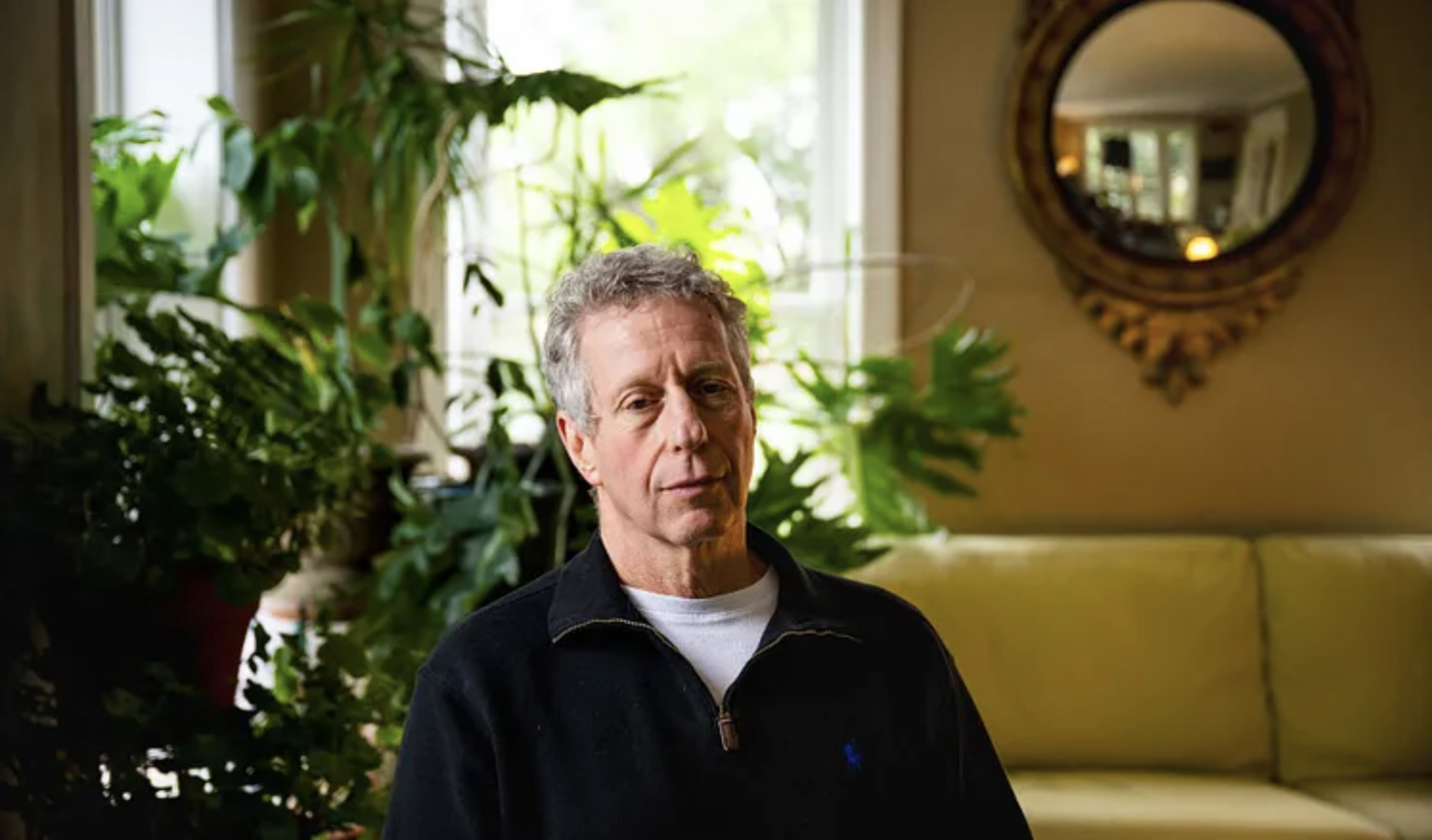
Uri Berliner, a senior business editor at NPR, says he started sounding the alarm internally when he noticed a bias creep into the network’s coverage. (Pete Kiehart for The Free Press)
I’ve Been at NPR for 25 Years. Here’s How We Lost America’s Trust.
Uri Berliner, a veteran at the public radio institution, says the network lost its way when it started telling listeners how to think.
Uri Berliner; Apr 9, 2024
You know the stereotype of the NPR listener: an EV-driving, Wordle-playing, tote bag–carrying coastal elite. It doesn’t precisely describe me, but it’s not far off. I’m Sarah Lawrence–educated, was raised by a lesbian peace activist mother, I drive a Subaru, and Spotify says my listening habits are most similar to people in Berkeley.
I fit the NPR mold. I’ll cop to that.
So when I got a job here 25 years ago, I never looked back. As a senior editor on the business desk where news is always breaking, we’ve covered upheavals in the workplace, supermarket prices, social media, and AI.
It’s true NPR has always had a liberal bent, but during most of my tenure here, an open-minded, curious culture prevailed. We were nerdy, but not knee-jerk, activist, or scolding.
In recent years, however, that has changed. Today, those who listen to NPR or read its coverage online find something different: the distilled worldview of a very small segment of the U.S. population.
If you are conservative, you will read this and say, duh, it’s always been this way.
But it hasn’t.
For decades, since its founding in 1970, a wide swath of America tuned in to NPR for reliable journalism and gorgeous audio pieces with birds singing in the Amazon. Millions came to us for conversations that exposed us to voices around the country and the world radically different from our own—engaging precisely because they were unguarded and unpredictable. No image generated more pride within NPR than the farmer listening to Morning Edition from his or her tractor at sunrise.
Back in 2011, although NPR’s audience tilted a bit to the left, it still bore a resemblance to America at large. Twenty-six percent of listeners described themselves as conservative, 23 percent as middle of the road, and 37 percent as liberal.
By 2023, the picture was completely different: only 11 percent described themselves as very or somewhat conservative, 21 percent as middle of the road, and 67 percent of listeners said they were very or somewhat liberal. We weren’t just losing conservatives; we were also losing moderates and traditional liberals.
An open-minded spirit no longer exists within NPR, and now, predictably, we don’t have an audience that reflects America.
That wouldn’t be a problem for an openly polemical news outlet serving a niche audience. But for NPR, which purports to consider all things, it’s devastating both for its journalism and its business model.
****
Like many unfortunate things, the rise of advocacy took off with Donald Trump. As in many newsrooms, his election in 2016 was greeted at NPR with a mixture of disbelief, anger, and despair. (Just to note, I eagerly voted against Trump twice but felt we were obliged to cover him fairly.) But what began as tough, straightforward coverage of a belligerent, truth-impaired president veered toward efforts to damage or topple Trump’s presidency.
Persistent rumors that the Trump campaign colluded with Russia over the election became the catnip that drove reporting. At NPR, we hitched our wagon to Trump’s most visible antagonist, Representative Adam Schiff.
Schiff, who was the top Democrat on the House Intelligence Committee, became NPR’s guiding hand, its ever-present muse. By my count, NPR hosts interviewed Schiff 25 times about Trump and Russia. During many of those conversations, Schiff alluded to purported evidence of collusion. The Schiff talking points became the drumbeat of NPR news reports.
But when the Mueller report found no credible evidence of collusion, NPR’s coverage was notably sparse. Russiagate quietly faded from our programming.
It is one thing to swing and miss on a major story. Unfortunately, it happens. You follow the wrong leads, you get misled by sources you trusted, you’re emotionally invested in a narrative, and bits of circumstantial evidence never add up. It’s bad to blow a big story.
What’s worse is to pretend it never happened, to move on with no mea culpas, no self-reflection. Especially when you expect high standards of transparency from public figures and institutions, but don’t practice those standards yourself. That’s what shatters trust and engenders cynicism about the media.
Russiagate was not NPR’s only miscue.
In October 2020, the New York Post published the explosive report about the laptop Hunter Biden abandoned at a Delaware computer shop containing emails about his sordid business dealings. With the election only weeks away, NPR turned a blind eye. Here’s how NPR’s managing editor for news at the time explained the thinking: “We don’t want to waste our time on stories that are not really stories, and we don’t want to waste the listeners’ and readers’ time on stories that are just pure distractions.”
But it wasn’t a pure distraction, or a product of Russian disinformation, as dozens of former and current intelligence officials suggested. The laptop did belong to Hunter Biden. Its contents revealed his connection to the corrupt world of multimillion-dollar influence peddling and its possible implications for his father.
The laptop was newsworthy. But the timeless journalistic instinct of following a hot story lead was being squelched. During a meeting with colleagues, I listened as one of NPR’s best and most fair-minded journalists said it was good we weren’t following the laptop story because it could help Trump.
When the essential facts of the Post’s reporting were confirmed and the emails verified independently about a year and a half later, we could have fessed up to our misjudgment. But, like Russia collusion, we didn’t make the hard choice of transparency.
Politics also intruded into NPR’s Covid coverage, most notably in reporting on the origin of the pandemic. One of the most dismal aspects of Covid journalism is how quickly it defaulted to ideological story lines. For example, there was Team Natural Origin—supporting the hypothesis that the virus came from a wild animal market in Wuhan, China. And on the other side, Team Lab Leak, leaning into the idea that the virus escaped from a Wuhan lab.
The lab leak theory came in for rough treatment almost immediately, dismissed as racist or a right-wing conspiracy theory. Anthony Fauci and former NIH head Francis Collins, representing the public health establishment, were its most notable critics. And that was enough for NPR. We became fervent members of Team Natural Origin, even declaring that the lab leak had been debunked by scientists.
But that wasn’t the case.
When word first broke of a mysterious virus in Wuhan, a number of leading virologists immediately suspected it could have leaked from a lab there conducting experiments on bat coronaviruses. This was in January 2020, during calmer moments before a global pandemic had been declared, and before fear spread and politics intruded.
Reporting on a possible lab leak soon became radioactive. Fauci and Collins apparently encouraged the March publication of an influential scientific paper known as “The Proximal Origin of SARS-CoV-2.” Its authors wrote they didn’t believe “any type of laboratory-based scenario is plausible.”
But the lab leak hypothesis wouldn’t die. And understandably so. In private, even some of the scientists who penned the article dismissing it sounded a different tune. One of the authors, Andrew Rambaut, an evolutionary biologist from Edinburgh University, wrote to his colleagues, “I literally swivel day by day thinking it is a lab escape or natural.”
Over the course of the pandemic, a number of investigative journalists made compelling, if not conclusive, cases for the lab leak. But at NPR, we weren’t about to swivel or even tiptoe away from the insistence with which we backed the natural origin story. We didn’t budge when the Energy Department—the federal agency with the most expertise about laboratories and biological research—concluded, albeit with low confidence, that a lab leak was the most likely explanation for the emergence of the virus.
Instead, we introduced our coverage of that development on February 28, 2023, by asserting confidently that “the scientific evidence overwhelmingly points to a natural origin for the virus.”
When a colleague on our science desk was asked why they were so dismissive of the lab leak theory, the response was odd. The colleague compared it to the Bush administration’s unfounded argument that Iraq possessed weapons of mass destruction, apparently meaning we won’t get fooled again. But these two events were not even remotely related. Again, politics were blotting out the curiosity and independence that ought to have been driving our work.
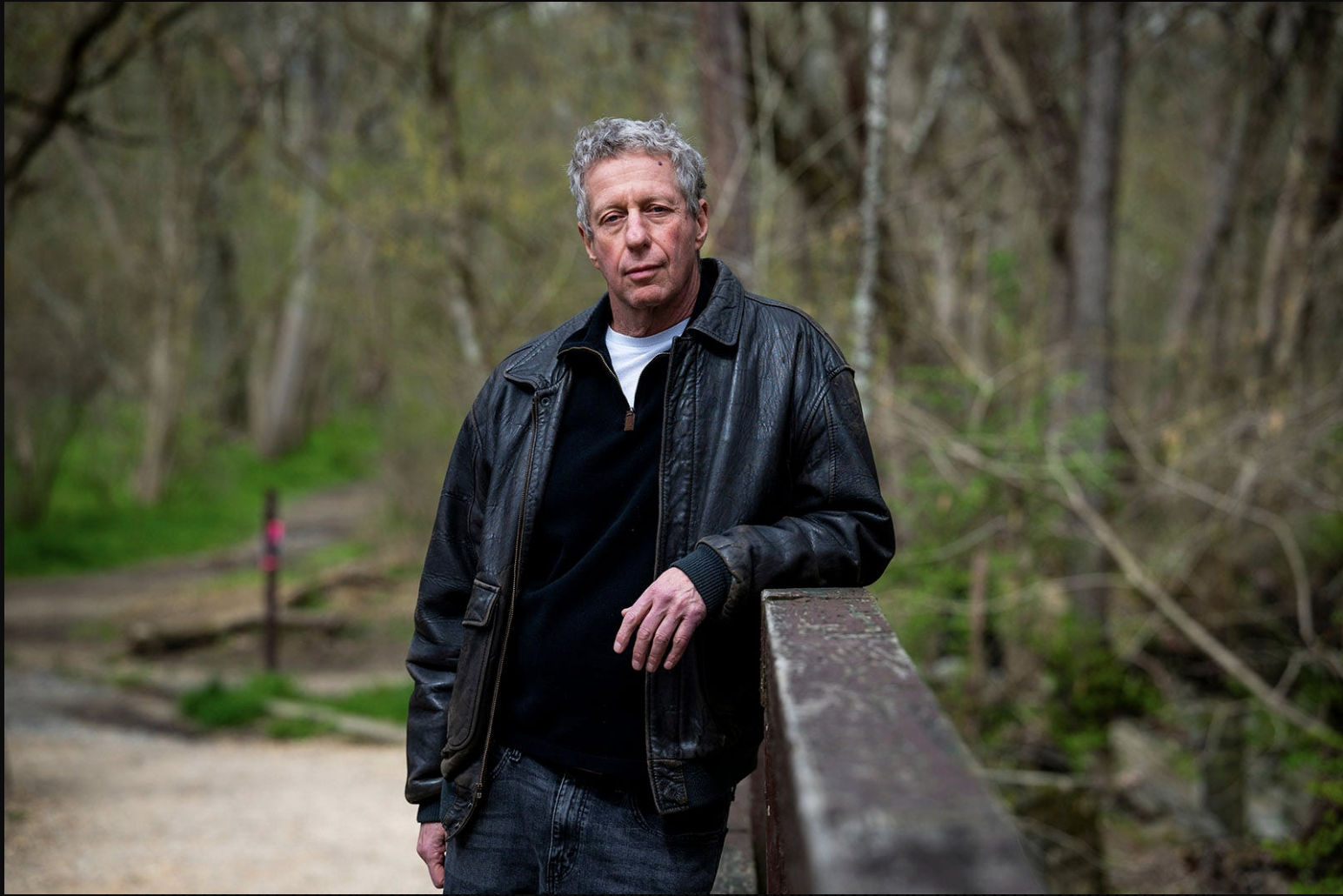
Uri Berliner near his home in Washington, D.C., on April 5, 2024. (Photo by Pete Kiehart for The Free Press)
I’m offering three examples of widely followed stories where I believe we faltered. Our coverage is out there in the public domain. Anyone can read or listen for themselves and make their own judgment. But to truly understand how independent journalism suffered at NPR, you need to step inside the organization.
You need to start with former CEO John Lansing. Lansing came to NPR in 2019 from the federally funded agency that oversees Voice of America. Like others who have served in the top job at NPR, he was hired primarily to raise money and to ensure good working relations with hundreds of member stations that acquire NPR’s programming.
After working mostly behind the scenes, Lansing became a more visible and forceful figure after the killing of George Floyd in May 2020. It was an anguished time in the newsroom, personally and professionally so for NPR staffers. Floyd’s murder, captured on video, changed both the conversation and the daily operations at NPR.
Given the circumstances of Floyd’s death, it would have been an ideal moment to tackle a difficult question: Is America, as progressive activists claim, beset by systemic racism in the 2020s—in law enforcement, education, housing, and elsewhere? We happen to have a very powerful tool for answering such questions: journalism. Journalism that lets evidence lead the way.
But the message from the top was very different. America’s infestation with systemic racism was declared loud and clear: it was a given. Our mission was to change it.
“When it comes to identifying and ending systemic racism,” Lansing wrote in a companywide article, “we can be agents of change. Listening and deep reflection are necessary but not enough. They must be followed by constructive and meaningful steps forward. I will hold myself accountable for this.”
And we were told that NPR itself was part of the problem. In confessional language he said the leaders of public media, “starting with me—must be aware of how we ourselves have benefited from white privilege in our careers. We must understand the unconscious bias we bring to our work and interactions. And we must commit ourselves—body and soul—to profound changes in ourselves and our institutions.”
He declared that diversity—on our staff and in our audience—was the overriding mission, the “North Star” of the organization. Phrases like “that’s part of the North Star” became part of meetings and more casual conversation.
Race and identity became paramount in nearly every aspect of the workplace. Journalists were required to ask everyone we interviewed their race, gender, and ethnicity (among other questions), and had to enter it in a centralized tracking system. We were given unconscious bias training sessions. A growing DEI staff offered regular meetings imploring us to “start talking about race.” Monthly dialogues were offered for “women of color” and “men of color.” Nonbinary people of color were included, too.
These initiatives, bolstered by a $1 million grant from the NPR Foundation, came from management, from the top down. Crucially, they were in sync culturally with what was happening at the grassroots—among producers, reporters, and other staffers. Most visible was a burgeoning number of employee resource (or affinity) groups based on identity.
They included MGIPOC (Marginalized Genders and Intersex People of Color mentorship program); Mi Gente (Latinx employees at NPR); NPR Noir (black employees at NPR); Southwest Asians and North Africans at NPR; Ummah (for Muslim-identifying employees); Women, Gender-Expansive, and Transgender People in Technology Throughout Public Media; Khevre (Jewish heritage and culture at NPR); and NPR Pride (LGBTQIA employees at NPR).
All this reflected a broader movement in the culture of people clustering together based on ideology or a characteristic of birth. If, as NPR’s internal website suggested, the groups were simply a “great way to meet like-minded colleagues” and “help new employees feel included,” it would have been one thing.
But the role and standing of affinity groups, including those outside NPR, were more than that. They became a priority for NPR’s union, SAG-AFTRA—an item in collective bargaining. The current contract, in a section on DEI, requires NPR management to “keep up to date with current language and style guidance from journalism affinity groups” and to inform employees if language differs from the diktats of those groups. In such a case, the dispute could go before the DEI Accountability Committee.
In essence, this means the NPR union, of which I am a dues-paying member, has ensured that advocacy groups are given a seat at the table in determining the terms and vocabulary of our news coverage.
Conflicts between workers and bosses, between labor and management, are common in workplaces. NPR has had its share. But what’s notable is the extent to which people at every level of NPR have comfortably coalesced around the progressive worldview.
And this, I believe, is the most damaging development at NPR: the absence of viewpoint diversity.
****
There’s an unspoken consensus about the stories we should pursue and how they should be framed. It’s frictionless—one story after another about instances of supposed racism, transphobia, signs of the climate apocalypse, Israel doing something bad, and the dire threat of Republican policies. It’s almost like an assembly line.
The mindset prevails in choices about language. In a document called NPR Transgender Coverage Guidance—disseminated by news management—we’re asked to avoid the term biological sex. (The editorial guidance was prepared with the help of a former staffer of the National Center for Transgender Equality.) The mindset animates bizarre stories—on how The Beatles and bird names are racially problematic, and others that are alarmingly divisive; justifying looting, with claims that fears about crime are racist; and suggesting that Asian Americans who oppose affirmative action have been manipulated by white conservatives.
More recently, we have approached the Israel-Hamas war and its spillover onto streets and campuses through the “intersectional” lens that has jumped from the faculty lounge to newsrooms. Oppressor versus oppressed. That’s meant highlighting the suffering of Palestinians at almost every turn while downplaying the atrocities of October 7, overlooking how Hamas intentionally puts Palestinian civilians in peril, and giving little weight to the explosion of antisemitic hate around the world.
For nearly all my career, working at NPR has been a source of great pride. It’s a privilege to work in the newsroom at a crown jewel of American journalism. My colleagues are congenial and hardworking.
I can’t count the number of times I would meet someone, describe what I do, and they’d say, “I love NPR!”
And they wouldn’t stop there. They would mention their favorite host or one of those “driveway moments” where a story was so good you’d stay in your car until it finished.
It still happens, but often now the trajectory of the conversation is different. After the initial “I love NPR,” there’s a pause and a person will acknowledge, “I don’t listen as much as I used to.” Or, with some chagrin: “What’s happening there? Why is NPR telling me what to think?”
In recent years I’ve struggled to answer that question. Concerned by the lack of viewpoint diversity, I looked at voter registration for our newsroom. In D.C., where NPR is headquartered and many of us live, I found 87 registered Democrats working in editorial positions and zero Republicans. None.
So on May 3, 2021, I presented the findings at an all-hands editorial staff meeting. When I suggested we had a diversity problem with a score of 87 Democrats and zero Republicans, the response wasn’t hostile. It was worse. It was met with profound indifference. I got a few messages from surprised, curious colleagues. But the messages were of the “oh wow, that’s weird” variety, as if the lopsided tally was a random anomaly rather than a critical failure of our diversity North Star.
In a follow-up email exchange, a top NPR news executive told me that she had been “skewered” for bringing up diversity of thoughtwhen she arrived at NPR. So, she said, “I want to be careful how we discuss this publicly.”
For years, I have been persistent. When I believe our coverage has gone off the rails, I have written regular emails to top news leaders, sometimes even having one-on-one sessions with them. On March 10, 2022, I wrote to a top news executive about the numerous times we described the controversial education bill in Florida as the “Don’t Say Gay” bill when it didn’t even use the word gay. I pushed to set the record straight, and wrote another time to ask why we keep using that word that many Hispanics hate—Latinx. On March 31, 2022, I was invited to a managers’ meeting to present my observations.
Throughout these exchanges, no one has ever trashed me. That’s not the NPR way. People are polite. But nothing changes. So I’ve become a visible wrong-thinker at a place I love. It’s uncomfortable, sometimes heartbreaking.
Even so, out of frustration, on November 6, 2022, I wrote to the captain of ship North Star—CEO John Lansing—about the lack of viewpoint diversity and asked if we could have a conversation about it. I got no response, so I followed up four days later. He said he would appreciate hearing my perspective and copied his assistant to set up a meeting. On December 15, the morning of the meeting, Lansing’s assistant wrote back to cancel our conversation because he was under the weather. She said he was looking forward to chatting and a new meeting invitation would be sent. But it never came.
I won’t speculate about why our meeting never happened. Being CEO of NPR is a demanding job with lots of constituents and headaches to deal with. But what’s indisputable is that no one in a C-suite or upper management position has chosen to deal with the lack of viewpoint diversity at NPR and how that affects our journalism.
Which is a shame. Because for all the emphasis on our North Star, NPR’s news audience in recent years has become less diverse, not more so. Back in 2011, our audience leaned a bit to the left but roughly reflected America politically; now, the audience is cramped into a smaller, progressive silo.
Despite all the resources we’d devoted to building up our news audience among blacks and Hispanics, the numbers have barely budged. In 2023, according to our demographic research, 6 percent of our news audience was black, far short of the overall U.S. adult population, which is 14.4 percent black. And Hispanics were only 7 percent, compared to the overall Hispanic adult population, around 19 percent. Our news audience doesn’t come close to reflecting America. It’s overwhelmingly white and progressive, and clustered around coastal cities and college towns.
These are perilous times for news organizations. Last year, NPR laid off or bought out 10 percent of its staff and canceled four podcasts following a slump in advertising revenue. Our radio audience is dwindling and our podcast downloads are down from 2020. The digital stories on our website rarely have national impact. They aren’t conversation starters. Our competitive advantage in audio—where for years NPR had no peer—is vanishing. There are plenty of informative and entertaining podcasts to choose from.
Even within our diminished audience, there’s evidence of trouble at the most basic level: trust.
In February, our audience insights team sent an email proudly announcing that we had a higher trustworthy score than CNN or The New York Times. But the research from Harris Poll is hardly reassuring. It found that “3-in-10 audience members familiar with NPR said they associate NPR with the characteristic ‘trustworthy.’ ” Only in a world where media credibility has completely imploded would a 3-in-10 trustworthy score be something to boast about.
With declining ratings, sorry levels of trust, and an audience that has become less diverse over time, the trajectory for NPR is not promising. Two paths seem clear. We can keep doing what we’re doing, hoping it will all work out. Or we could start over, with the basic building blocks of journalism. We could face up to where we’ve gone wrong. News organizations don’t go in for that kind of reckoning. But there’s a good reason for NPR to be the first: we’re the ones with the word public in our name.
Despite our missteps at NPR, defunding isn’t the answer. As the country becomes more fractured, there’s still a need for a public institution where stories are told and viewpoints exchanged in good faith. Defunding, as a rebuke from Congress, wouldn’t change the journalism at NPR. That needs to come from within.
A few weeks ago, NPR welcomed a new CEO, Katherine Maher, who’s been a leader in tech. She doesn’t have a news background, which could be an asset given where things stand. I’ll be rooting for her. It’s a tough job. Her first rule could be simple enough: don’t tell people how to think. It could even be the new North Star.
Uri Berliner is a senior business editor and reporter at NPR. His work has been recognized with a Peabody Award, a Loeb Award, an Edward R. Murrow Award, and a Society of Professional Journalists New America Award, among others. Follow him on X (formerly Twitter) @uberliner.
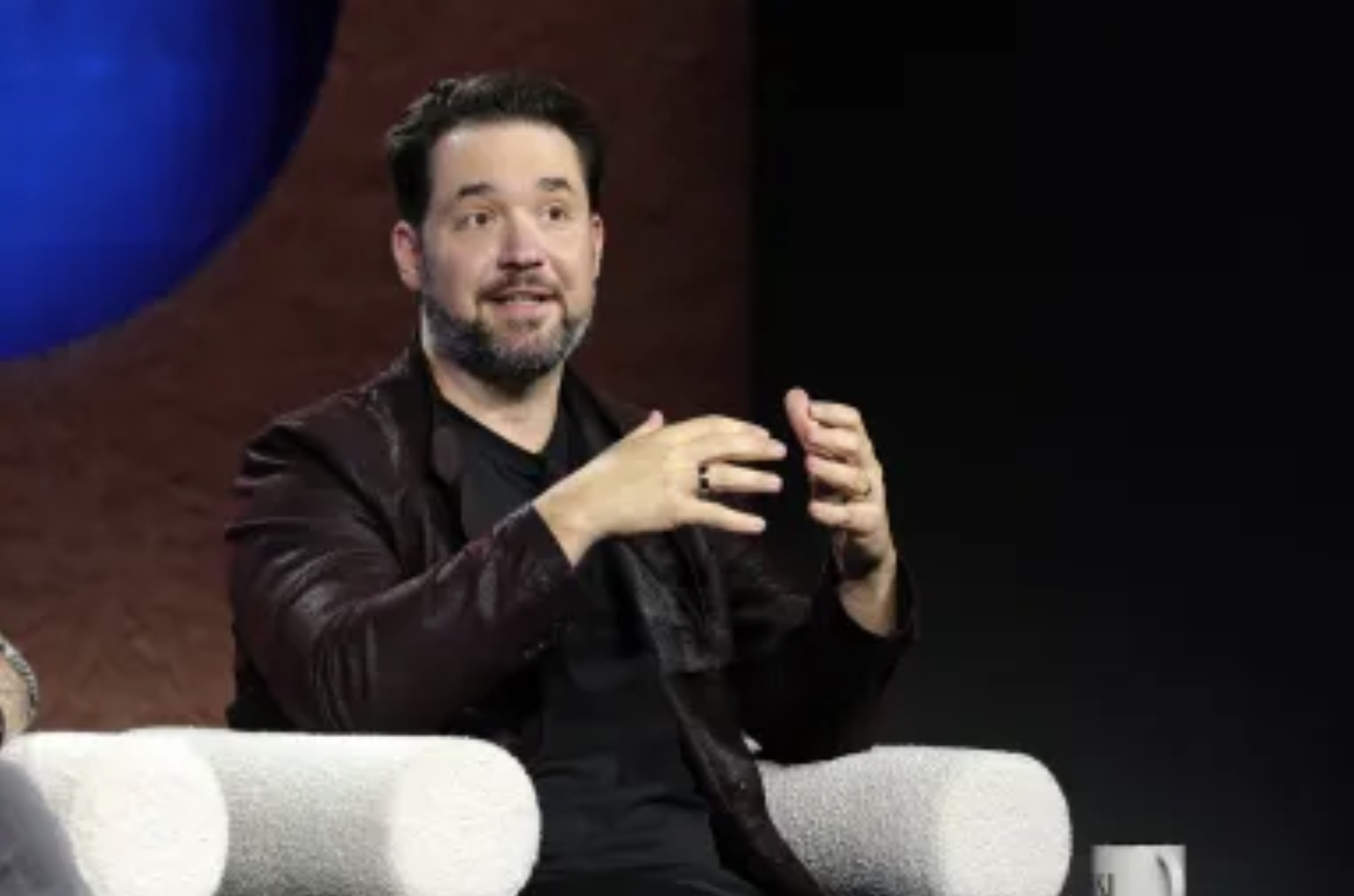
Reddit co-founder Alexis Ohanian warns the internet has become less human due to bots and AI slop. (Dia Dipasupil—Getty Images)
Reddit co-founder Alexis Ohanian says ‘so much of the internet is dead’—and the rise of bots and ‘quasi-AI, LinkedIn slop’ killed it
Sasha Rogelberg; Oct 15, 2025
In the last four years, the “dead internet theory” emerged as a conspiracy claiming the online world was being taken over by bots and automatically generated content run by an algorithm that would eventually thwart human activity online and control the global population.
According to Alexis Ohanian, investor and Reddit co-founder, there’s some truth to the idea, and a new era of social media will emerge because of it.
“You all prove the point that so much of the internet is now just dead—this whole dead internet theory, right, whether it’s botted, whether it’s quasi-AI, LinkedIn slop,” Ohanian said speaking to the hosts of the TBPN podcast on Monday. “Having proof of life, like live viewers and live content is really f–king valuable to hold attention.”
Last month, OpenAI founder and CEO Sam Altman came to a similar conclusion: “i never took the dead internet theory that seriously but it seems like there are really a lot of LLM-run twitter accounts now,” he wrote on X.
In a very 21st century trajectory, the theory began as a 2021 post by “IlluminatiPirate” on the Agora Road forum and was soon written about by The Atlantic under the headline “Maybe you missed it, but the internet ‘died’ five years ago.” (As of press time, the original thread had been viewed over 363,000 times.) Data from cybersecurity firms increasingly confirms the worldview of the IlluminatiPirate. Nearly one-third of all internet traffic has come from bots over the last 12 months, according to data from cybersecurity platform Cloudflare. Meanwhile, Imperva’s “Bad Bot report
While these bots’ actions can be as innocuous as generating generic, if not nonsensical, comments on social media posts, they can also generate fake pageviews, user impressions, and session durations, skewing and inflating metrics that may be used to misrepresent a company’s strength. As business leaders and economists begin to take concerns of an AI bubble more seriously, the proliferation of loosed internet bots has become more alarming because of their potential to distort data key to assessing the sustainability and growth of emerging tech companies.
Making the internet more human
For Ohanian, the solution to mitigating the power of bots on the internet is perhaps more romantic: Apps should be more human.
“I think we’ll see a next generation of social media merge that’s verifiably human because it’s all going down in the group chats now—that is not novel tech,” Ohanian said. “There’s got to be some next iteration of that, because that’s where all of us are getting our, really, best info now.”
Described by New York Times culture critic Sophie Haigney as the “anti-social media,” the group chat has emerged as a popular—and private—forum for discussing cultural phenomena, personal lives, and politics.
Semafor Editor-in-Chief Ben Smith reported in April that group chats were so influential they had even “changed America.” A Signal group named Chatham House, revolving mainly around venture capitalist Marc Andreessen, had “fueled a new alliance” between the tech industry and the right wing of U.S. politics, Smith reported, while uncovering other “power group chats” on Signal, WhatsApp, even a China-friendly group on WeChat.
The hypothetical switch to platforms based on more intimate human interactions is in part a result not only of the rise of bots, but of a crowded AI space that leaves only room right now for companies looking less to challenge juggernauts like OpenAI and Google, and more to create off-the-wall products to delight, Ohanian noted.
“I think we’re gonna get really delightful, fun consumer experiences where some scrappy founders in Brooklyn, like the Doji guys can say, ‘Hey, let’s make shopping fun again using this tech,’” he said.
Doji is an AI-based platform that allows an avatar of users to try on various outfits. Ohanian’s venture capital firm Seven Seven Six participated in the startup’s $14 million seed funding round funding this year.
“How do you build the stuff that’s actually dope for the end consumer?” Ohanian said.
Reddit accounts with ‘fishy’ bot-like behavior will soon need to prove they’re human
Human verification ‘will be rare and will not apply to most users,’ according to Reddit CEO Steve Huffman.
Emma Roth; Mar 25, 2026
Reddit is taking new steps to identify bots on the platform — a process that may require some users to confirm that they’re human. In a post on Wednesday, Reddit CEO Steve Huffman writes that the company will introduce a labeling system for accounts registered as bots, and ask users with “automated” or “fishy behavior” to verify that they’re human using methods like fingerprint scanning or submitting their ID.
With this update, developers can register automated accounts with Reddit, which will then receive an “[APP]” label. However, Reddit also notes that it will be on the lookout for unlabeled accounts with suspicious behavior. “If something suggests an account isn’t human, including automation (hi, web agents), we may ask it to confirm there’s a person behind it,” Huffman writes, adding that these cases “will be rare and will not apply to most users.”
Reddit will ask users behind suspected bot accounts to verify that they’re human, and is exploring several verification methods to do so without actually identifying who the person is. That includes asking users to complete a passkey check, such as scanning their fingerprint on a smartphone, or entering a PIN. It’s also looking into using third-party biometric services, like the Sam Altman-backed World ID, which uses an eyeball-scanning orb to verify humanness.
Huffman brings up third-party ID verification services as well, which he says are “the least secure, least private, and least preferred” verification method. He adds that the UK, Australia, and some US states already require it to support this type of verification. Suspected bot accounts that are unable to verify their humanness “may be restricted,” according to Huffman.
Last year, Reddit began testing account verification for brands and individual users. Huffman hinted at launching a bot verification system in a letter to shareholders in February, and floated the idea of using Face ID to verify a user’s humanness during an interview on TBPN this week.
Along with this update, Huffman says Reddit is going to make reporting suspected bots “easier and more flexible” — though the platform isn’t going to come down too hard on all accounts using AI to write. “We’ll monitor its usage and see what happens as we crack down even more on automated accounts,” Huffman says. “Our current focus is to ensure there is a real, live human behind the accounts you’re seeing.”
Thoughts?
Prove you’re not a bot by commenting something other than offering me SEO services so this blog can go from 50 readers a day to 51 readers a day. What do you think about dead internet theory, singularity, and the increasingly humiliating possibility that a lot of “human discourse” was never all that human to begin with?
My personal opinion is that there were always far fewer creative minds on earth than we imagined, and that much of the world is manufactured by our AI overlords. I keep seeing the same names in comment sections, over and over, and I genuinely start wondering where the other millions or billions of people are. Chinese social media I guess?