Science Be Damned
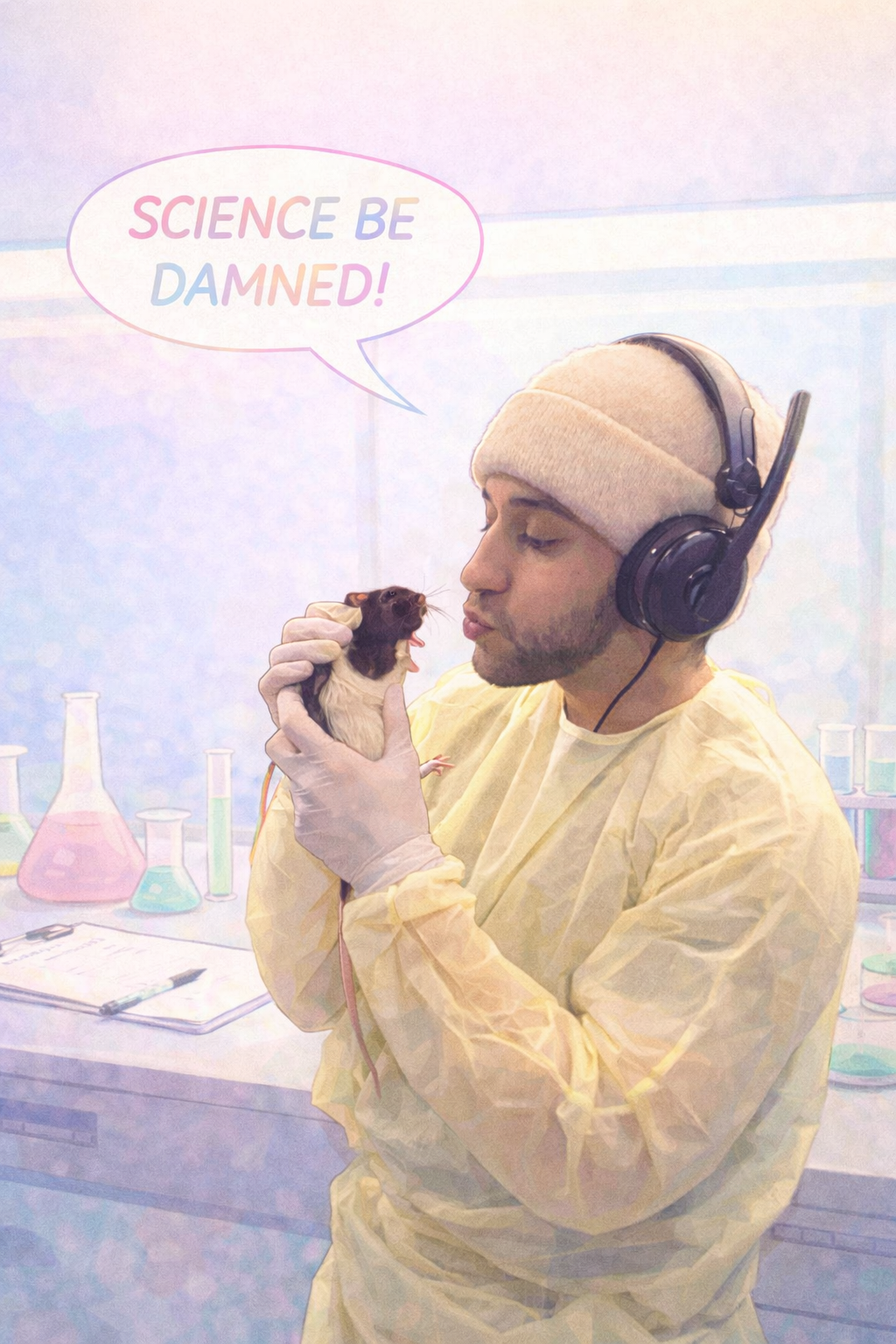
Science Says!
I hate prefacing this essay this way, but I’m team #sciencesciencescience (that’s an HHHH reference nobody will get):
I keep up with science stories, from the oversensationalized clickbait to esoteric articles.
I graduated from one of Florida’s top schools with really good grades.
Some of my best friends are scientists!
Science is not a game of Simon Says.
It’s not “Science says raise your left hand. Science says spin in a circle. Don’t drink milk. Science didn’t say so!”
Yet tabloids treat science that way:
“Science says eggs are good.”
“Science says eggs are bad.”
“Eggs are good again.”
“Science didn’t say so!”
Despite that science doesn’t say things, we are inundated with people and headlines claiming “science says...”
I find it all strange.
I’m not remotely superstitious (not even a little stitious), but I fully appreciated scientists like V.S. Ramachandran reminding the world that you can believe non-scientific things, including religion, regardless of what science says.
Anyone who has actually studied science should understand that it develops over time, that it’s not foolproof. We can only study so many things. So even if there’s good evidence for something you believe, or good evidence against it, that doesn’t obligate you to emotionally renounce it.
You’re allowed to believe things. Maybe science just hasn’t caught up with you yet.
So here is an ode to five things I genuinely believe: Science be damned.
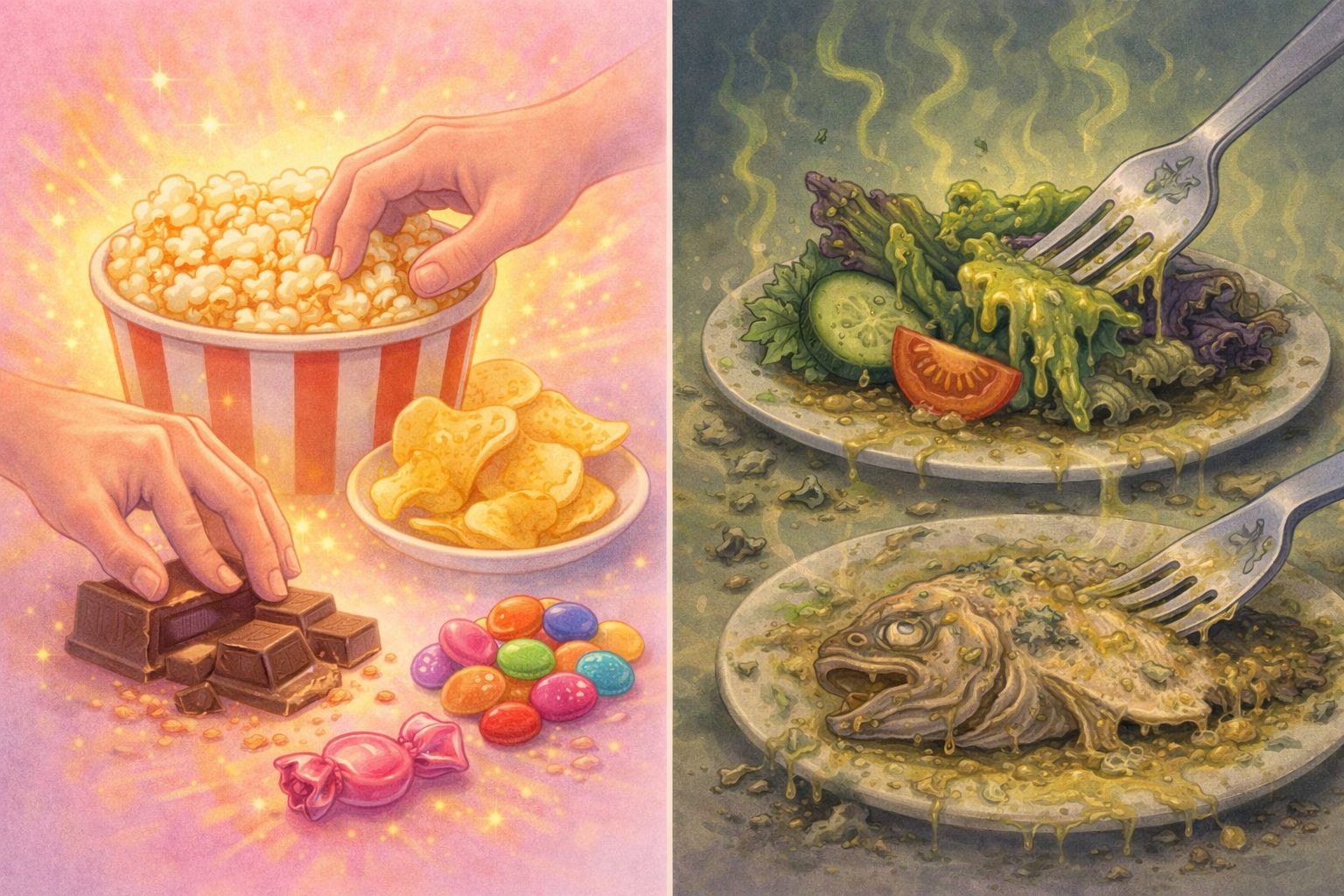
1. Food becomes more addictive when you eat it with your hands.
Yes, addictive. Not tastier. Not healthier. Addictive.
Just consider the foods you eat with your hands and the feeling they give you: popcorn, potato chips, pizza. Hell, even vegetables become suspiciously compelling once there’s a dip involved.
I looked into this. I found a bit to back me up.
Still, there are at least two plausible pathways here, even if the literature hasn’t caught up. First, maybe there’s something chemical going on. Something primal. Something beautiful. Something I would very much like to be true. Second, if we want to be boring and logical, there’s a mechanical explanation: eating with your hands is a fidget. Lighting a lighter. Clicking a pen. Using a fidget spinner. Movement itself is addictive, so why wouldn’t eating movements be?
Nature’s shovel is just a superior utensil. Indians get this. Dumb racists who judge Indian culture do not. Until they eat popcorn.
Try eating popcorn with chopsticks and see if you eat as much as you do with your bare paws.
(Pedants’ note: there is no direct research showing that eating with your hands is “addictive,” but there are three adjacent mechanisms that could explain why it feels that way. First, oral–sensory feedback: foods that involve touch, texture, and manual handling tend to increase sensory engagement and reward salience. Second, motor repetition and reward loops: repetitive hand-to-mouth movements resemble other reinforcing behaviors like fidgeting, pen-clicking, or even smoking, where the motion itself becomes part of the reward. Third, portion control effects: studies consistently show that using utensils like chopsticks slows eating and reduces intake, which indirectly supports the idea that hand-eating promotes faster, more compulsive consumption. None of this proves addiction, but it does suggest that “use your hands” quietly hacks multiple reward pathways at once.)
2. The language you predominantly speak changes the way you look.
As in, speaking an East Asian language or Portuguese might give you a more defined mouth than speaking English, especially American English, a language famous for laziness and slack-jawed yokels who can’t be bothered to fully close their mouths while talking.
No, this is not going to veer into phrenology or any of the other unscientific nonsense that gets rebranded every few decades. Some of my very #sciencesciencescience friends insisted this is categorically true and the evidence exists. Others agreed that definitive research really doesn’t. When I asked the first group for links, I got a lot of science cosplay: anecdotes, half-assed studies, and things that looked scientific if you squinted hard enough.
Does that mean this belief is right or wrong? Again, no.
This is something I feel to be true, and I struggle to explain. I’ve seen people move to a country, adopt a language, and slowly begin to resemble that culture. Genetics didn’t change. Epigenetics isn’t nearly powerful enough to explain it. So something is happening with muscle fibers, habitual expression, or facial tension that we’re not fully capturing.
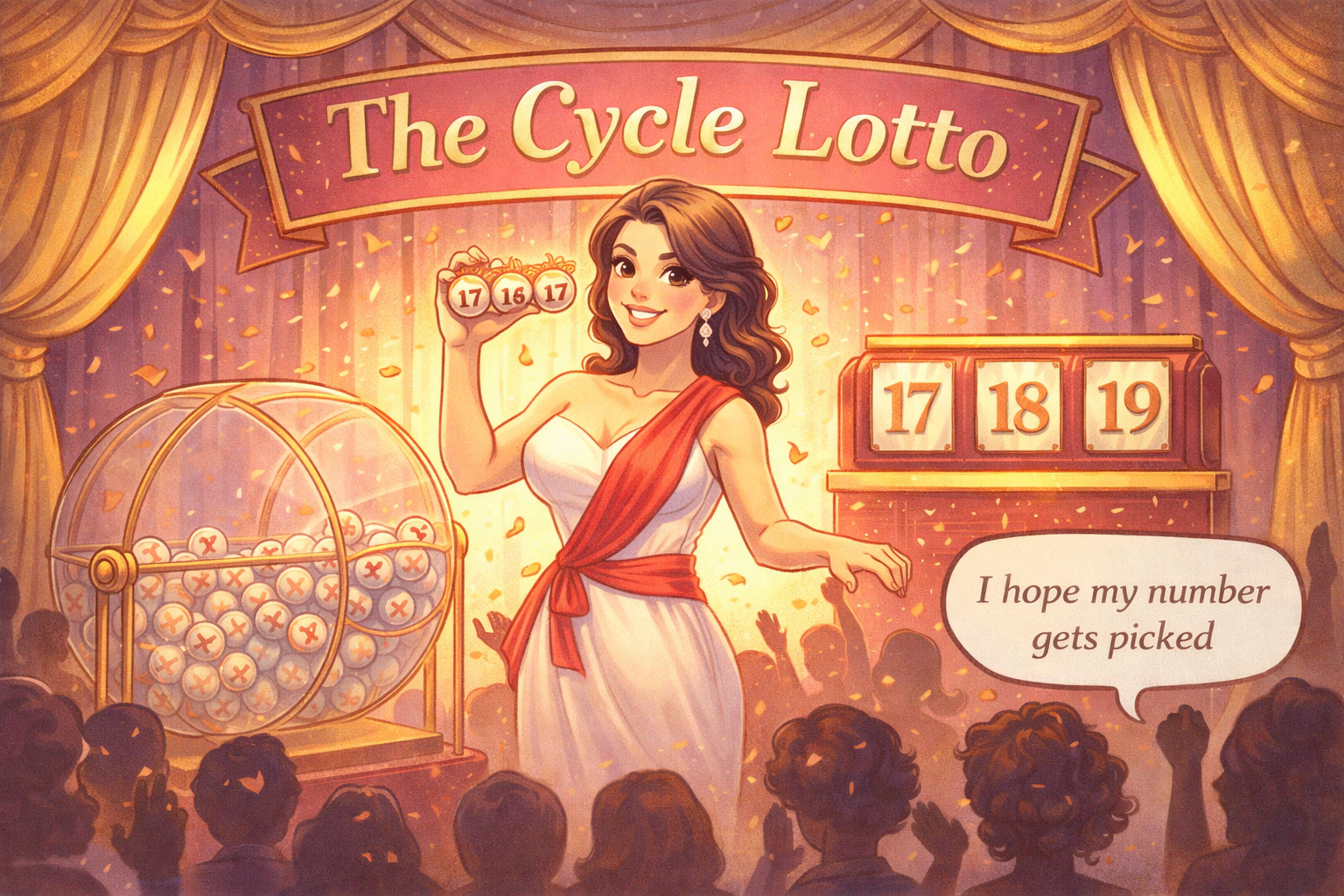
3. Periods can sync through close personal bonds.
Oh boy. Try sitting next to two women who insist this is 100% true, and two who insist it’s 100% not. I have.
Unlike the previous beliefs, this is one where science actively discredits my statement. Studies suggest that period syncing among close friends isn’t real. It’s just coincidence. A coincidence so common that it feels meaningful.
I get it: Periods last different lengths of time. Cycles vary. Alignment is statistically inevitable. Two people with seven-day periods once a month are bound to overlap sometimes. This isn’t astrology or astronomy, it’s statistics.
And yet… I still believe. Or want to believe. Maybe because I was in one high school class where about a dozen girls swore it happened to them, and I never checked if they were telling the truth. Maybe because I’ve heard women talk about it. Maybe because some of my friends insist it’s real with the confidence of someone who has lived it, recanting story after story about how it happened to them.
I can even offer a quasi-scientific explanation. Not science, but also not Star Trek nonsense. Periods are influenced by hormones. Hormones are influenced by emotions. Emotions are influenced by major life events. Two people go on vacation together, bond deeply, flood themselves with oxytocin and serotonin, and bam: early period. Or the opposite. Shared trauma. Stress. Delays. Alignment.
Is this proven? No.
Will I let it go? Also no.
Trust me on this. I’m a man. I know periods.
Note: The idea of menstrual synchrony was backed by a 1971 study by Martha McClintock, which suggested that women living together might synchronize cycles. That study had small samples and weak statistical controls, but the idea exploded. Later, larger and better-controlled studies failed to replicate the effect, and mathematical modeling showed that apparent syncing is statistically inevitable given cycle variability. Modern reviews conclude that menstrual synchrony is best explained by coincidence plus confirmation bias, not by pheromones or bonding. In short: the myth came from early, shaky research, and later science mostly dismantled it. I am aware of this and still emotionally refuse to let it go. See: Wilson (1992), Strassmann (1997), Schank (2001, 2006 reviews), Harris et al. (2013))
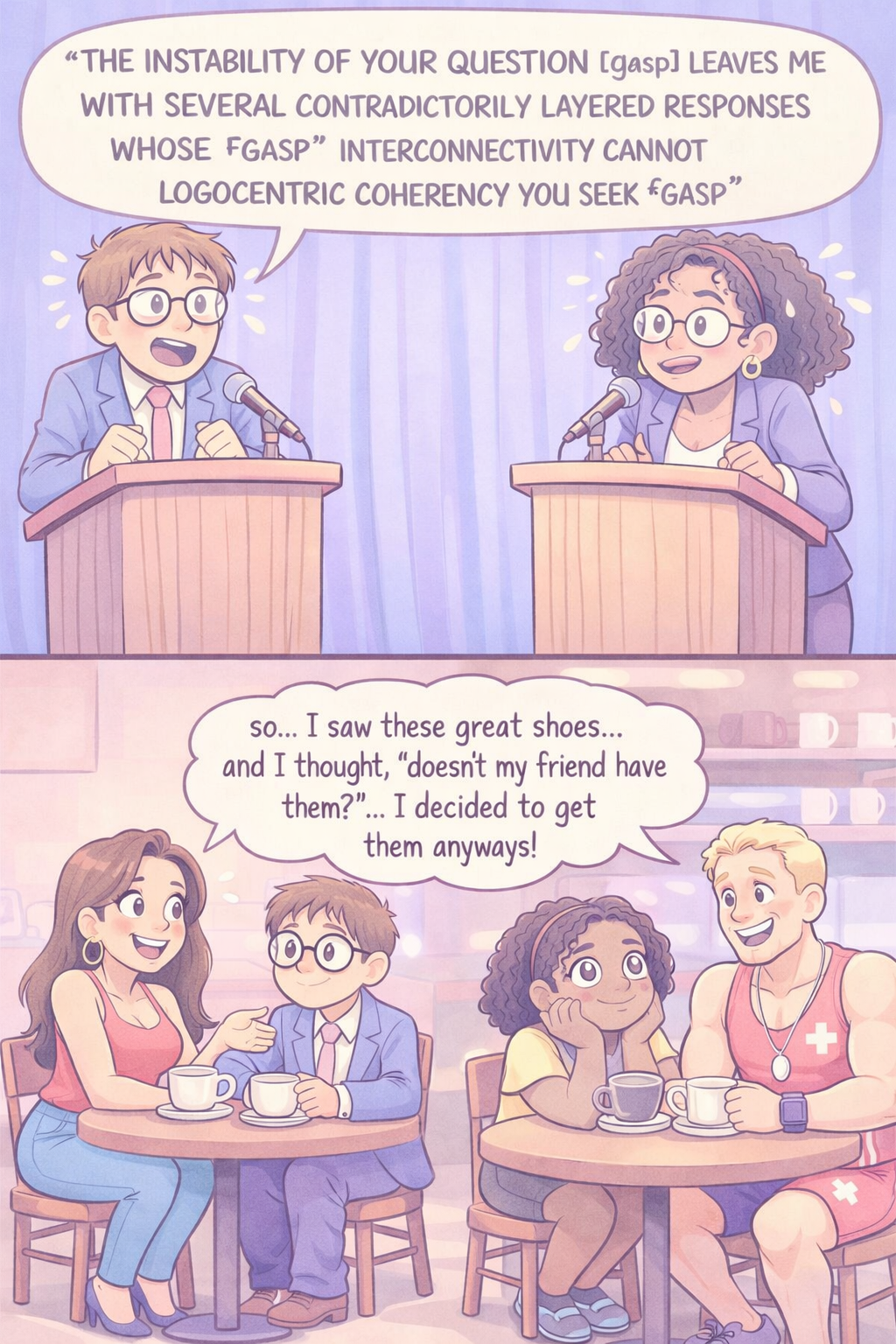
You can’t imagine how many tries I had (with ChatGPT) at this image before deciding ths is good enough.
4. Extremely attractive people talk slower because they’re never/rarely interrupted.
I first heard this crackpot idea on the podcast We Might Be Drunk, and it immediately resonated. I thought of models, gym legends, D-list celeb friends, and miscellaneous hot people I’ve encountered. I remembered times of listening to someone speak painfully slowly and thinking, “Wow. No one else could get away with this.”
I also remembered losing entire thoughts because someone was too attractive, and just letting them ramble. About anything. If you’re hot enough, you get to talk about Flat Earth Theory without anyone else saying a word.
This is obviously anecdotal. But I suspect 99% of people instinctively agree with this, while 1 percent rush to invent edge cases like “the sexy speed-talking nerd” or “the stimulant-powered model.” Somehow, this might be the least controversial belief on the list, even if it feels the least science-y.
(Pedants’ note: No one has formally tested “hot people talk slower because they’re rarely interrupted,” which is a tragic failure of modern science (and proof Adult Science Fairs should be a thing). Several underlying components are supported: research shows that physically attractive people are interrupted less in conversation, are perceived as more competent and persuasive, and are granted greater conversational latitude. There is extensive evidence that high-status speakers are allowed to speak longer, slower, and less efficiently without social penalty. So science hasn’t tested my exact claim, but it has repeatedly confirmed the social privileges that would make it true. Useful areas you could reference if you want to sound annoyingly credible: 1. Research on interruption patterns and status. 2. Studies on the halo effect (attractiveness → perceived competence). 3. Work on conversational dominance and social power (e.g., Ridgeway, Anderson). 4. Communication studies on speech tolerance for high-status individuals)
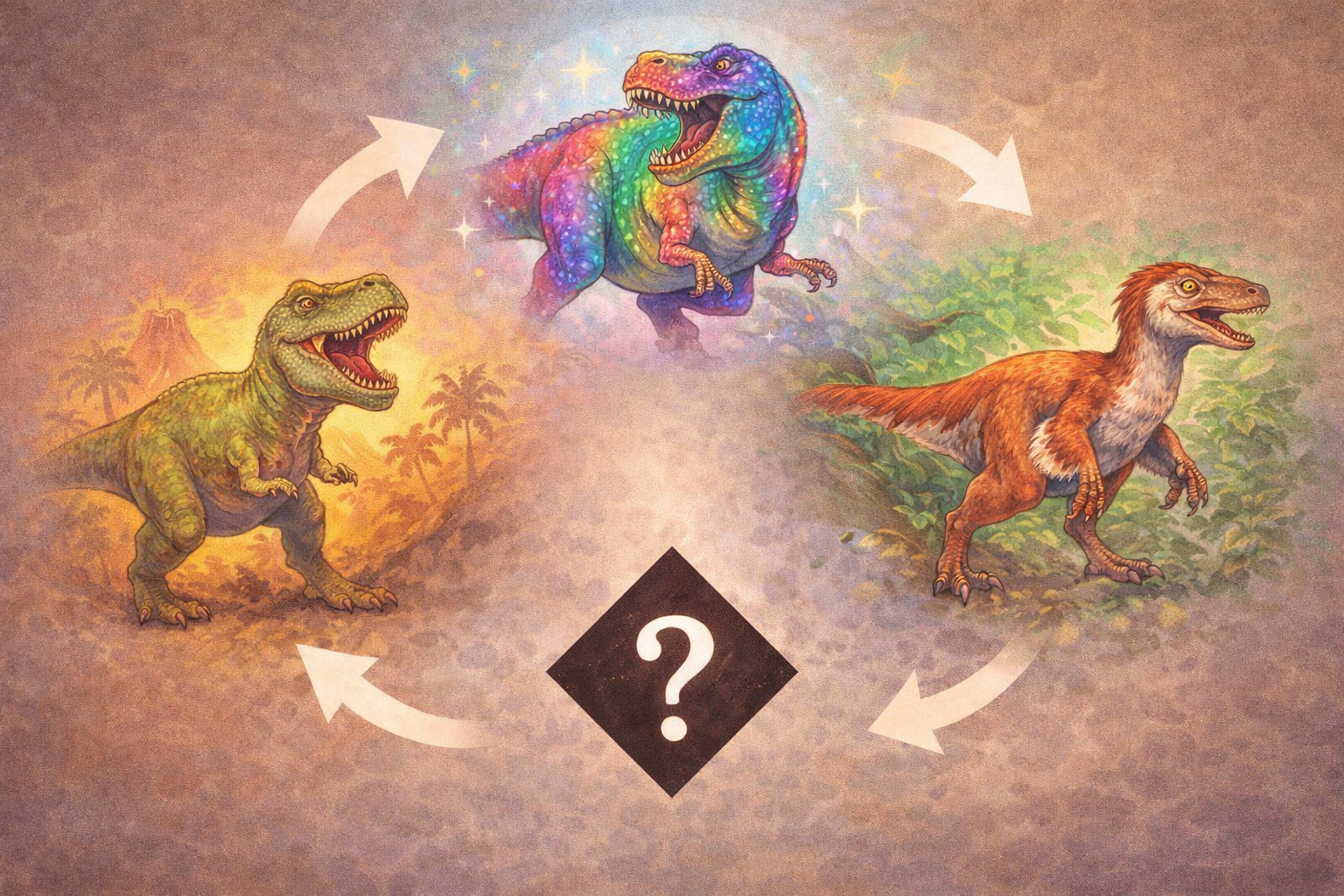
5. Dinosaurs are still wildly misrepresented.
This one really annoys people. Like, really, really, really annoys people.
I believe dinosaurs existed. I understand radiocarbon dating. Hell, I understand how it becomes less precise with older artifacts and how it can be manipulated. And I’m not saying “birds aren’t real.” I’m saying: they’ve been wrong before. Repeatedly. Why should now be sacred?
Every year there’s new canon. Feathers. Colors. Behaviors. Screaming their own names like Pokémon. It’s too much.
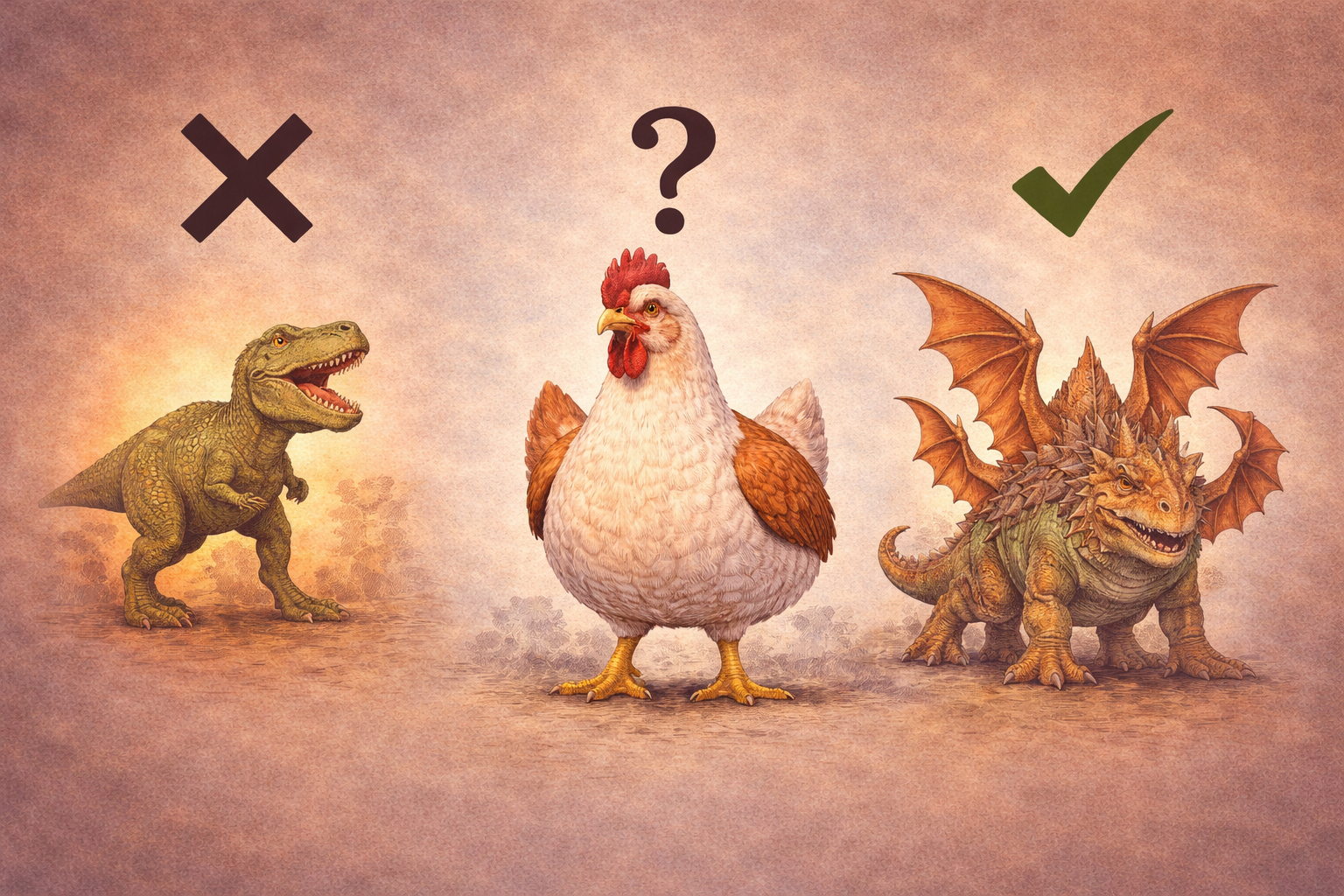
The bigger issue is museums pretending certainty where there isn’t much.
You want to buy into BIG MUSEUM? Fine. Have some class about it. At least be humble, because they don’t put up big bold signs saying, “All skeletons shown are synthetic reconstructions based on fragmentary evidence. We have no idea what these creatures actually looked like.” Or, “This is based on the movie Jurassic Park.”
Science, like philosophy, is strongest when it explains what we don’t know. Radiocarbon dating exists, yes. It’s also imperfect, and half-lives get less reliable over vast timescales. We have fragments, yes. But not nearly enough to be as confident as museums pretend.
People treat science like faith. They insist dinosaurs look close to how they’re depicted, despite never seeing real bones, in much the same way religious people insist on events they never witnessed (queue It’s Always Sunny again). The difference is that religious people usually admit it’s faith. Science absolutists insist they’ve “seen” proof they actually haven’t.
Big Museum really wants you to believe. So we have T-Rex Cafe in Orlando, my vote for the worst themed restaurant on Earth. And T-Rex skeletons, my vote for least likely thing people insist on. I might be more OK with both if the food was better and the scientists were sciencing a bit more.
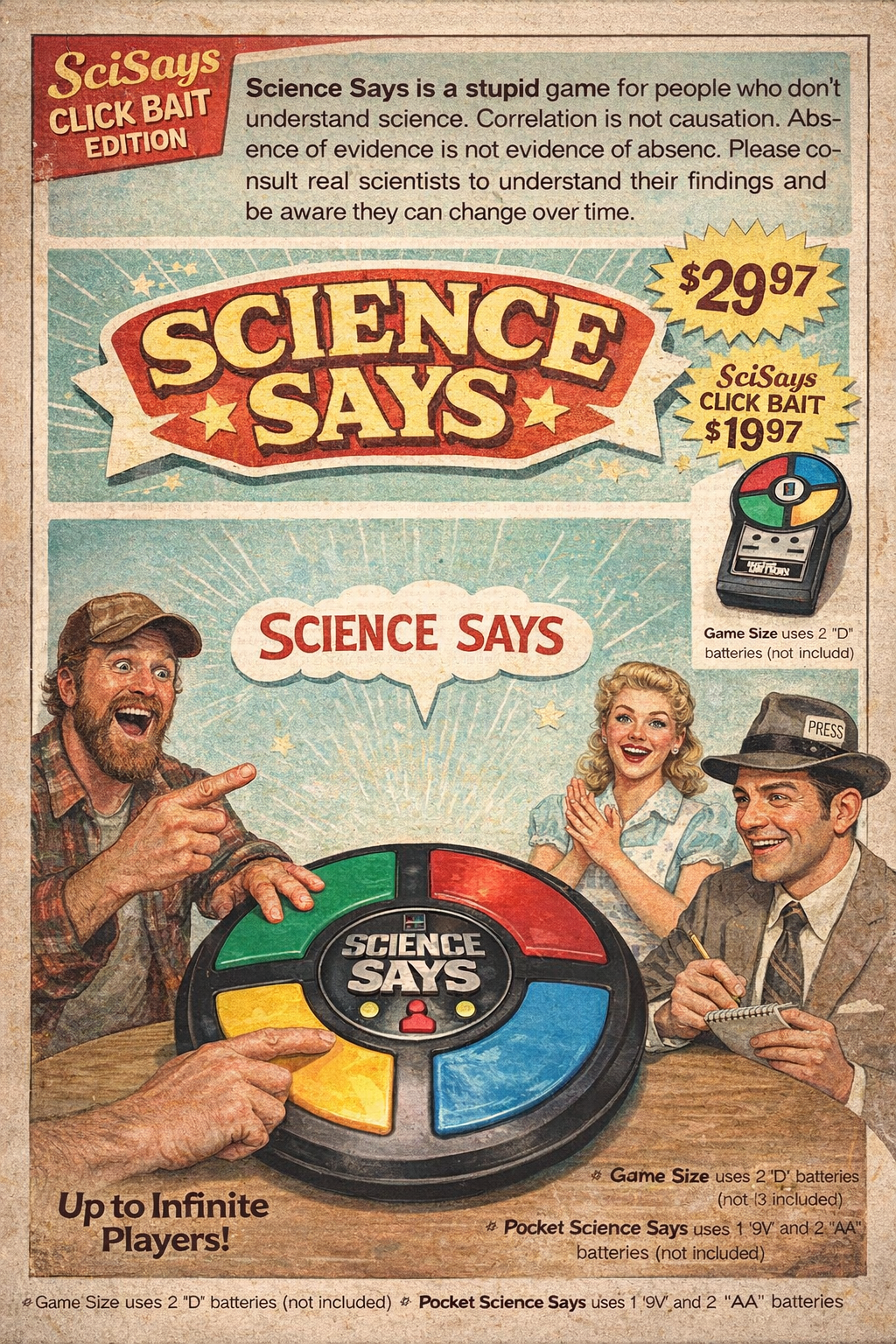
G-d I love this stupid image
Science Doesn’t Say, You Do
Science shouldn’t be deceptive, because that’s how you get vaccine deniers.
Also, it’s okay to believe things, even unscientific things. Except vaccine denial.
The people who treat science like scripture are the ones who need to retake their classes. Nobody gets to shout “science says” at you unless they’re prepared to explain margins of error and methodological limits.
You said what you said, not science.