Repost: David Zucker’s 15 Rules of Comedy
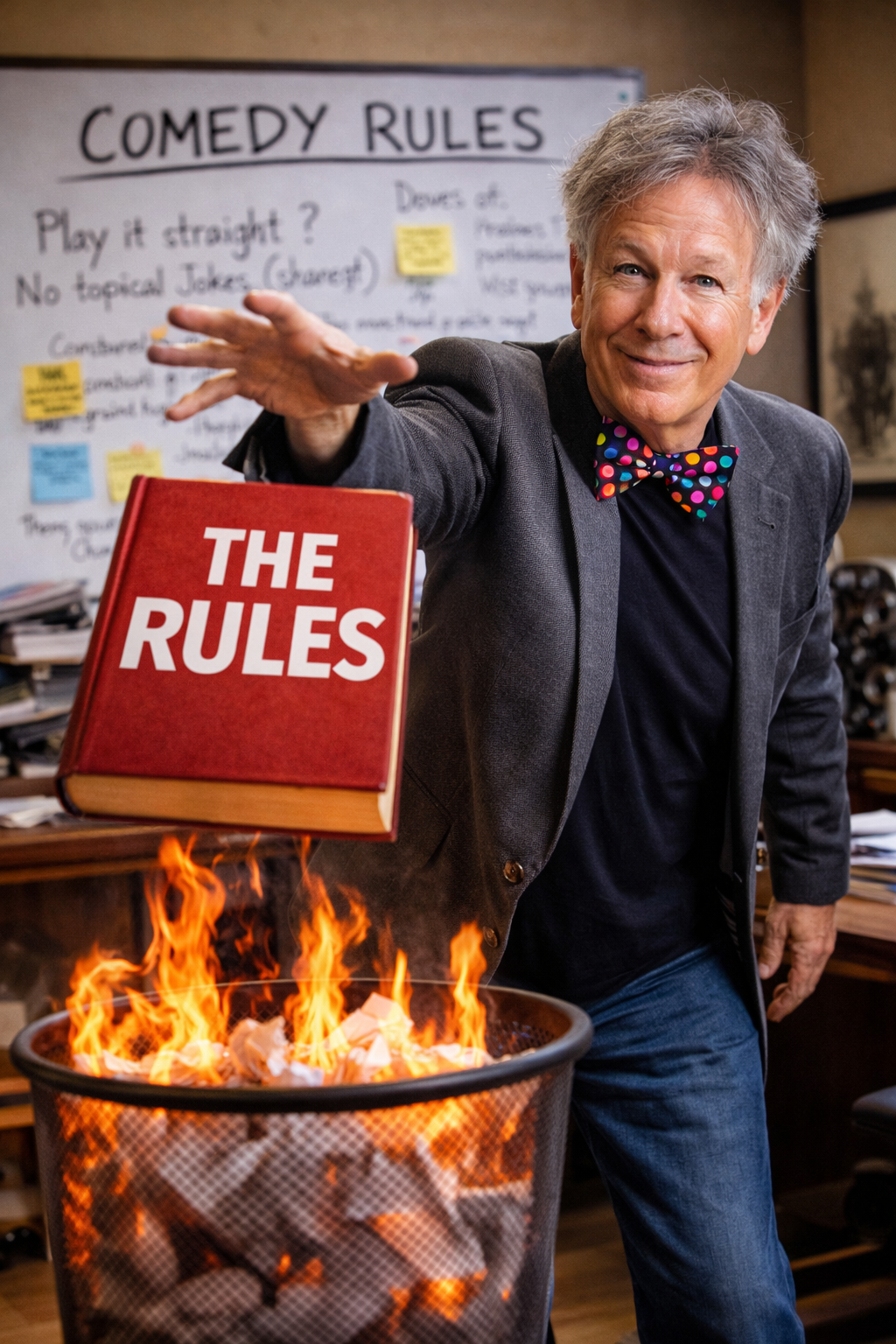
“Comedy Rules”
What’s better for my first GuySpace Repost than comedy legend David Zucker’s 15 rules of comedy? I’m a huge fan of comedy, and these rules genuinely guide how I think about writing. The GuySpace difference is getting excessively informative and diving into trivia for my fellow nerds, pushing back against the culture of cutting everything down to a tweet-sized thought. This site isn’t for tl;dr culture, even if I do give you one up top.
Some background: David Zucker is one third of the legendary ZAZ team (Zucker, Abrahams, Zucker), the minds behind Airplane!, Top Secret!, and The Naked Gun. These guys invented modern parody by treating absurd material with complete seriousness, stacking jokes, and adding microhumor, my favorite humor, perfected later by The Simpsons. This creates art you can rewatch, catching something new each time. Til today, this is an amazing recipe for comedy.
The “rules” evolved during ZAZ’s early sketch and film work in the 1970s and 80s, mostly through trial and error. Later, Zucker and the team began articulating what made their jokes land, turning instincts into repeatable principles. Eventually they were compiled into various versions of the list reposted below, the “15 rules of comedy.”
You can read the New York Times / Chicago Tribune version from 1991 here, behind a paywall, or read it below:
https://www.chicagotribune.com/1991/07/26/a-funny-thing-happens-when-david-zucker-writes-rules/
Alternatively, you can read a shorter, punchier, Reddit-cited list from decades later here:
https://creativecreativity.com/2017/07/30/david-zuckers-15-rules-of-comedy/ Creative Creativity seems to be a now-defunct website, but it has some other nice, short articles worth checking out.
A FUNNY THING HAPPENS WHEN DAVID ZUCKER WRITES RULES
New York Times News Service; Jul 26, 1991
In 20 years of writing, producing and directing comedy, I never once read a book about it. Prior to that, the longest time I ever went without reading a book was perhaps the four years I spent in college. But that makes it no easier to write about.
In writing ”The Naked Gun 2 1/2: The Smell of Fear,” I have relied on 15 simple rules of comedy that were formulated while making films with my brother, Jerry, and my partner, Jim Abrahams. (We used to have 19 rules, until four were thrown out after the Falklands War.)
It has been said that comedy is all but impossible to teach, but we found that it was possible to list certain things not to do. These rules are listed below in no particular order. And please don`t try these at home.
1. Joke on a joke: We never try to do two jokes at the same time. When Leslie Nielsen, who plays the role of Lt. Frank Drebin of the Los Angeles Police Department, delivers a punch line, he always does it straight; he never tries to be funny on top of it. Likewise, if there is something funny going on in the background, the foreground action must be straight and vice versa. An example in politics: Dukakis and Quayle on the same ticket.
2. Unrelated background: A joke happening in the background must be related in some way to the action in the foreground. A good illustration of this rule occurs in ”Naked Gun 2 1/2” as Leslie Nielsen complains to George Kennedy over drinks, ”Is it just me, Ed, or is the whole world crazy?”
As George tries to reassure him that ”no, it`s just a small percentage of the population,” the waiter turns to leave and we see that he`s naked under his apron. Unfortunately, half the audience fails to notice this because they`re still laughing at the silly drink the waiter has brought the lieutenant, a blatant violation of the joke-on-a-joke rule. But at least now they`ll all have to come back to see the movie again.
3. Acknowledgment: Actors in the foreground must ignore jokes happening behind them. In ”Airplane!,” Robert Stack and Lloyd Bridges engage in an argument, while behind them watermelons crash down from the ceiling and Indian spears thud into walls. The actors do a fine job of ignoring the spears and watermelons, but because this bit violated rule No. 2, audiences still didn`t laugh. All in all a disappointment, but nothing like the crash tests of the Yugo.
4. Breaking the frame: It`s usually not a good idea to remind the audience that they`re watching a movie. Robert Hays gets away with it in ”Airplane!” after Julie Hagerty scolds him in an early scene. He turns to the camera and complains to the audience about his plight.
The movie has to be a strong one to withstand more than one or two of these, because you run the risk of breaking the spell. The suspension of disbelief is of prime importance, much as it was during the Reagan administration.
5. That didn`t happen: Completely defying logic is bad, but something that is on and off the screen so fast that we can get away with it is OK. Example: Robert Stack in ”Airplane!” yells to Lloyd Bridges, ”He can`t land; they`re on instruments!” And of course we cut to the cockpit and four of the actors are playing musical instruments. Seconds later, in the next scene, the saxophone and clarinets have disappeared. If it`s done right, no one in the audience will ask where the instruments went.
6. Can you live with it? Once a joke is made, it can`t be allowed to hang around after the initial laughs, like Gary Hart. In ”Naked Gun,” Leslie and George are seated in a car, munching pistachio nuts. In the process, their lips and faces get smeared in red. But in the next scene, when Leslie goes snooping in Ricardo Montalban`s apartment, he`s got to be clean. This rule also applies to personalized license plates. How long can ”HI 2 U” be funny?
However, Jim Abrahams once found a way around this. In the early `80s, he ordered the license plate of his Volkswagen Rabbit to read, ”BOBS MG,” just so when somebody pulled alongside him and pointed out that it wasn`t an MG, he could reply, ”I’m not Bob, either.”
7. Ax-grinding: Belaboring an ideological point past the humor of the joke. We never ax-grind. Except for, well, maybe some environmental stuff. Sometimes.
8. Self-conscious: Any jokes about the movie business or comedy itself. A strict no-no, except for an isolated instance in ”The Kentucky Fried Movie,” where the bad guy listed all his nefarious activities, including ”gun running, drug trafficking, motion picture distribution. . . .”
9. Trivia: A joke understood by so few people as to make it not worth the effort. In ”Top Secret!” a character during an ambush cries out, ”My God, they`re going to kill us all!” An arcane J.F.K. assassination conspiracy reference. Since the movie`s release in 1984, only one person we know of has gotten that reference, not enough to make ”Top Secret!” a hit.
10. Straw dummy: A hollow setup for a joke or when the target is fabricated. Even if the joke hits the target, who cares? We once had an elaborate sequence written for ”Naked Gun 2 1/2” involving Leslie being trapped in an oil barrel processing plant. But the jokes all depended on machines that we made up ourselves in an elaborate and expensive set.
Fortunately, Paramount insisted on deleting the scene, saying they needed the money to pay the lawyers to explain what they were doing to Art Buchwald. 11. Jerry Lewis: We don`t do anything that Jerry Lewis would do. (OK, maybe a telethon, but that`s it.)
12. Technical pizazz: We don`t do lots of car crashes and fancy special effects. Mindless action without a comedic payoff never works, except at the Democratic National Convention.
13. Piling on: When a particular target has had enough and it`s been used up. In the `70s, Nixon jokes. In the `90s, Quayle jokes. Or a reference to Richard Simmons in any decade.
14. Hanging on: Knowing when a joke, or a newspaper article, has gone too long.
15. There are no rules: And so we`ve tried to follow these rules as closely as possible, realizing that perhaps what is most important is knowing when to ignore them. And of course this is all in the interest of making better cinema for the moviegoer.
I feel strongly that the Hollywood community has a responsibility to the public, to play an active role in this effort and to limit the amount of cosmetic surgery done to any one person.
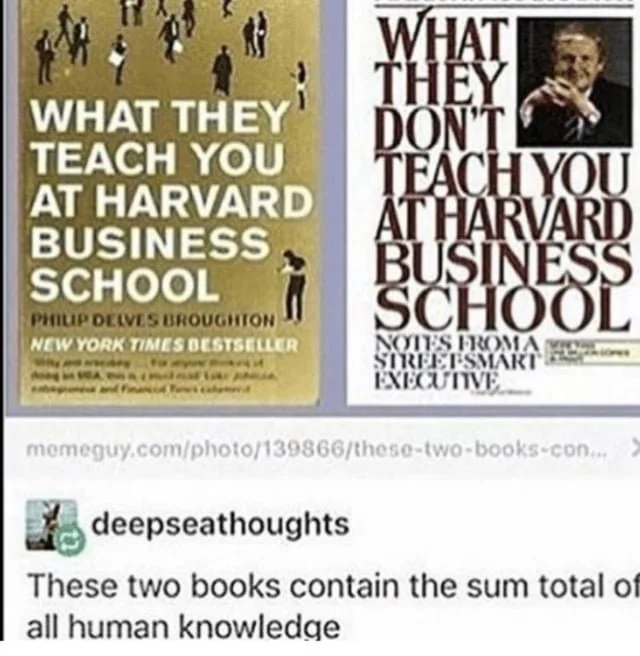
Stolen from Reddit
Outro: 10 More Rules"
Note 1: Other lists simply end, “There are no rules.” I’m a fan of excess, so I’m sticking with the Director’s Cut.
Note 2: The “straw dummy” item is about easy targets, like politicians people always poke fun at (ex: Trump, Biden). It’s not worded good.
And truly, there can be no rules in comedy. That’s why comedy rules.
In Ferris Bueller’s Day Off, Ferris turns to the camera constantly. Norm Macdonald built entire jokes that wandered across countries, over bridges and through tunnels, up and down, left and right, just to deliver one single slice of American cheese And that’s exactly why both the movie and the legend are so loved.
Comedy relies on the unexpected. For some, let’s say Bugs Bunny, that’s absurdism. For others, let’s say Oscar Wilde, it’s all about truth, hence the Wilde quote, “If you want to tell people the truth, make them laugh, otherwise they’ll kill you.” Truth works for Wilde, not Bugs, not Eric Andre, not Steve Martin, and not your ex while she’s ending it with you.
In later interviews, Zucker adds more “rules” that aren’t really rules. I managed to pull an extra TEN!:
Comedy depends on surprise (reversing expectations)
Take serious material and play it straight
Let the audience find the joke
Don’t cut to reaction shots if it kills the joke. [In standup, this translates to timing. If you don’t give the audience space to laugh, they won’t laugh, and they won’t listen.]
Design scenes so jokes can be removed. [Sometimes less really is more. Just not on my blog.]
Write with confidence before shooting (no improvising)
Use real life and existing movies as raw material [Again, more of a ZAZ signature than a universal rule.]
Irreverence is key
Comedy is both science and chaos
There are no rules.