
James Andrew Selby reviews Kill Bill: The Whole Bloody Affair
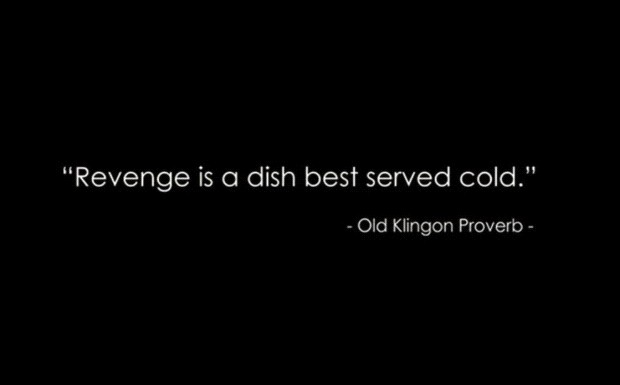
(Fig. 1) Kill Bill: Vol 1 (2003) intro. Courtesy of Lionsgate.
Wanting More
Tarantino’s Best Film, But Is It The Best Version?
James Andrew Selby; Feb 21, 2026
Quentin Tarantino, currently in the zeitgeist almost as much for his non-existent looming “final” film as he is for his actual released ones, has said that as, first-and-foremost, a showman, he wants to retire from filmmaking leaving audiences still “wanting more.” No other film released by the sixty-two year old filmmaker, in his thirty-four year career, has succeeded as resoundingly in this goal as Kill Bill.
The packed cinemas across Israel this weekend, paying 45 ILS per person to sit through an almost five-hour movie that they could watch, in an almost identical format, for free, at home, only adds to the mountain of pre-existing evidence of this desire for “wanting more.” More Tarantino. More Bill. But the interesting thing is, there isn’t actually that much more in The Whole Bloody Affair.
The noticeable differences are few and far between: there is an opening dedication to Battle Royale director, Kinji Fukasaku, the O-Ren Ishii anime chapter has an added sequence (Fig. 2), the ‘House of Blue Leaves’ fight is a bit longer, and now in full colour (although evidently never intended as such, as a handful of the ‘Crazy 88’ explode into colourless water-like blood). There are a few extra shots interspersed here and there, and a Fortnite-styled post-credit rendition of the ‘lost-chapter’ that would have bridged the two volumes in lieu of an intermission… So then, why didn’t it?
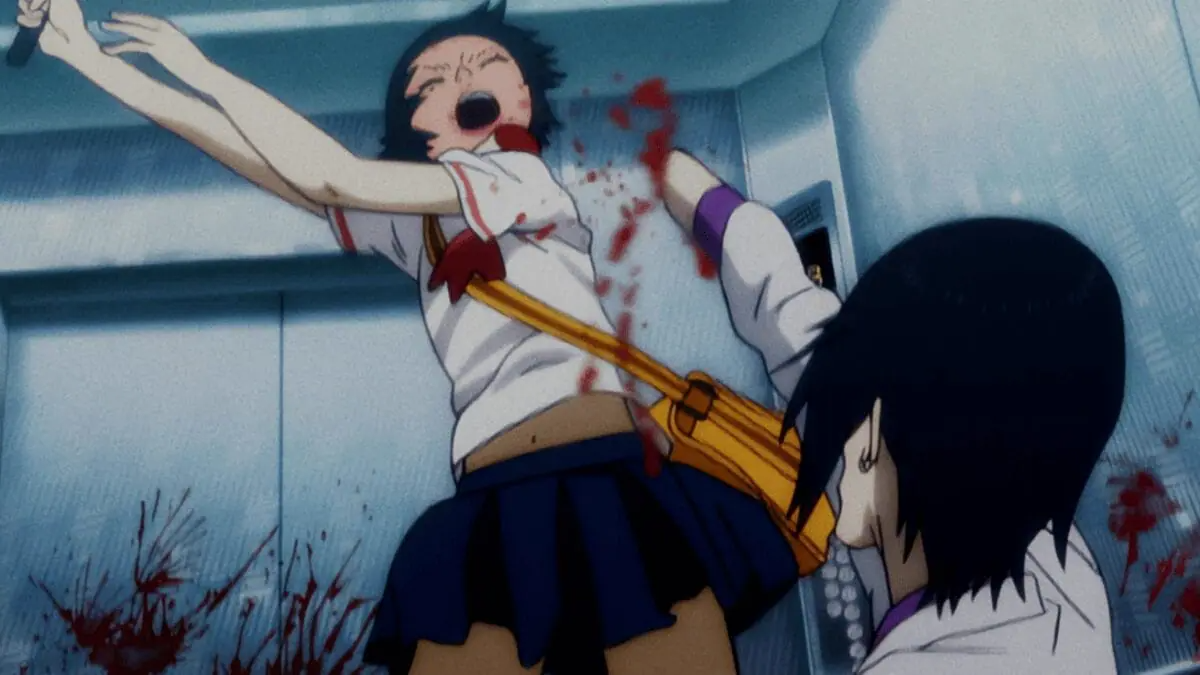
(Fig. 2) Still from from the added elevator scene. Taken from Discussing Film, courtesy of Lionsgate
Well, length aside, editing Bill’s two volumes to play back-to-back as one big, epic, movie, does little to mitigate the fact that these are two very different, albeit complimentary films. What has been cut to join the two is the most revealing of this fact: pieces like the excellent cliff-hanger reveal, originally placed as the final line of Volume 1; the heavily noir-styled monologue to the camera at the beginning of Volume 2 (establishing a very different tone for the audience); and, crucially, the ‘Old Klingon Proverb’ (although another Star Trek reference did survive) serving as the opening title card of Volume 1 (Fig. 1), and might as well also be the thesis statement for the entire project.
The Shakespearean treatment of the Wrath of Khan quote establishes the transcendental treatment of genre material that defines Bill’s identity. Tarantino has stated before that he dislikes critics combing through his films for references to other media, as if to “match wits” with him, but that misses the point. These aren’t simple plagiarisms, but tools being wielded, often in a superior way than their actual source materials, and sometimes even weaponizing a sense of reverie with them.
The decision to apply Spaghetti Western operaticism to Japanese Yakuza and Chambara aesthetics, Blaxploitation funk to Shaw Bros-style Kung Fu fights (Gordon Liu effectively filling in for Lo Lieh’s pointed character archetype from Clan of The White Lotus), Giallo angling with the RZA’s Shaw Bros. influenced compositions; the switching between aspect ratios, colour and black-and-white, the confluence of diegetic and non-diagetic music, is all the type of purposefulness that doesn’t just craft an identity but heightens the materials along with it. Even the Dragon Lee (‘Bruce Lei’) jumpsuit (not Bruce Lee, as one may first assume, but a rip-off of a rip-off) featured in the second half of Volume 1, and the miniature Tokyo skyline looking like it’s been reused from a Godzilla movie (GMK, specifically), serve a purpose greater than simple homage. Think more Joseph Cornell and less Ye Yongqing.
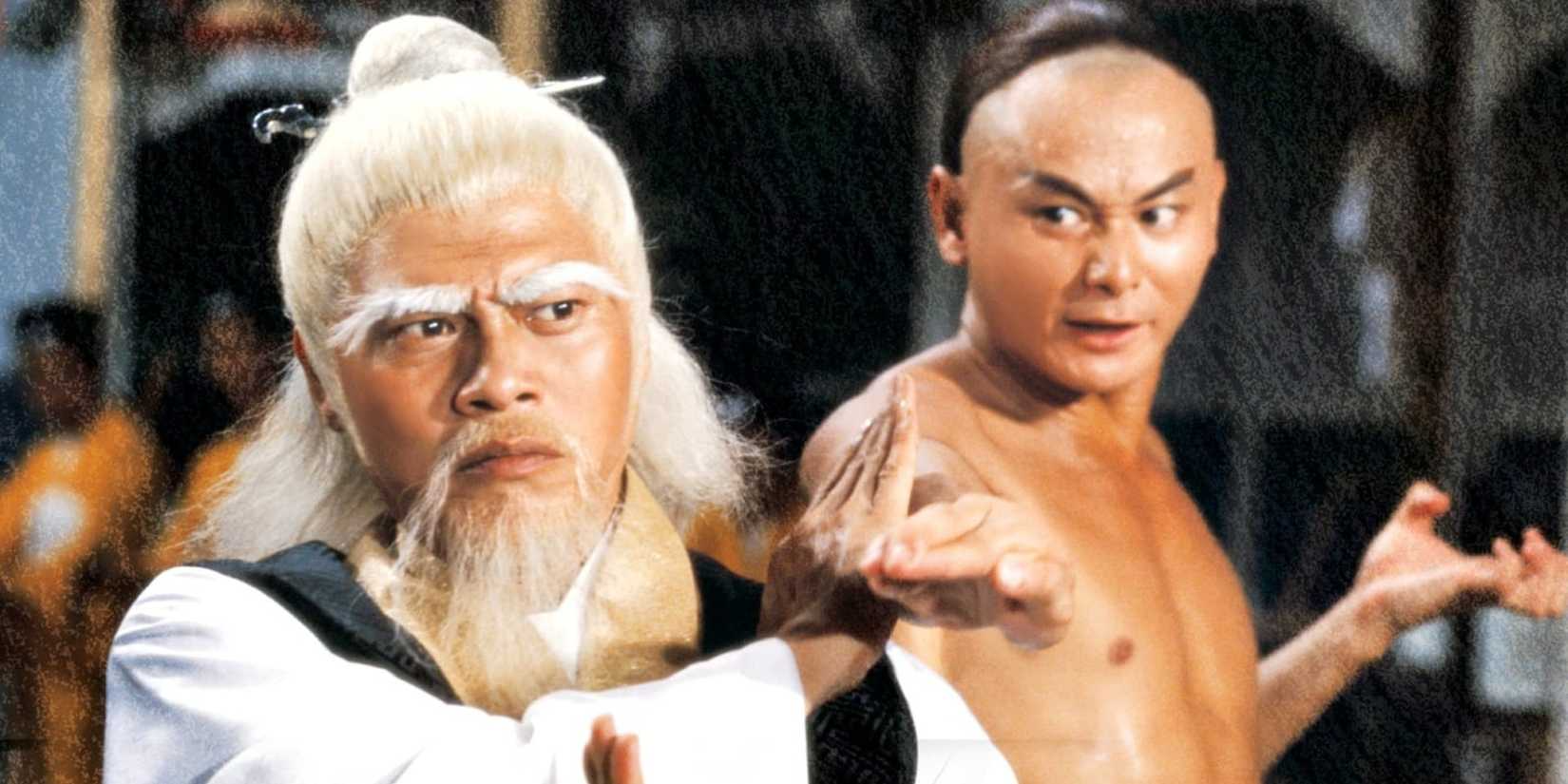
(Fig. 3) Still of Lo Lieh in Clan of the White Lotus (1980). In this scene, he fights Gordon Liu, who would go on to play Pai Mei in Vol 2. (taken from Collider.com)
This is mostly done better within the frenetic exuberance of Volume 1, than it is with the more purposefully-paced mythic quality of Volume 2 (again, both remaining equally as distinct from one another in The Whole Bloody Affair). But both demonstrate a quality that helps to make this Tarantino’s best film. While Tarantino has established himself as the face of dialogue-anchored set-pieces (generally one character conveying power by tirelessly monologuing to another character who, realistically, would have rolled their eyes several times over, gotten up, and left the room) his filmmaking is often better when he finally lets his characters shut the fuck up.
There is a level of mastery to the direction of these movies (that is, when characters aren’t monologuing to one another) so emphatically on display that is seldom seen again, before or after in the director’s filmography. The action choreography is wonderful, fun, and shot with a strong sense of personality; montages propel the viewer like a rollercoaster (even set pieces like The Bride stalking Budd from outside of his trailer feel like a Universal Studios experience); and the aforementioned dialogue (mostly) doesn’t overstay its welcome, especially in Volume 1, flowing smoothly with the pacing of the movie. The aesthetics contain a sense of contradictory playfulness, peppering brutal violence with humour, gore with beauty, disturbing with fun, making the unappealing enticing, keeping audiences on the edge of their seats by regularly making things just a little fucked up.
Perhaps most notably, the music in Bill is given a dialogue-free space to work its magic in ways seldom allowed in Tarantino’s oeuvre, not just balancing the narrative, so that it doesn’t feel like a truncated series of conversations (see Inglourious Basterds), but a flowing, emotional, dare I say epic ride. In the almost five hours of The Whole Bloody Affair, the film only starts to drag during the final chapter when Bill drones on about fish murder, truth serums, superhero mythology, relationship dynamics, and whatever else pops into his head—incidentally foreshadowing the direction Tarantino’s filmmaking would take, and potentially even being retroactively mitigated by it.
This all contributes to making Bill Tarantino’s best movie, but it isn’t the main tenant responsible for audiences “wanting more,” which is the mythology built around its world and characters. Watching the two volumes in 2003-2004, I was mesmerized by the tour de force of the direction, and larger-than-life personalities (and fun, showy violence) of its characters. Seeing the film in 2026, after two decades of cardboard derivatives, I’m fascinated by the non-violence. Bill features numerous accoutrements to its world-building mythology–a highly-stylized council of Yakuza bosses, an airplane filled with samurai swords casually resting on seats (an airline for professional assassins? (Fig. 4)), ads for fictional brands, a camera gliding godlike over rooms catching fleeting details like a busy kitchen staff. But in Bill the most crucial mythos, like in most good fiction, is created through what we don’t see.
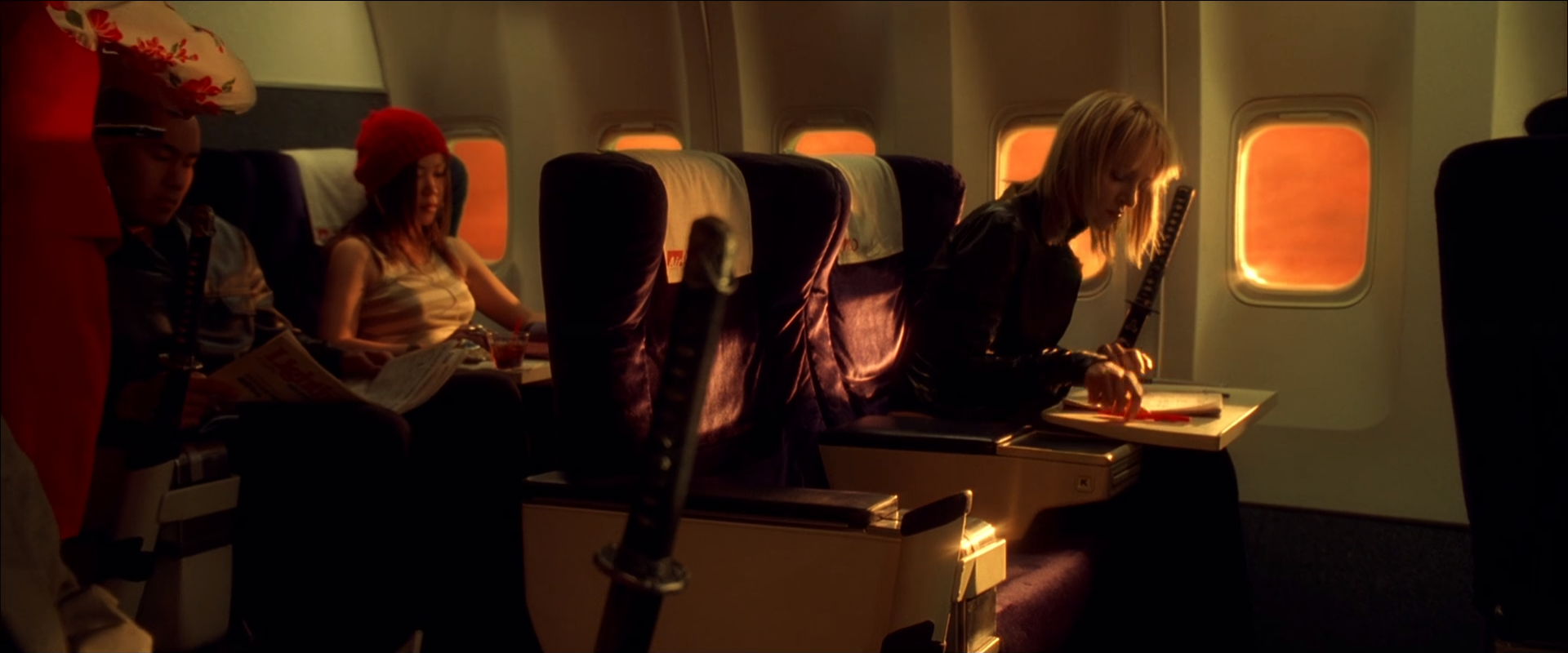
(Fig. 4) In Vol 1, The Bride’s name appears briefly on her plane ticket. Note the katana-holders. (Courtesy of Lionsgate.)
The world of Kill Bill doesn’t feel like those of most action movies that come into existence for the length of its runtime, and those residing in it, while larger than life, are but tiny pieces existing in it. The characters, namely the former members of the now disbanded “Deadly Viper Assassination Squad,” aren’t simply creative place fillers; they convey a sense of pathos—unelucidated character dynamics, referring to inside jokes, romances, falling outs and, of course, betrayals. Roger Ebert, in his original review of Volume 1, wrote that “the film is not about anything at all except the skill and humour of its filmmaking.” I disagree.
The characters in Bill convey a sense of history, affection, resentment, broken relationships, and the type of passion that can only come from having most of that narrative-glacier remain under water. As The Bride achieves each individual act of revenge, and each of these characters finally becomes, as Vortigaunts would say, “untethered” from this world, there is a sense of loss and regret alongside the catharsis. Even an alcoholic, living alone, in a trailer, in the middle of nowhere, is chock full of pathos. Watching these films edited together as one highlights these characters’ connections to one another, and it does so without additional footage.
But there is added footage. The additional sequence in O-Ren Ishii’s backstory fits in almost seamlessly, albeit unnecessarily, with the original animation (one suspects it was created, because it was felt that there wasn’t enough extra content to justify the product). But the feeling drawn from it isn’t so much that it improves the film, but that Ishii is worthy of a feature length animated film of her own, and since Tarantino demonstrates with this new content that he’s still perfectly capable of residing in, and expanding on this universe, that this is perhaps the direction he should take.
The Bride’s tale of bloody revenge feels less like a self-contained story, and more like the conclusion to a sweeping epic myth, set in a world built on the passions of its writer-director and the various influences of mid-century B-list world cinema, ranging from American neo-noir, to Southern European Giallo and Spaghetti Westerns, to Hong Kong Kung Fu, Japanese Chambara and Yakuza, and Filipino-made, English-language Blaxploitation (Fig. 5), among others.
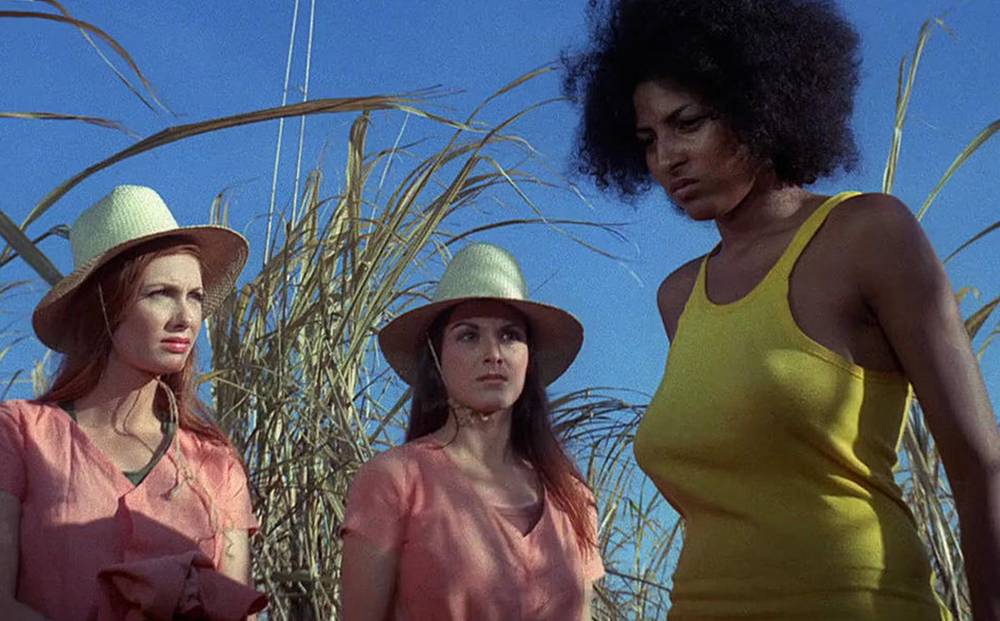
Still from The Big Doll House (1971) (available free on YouTube), an exploitation movie starring Pam Grier. Grier, the star of Jackie Brown, was described by Tarantino as cinema's first female action star.
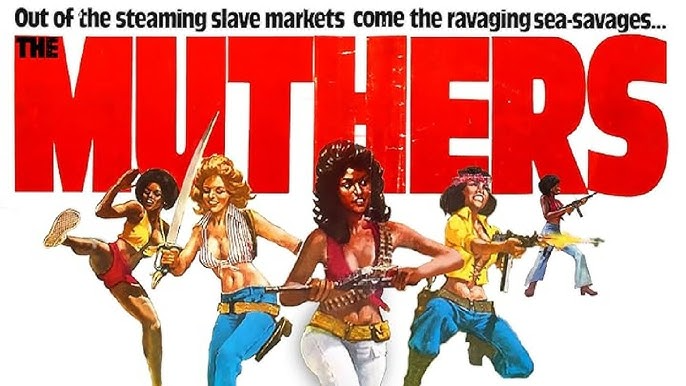
(Fig. 5) The Muthers (1976) stars Jean Bell. Vernita Green’s alias in Vol 1 is “Jeanie Bell”
Yet, The Full Bloody Affair’s audiences are still left “wanting more.” But I don’t think Kill Bill warrants the long-talked about Volume 3. After all, The Bride’s story ends about as satisfyingly as it could… but we could have more Bill. O-Ren Ishii certainly merits that feature-length animated film, and Hattori Hanzō and Pai Mei could further enrich this assassin-focussed world with their comic book-esque histories (although I suspect they’d greatly resemble Shadow Warriors and The Clan of The White Lotus (Fig. 3), respectively). But, most of all, the character both films dedicate the most effort to tantalizing their audience towards is the titular Bill.
While certain wonderful aesthetic touches are diminished by playing these two films as one, such as Bill’s face being concealed like Dr. Claw through Volume 1 (mostly showing his hand playing with the hilt and demon-adorned scabbard of his samurai sword), playing these films together really emphasises just how compelling Bill’s backstory is. While David Carradine’s death in 2009 impacts the odds of getting the character’s animated biography, as previously mentioned by Tarantino, the filmmaker is now also a novelist.
The reader could learn about Bill’s childhood as the son of a prostitute in Mexico with his half-brother, Budd, his membership to the Acuña boys, how he came to study under Hattori Hanzō and Pai Mei, his becoming a professional assassin, first meeting The Bride, and the founding of the “Deadly Viper Assassination Squad.” The alternative takes (either altered, or from a certain character’s perspective) on scenes in the novelization of Once Upon a Time in Hollywood would mean the events towards the end of his life in Bill wouldn’t have to be excluded either.
Kill Bill works a bit better as two separate volumes, but ultimately that’s splitting hairs. Much of the audience went into our showing uncertain if they could sit through the entire four-hours-and-forty-one minute runtime. Just about everyone ended up staying. It’s a film that understands the theatrical experience, and after over two decades with a seeming ease breathes life into its world, and life into the cinema, with the vigour and single-minded determination of someone waking up out of a coma to pursue a globetrotting quest of bloody revenge. It’s one hell of a theatrical experience.
Author bio: James Andrew Selby is a Canadian-Israeli author residing in Tel Aviv. His work was most recently featured on State of Matter magazine.
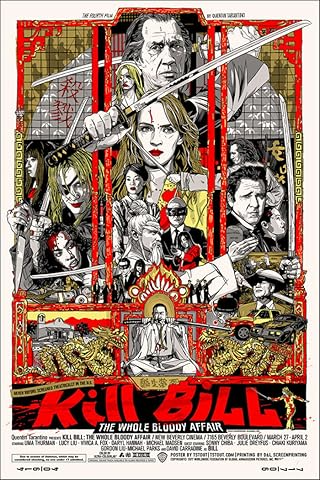
Poster courtesy of IMDB.
Do you think Tarantino movies have too much dialogue, or is that what makes his later films work? Share your thoughts in the comments.