Proportionality + Intent
Words like “Holocaust” and “genocide” have meanings. Attempting to deny those meanings doesn’t “Free Palestine.” It does show a cult’s intent to delegitimize one event with another.
The Holocaust remains the clearest genocide: roughly two-thirds of Europe’s Jews were murdered, with some communities almost entirely erased. Lithuania lost over 90% of its Jewish population. Since Palestine Supporters hear the term “Holocaust” and respond “what about the Christians?” or “what about the Russians?,” but never “what about the Palestinians, who sided with the Nazis?” it’s worth noting nine additional genocides of the 21st century.
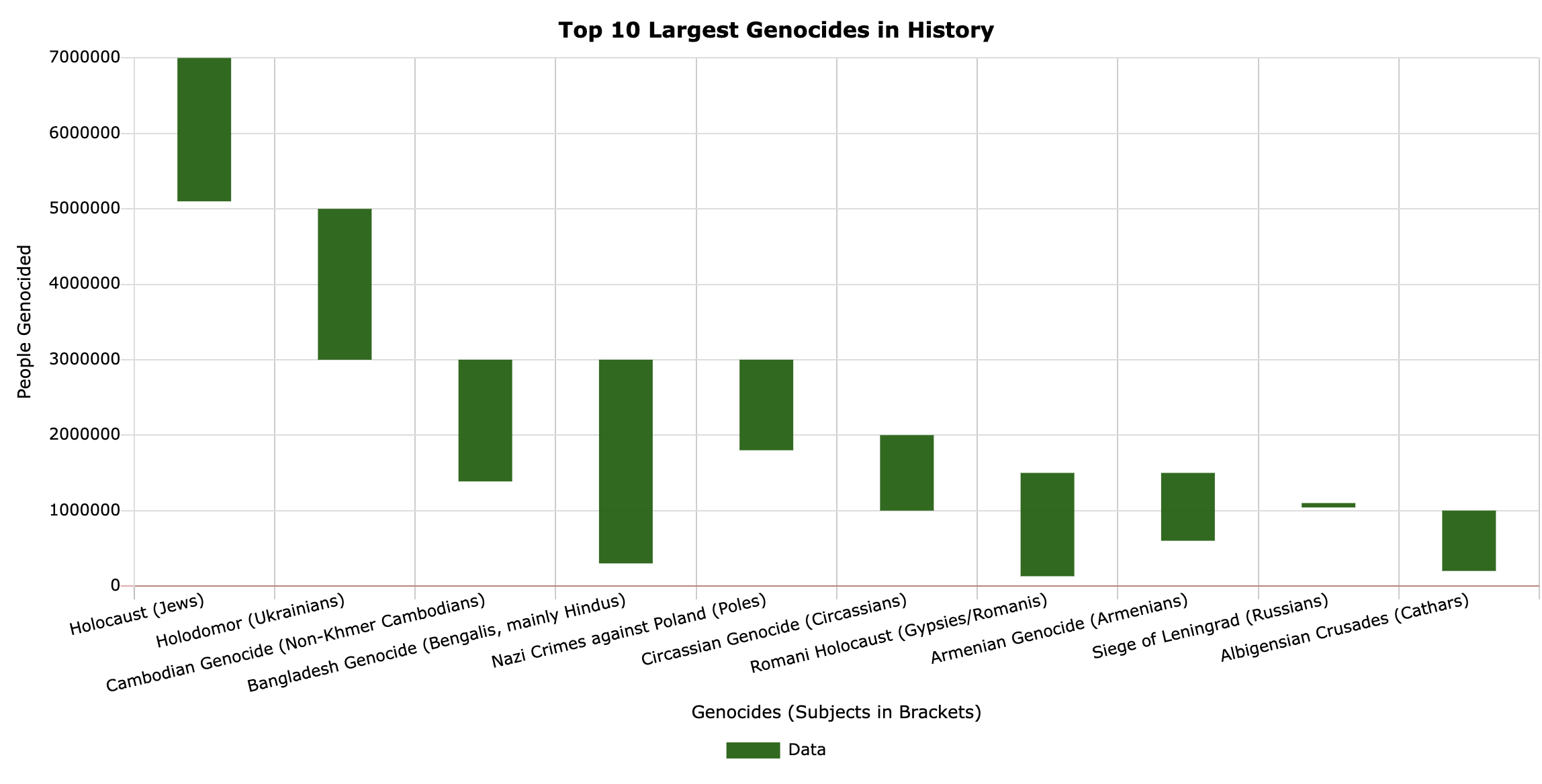
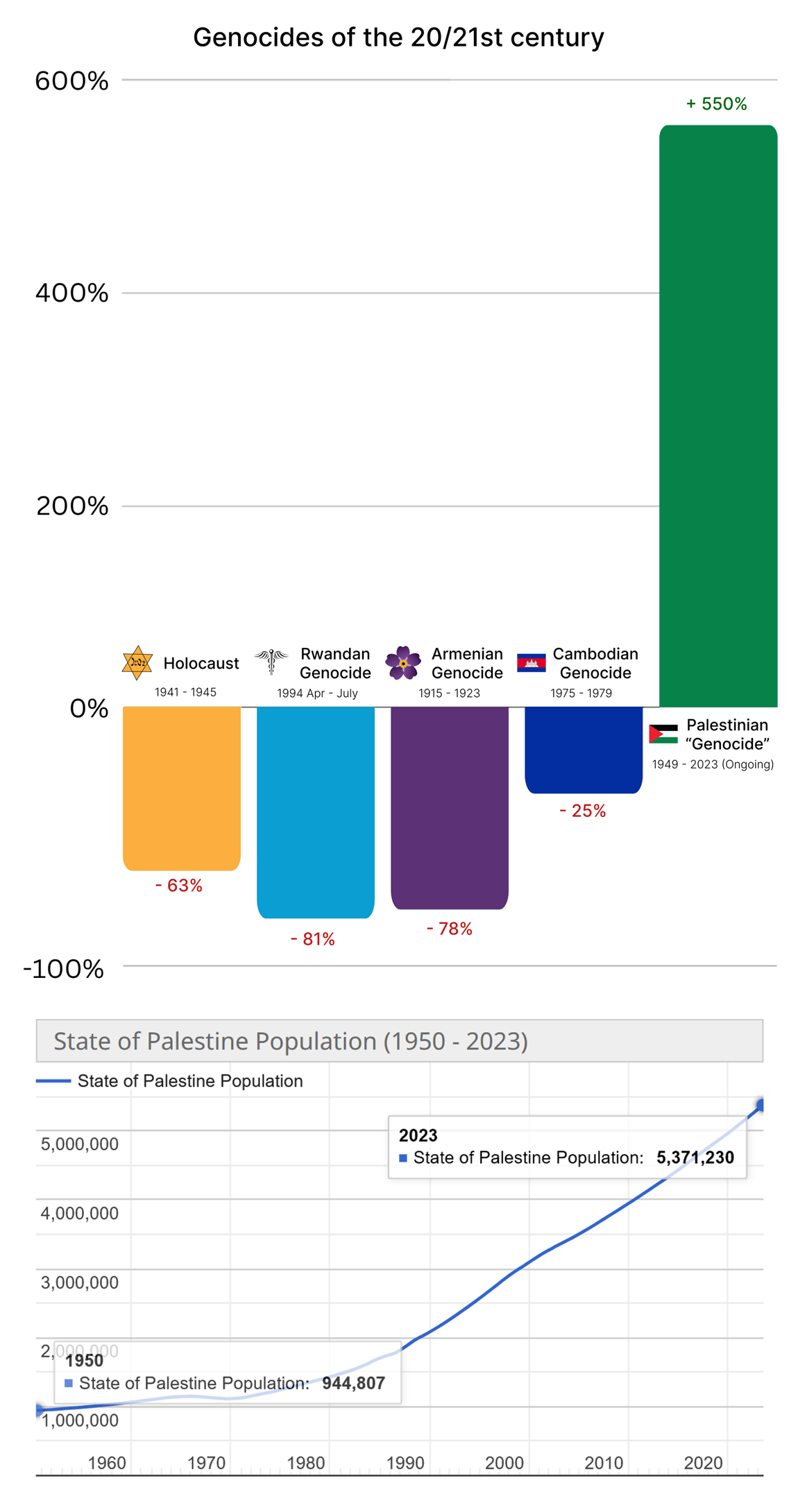
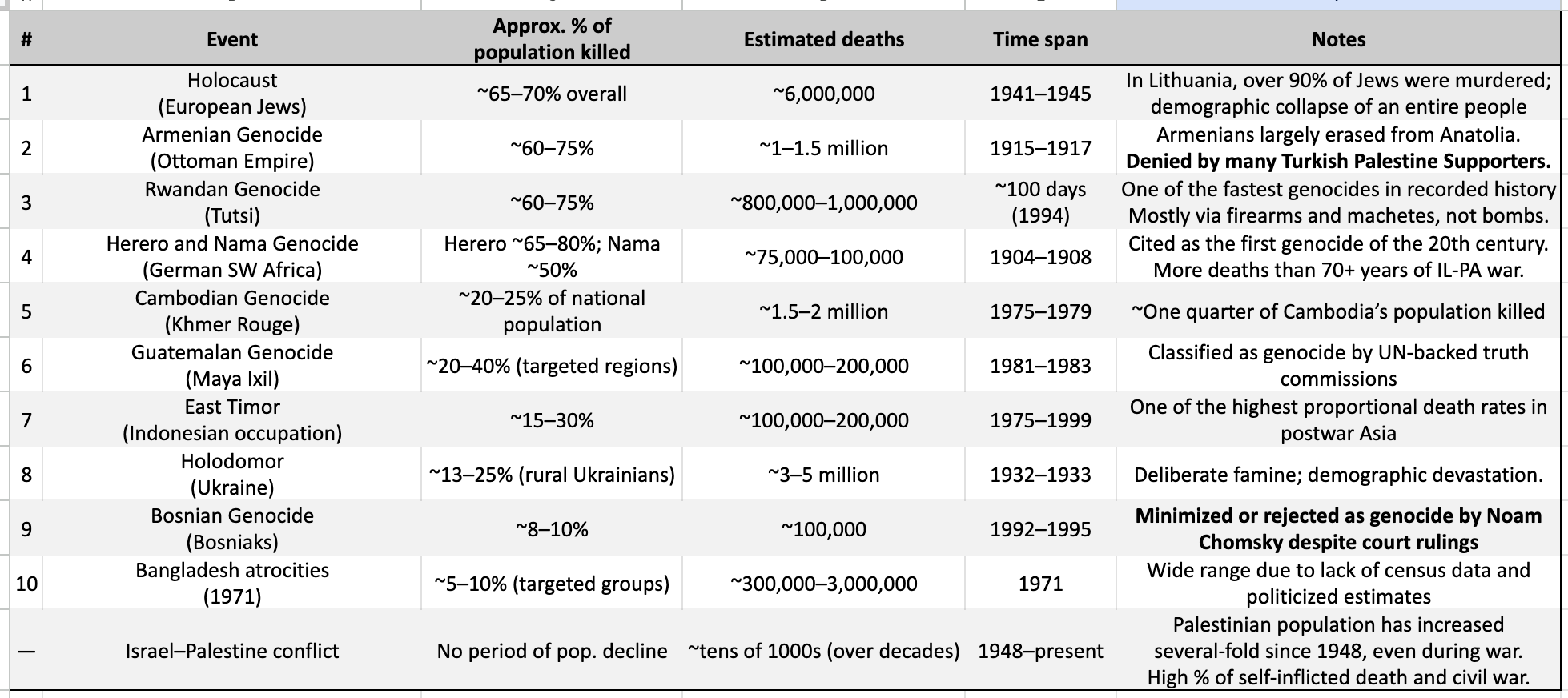
This table above compares ten of the largest mass killings of the last century by percentage of the targeted population destroyed, rather than by rhetoric and coordinated media attention. It has an extra row for the Palestinian war on Israel, an endless Holy War where the belligerents are praised for losing.
Isn’t it strange you never hear about the Holocaust or Cambodian martyrs? Only one group praises martyrdom.
Population-level destruction is a metric we should understand in the context of intent, especially when one side has the capability of wiping out the other. Ranking genocides is, admittedly, morbid. But refusing to distinguish between events that annihilated 20-70% of a people and conflicts in which populations continued to grow is worse.
The last century includes multiple events that meet the genocide criteria: intentional targeting, short time frames, and double-digit proportional population loss. Armenians in Anatolia. Tutsi in Rwanda. Cambodians under the Khmer Rouge. Indigenous communities in Guatemala and East Timor. These were not tragedies measured in headlines or emotional intensity, but in demographic collapse.
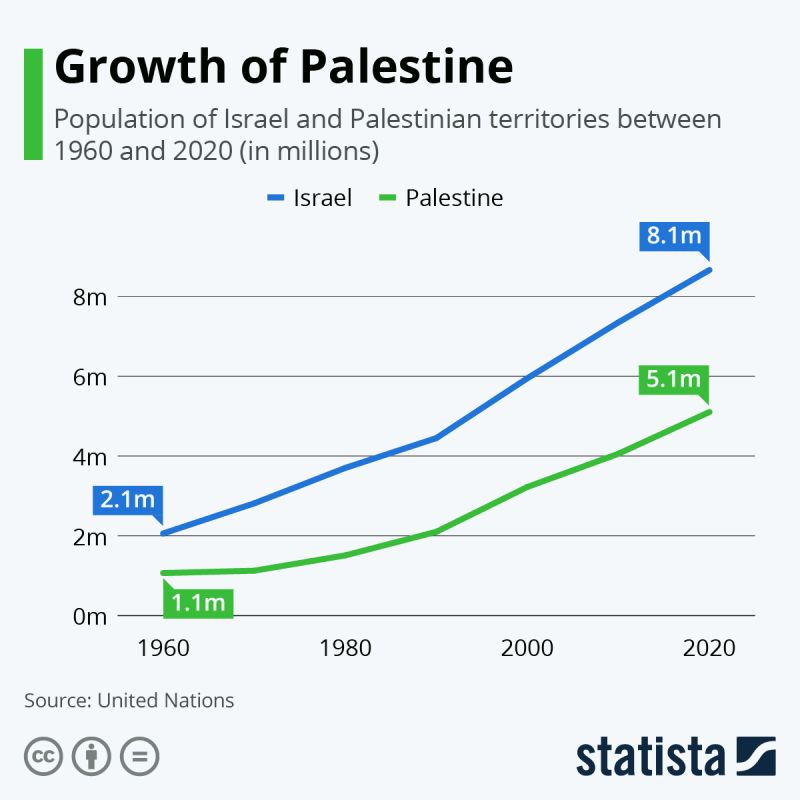
By contrast, the Israel–Palestine conflict does not exhibit these characteristics. There is no period of population decline, let alone annihilation. The Palestinian population has increased several-fold since 1948. Civilian deaths, while real and tragic, are spread over decades and do not approach the scale or intent that defines genocide in either legal or historical scholarship.
The inclusion of Bosnia near the bottom of the table illustrates another important point. Despite international court rulings recognizing genocide, prominent Free Palestine intellectuals, including Noam Chomsky, have rejected that classification, while applying the term far more loosely to Israel. This asymmetry highlights how ideological alignment often governs the use of the word genocide more than demographic or legal criteria. A group can call themselves “The Young Turks,” praising the real genociders of MENA, and get away with it… if they rant about Israel.
The purpose of this comparison is not to rank suffering, excuse war, or deny civilian harm. It is to insist that genocide is a population-level crime, defined by scale and intent, not by repetition of accusation. If the world agrees to label Palestine a genocide, the term ceases to describe anything at all. It will refer to gang violence and cancer next.
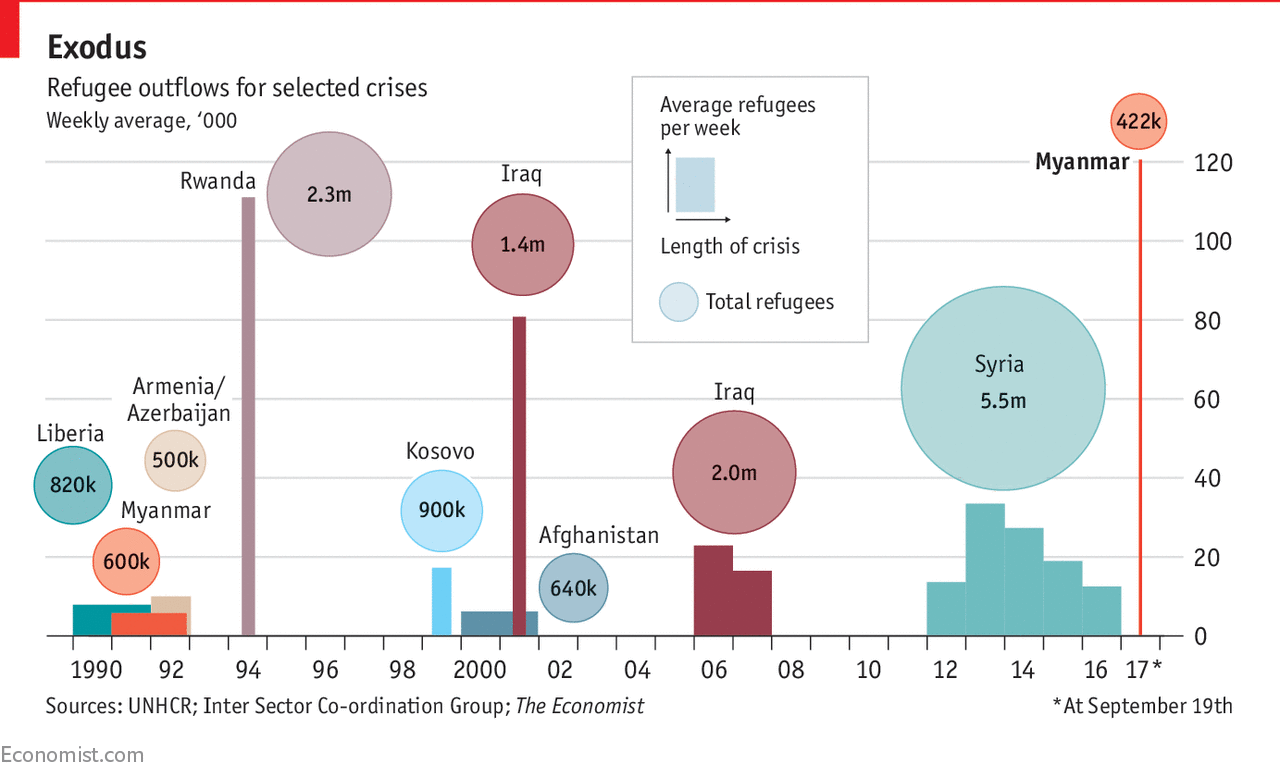
I’m, of course, not the first or last to point this out, so here are some graphical representations: