Repost: Maarten Boudry, “Europe’s silenced scholars: the forced Gaza genocide ‘consensus’”
As I continue to see performative influencers insist every. single. thing. they don’t like is about Israel, insisting the Jews are censoring them, I’m reminded that it is quite literally an inversion of reality. But since I’ve ranted about Charlie Hebdo and banned South Park eps before, and I’ve called out how performative anger doesn’t translate to education, real advocacy, and most of all, volunteering to improve the situation, and I’ve pointed out that these “censored” voices are routinely amplified 100x, because they’re not in any way censored, I’ll skip the ramblings today.
This article comes by way of The Jewish Chronicle, or The JC. I believe it is by a non-Jewish author who is simply describing what he is seeing on the ground: European academics and researchers being outright silenced unless they adopt a prescribed narrative framing Israel’s actions in Gaza as “genocide,” regardless of their own expertise. The piece documents how open letters, institutional statements, and informal professional norms have created an environment where dissent from this framing carries reputational risk, funding consequences, and career penalties, effectively enforcing ideological conformity inside universities rather than encouraging inquiry.
As a reminder, the current unelected leader of the PLO, who is considered the more peaceful and progressive option, earned his doctorate by writing Holocaust denial papers. Academia has long perpetuated antisemitism. This isn’t new.
Read the article below, or read it directly on The JC:
https://www.thejc.com/opinion/europes-silenced-scholars-the-forced-gaza-genocide-consensus-fifilnd4
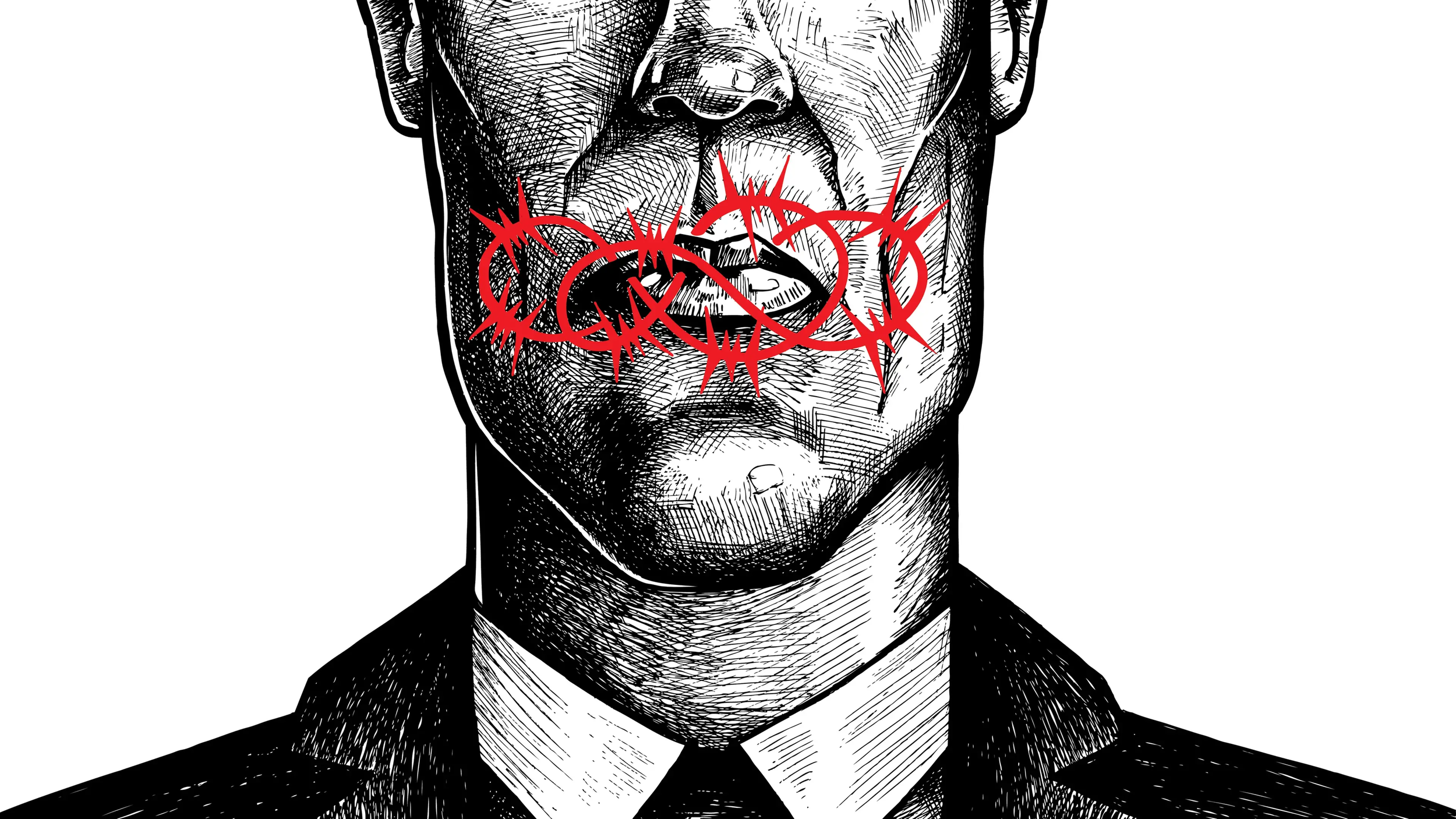
Europe’s silenced scholars: the forced Gaza genocide ‘consensus’
Anonymous testimonies reveal how intense social pressure and fear of dismissal coerced academics into falling into line with the obscene claim that Israel is guilty of the ‘crime of crimes’
Maarten Boudry; Jan 28, 2026
Anyone who has followed academia over the past two years might be forgiven for concluding that scholars have reached near-unanimous agreement on one claim: that Israel has committed genocide in Gaza.
Not a week passes without another open letter from academics – often amassing hundreds or even thousands of signatures within days – denouncing Israel in the strongest terms. Across Europe, dozens of universities have now severed ties with Israeli institutions, citing alleged complicity in genocide – or at the very least, systematic war crimes.
In August 2025, the International Association of Genocide Scholars adopted a resolution that appeared to settle the question: the Jewish state, it declared, was guilty of the “crime of crimes”.
In reality, the accusation of genocide is as obscene as it is absurd. Netanyahu and his far-right cronies may be guilty of many things, but there’s no evidence whatsoever that Israel intends to exterminate Gazans, and abundant evidence to the contrary. The eagerness of Western intellectuals to nonetheless accuse Israel of genocide is by now depressingly familiar, as is their blindness to Hamas’s cynical war tactics and the extraordinarily difficult conditions under which Israel has had to pursue its legitimate aims of defeating Hamas and freeing the hostages. In my latest book, Het verraad aan de verlichting (The Betrayal of Enlightenment), I trace this reflex to a postcolonial ideology that casts the West as perpetual oppressor and anti-Western forces as inherently virtuous victims.
A contrived consensus
And yet, there are clear indications that this supposed academic consensus was artificially contrived, a product of intense social pressure, ideological hectoring, and a “spiral of silence.” The IAGS resolution, for example, is not grounded in any original research and offers little substantive argumentation.
In Europe, social pressure is even more intense than in the US. A petition opposing the IAGS resolution garnered hundreds of American signatories, but only a handful in Europe – primarily in Germany and around a single London-based centre for antisemitism research.
In the Low Countries, where I live, my stance on Gaza has left me increasingly isolated within the ivory tower. The rector of my alma mater, Ghent University, declared that any academic questioning the genocide in Gaza can no longer rely on the protections of academic freedom: “This is a line that cannot be crossed.” Five professors have called on the previous rector to discipline me for my “Zionist-tinged” views. I’ve also been deplatformed twice at the University of Amsterdam for my view on Israel.
A spiral of silence
And yet, for the past two years, I have been receiving regular emails from academic colleagues that can be summarised as follows: “I completely agree with you and am glad that you’re fighting this battle, but please keep it quiet – I don’t want to get into trouble.” The social pressure to condemn Israel has become so intense that many “dissidents” no longer dare to speak out.
This reluctance to speak up gives rise to what psychologists call pluralistic ignorance: people mistakenly assume that they are alone in holding a dissenting opinion and therefore either remain silent or misrepresent their own views, inadvertently perpetuating the illusion of consensus and raising the social cost of dissent, as Steven Pinker notes in his book When Everyone Knows That Everyone Knows.
I wanted to see if there was a way to break the cycle. What if people could speak honestly without risking their careers? I tested this by inviting primarily Dutch-speaking academics to share anonymous views on Israel and Gaza. What arrived was sobering – and chilling.
Shut up or else
A senior lecturer at a Dutch university writes: “I’m afraid to share my thoughts freely with my colleagues and feel restricted in my freedom to speak openly about this.” A philosophy professor describes the academic debate on the war in Gaza as effectively “impossible”, writing that “Critical voices are silenced through exclusion, dismissal, and sometimes even violence. In such circumstances, I don’t feel compelled to express my critical thoughts openly.” Another Dutch lecturer admits: “I certainly keep my mouth shut about my views to my colleagues.”
A colleague at my own faculty calls the accusation of genocide “sickening” and a form of “cynical manipulation”, yet she is terrified of speaking out. She avoids the topic in conversations with colleagues and students, confessing to “self-censorship” to protect herself. Another academic explains why: after signing a petition opposing the anti-Israel boycott, he was “shunned for weeks by colleagues in our department”. Yet another professor said he received a warning “to be careful what I say around certain colleagues”. In today’s academic climate, speaking out in support of Israel is widely regarded as tantamount to “academic suicide”.
Among the testimonies are also voices with the relevant expertise, rarely heard in mainstream media. A professor of military law stresses that “extreme caution is required” on the question of genocide and warns against “jumping to conclusions”. Some actors, he notes, “automatically assimilate the conduct of hostilities with acts of genocide, but this reasoning seems incorrect to me”. A doctor of law and former adviser to the International Court of Justice, who has pored over previous genocide dossiers for many years, writes in a lengthy email: “I am not convinced that Israel is committing genocide, but I am currently raising capital and will not risk taking this position publicly.”
Dissenting opinions can be found even at the highest levels of academic institutions. A vice-chancellor of a Belgian university observes: “The Gaza mania that is currently prevailing seems to me a collective madness. The call to declare what Israel is doing a genocide is in line with this.” A Ghent academic notes that the election of our new rector, Petra De Sutter – who is strongly anti-Israel – worsened the atmosphere: “I saw this tendency strengthen following the rector elections. Either you were outspoken, or else you were better off keeping quiet. The election result and the political convictions of the new rector have reinforced their ideology.”
A Jewish professor who does speak out about Israel notes that not everyone enjoys the protection of tenure: “I know many young scientists with dissenting opinions, but most of them don’t dare express them. They are rightly concerned about their careers. Without tenure, they are in a precarious position. The social and professional isolation is very real.” Since making her public statements, she has stopped receiving invitations for book chapters, workshops, and conferences.
Another lecturer’s testimony illustrates how subtle yet pervasive the professional and social repercussions can be, even for tenured staff: “I stopped reposting and commenting about Israel on X after noticing that my university suddenly stopped sharing any of my achievements. While colleagues were receiving retweets and links to their projects, mine went unnoticed, whereas this had never happened before.” The pressure extended to the social realm, with colleagues unfollowing him or no longer responding to messages. Ultimately, he gave up: “The decisive factor came when my wife asked me to leave the fight to others. We simply cannot afford to lose our jobs.” Several colleagues describe struggling with guilt for remaining silent, scolding themselves as “cowards” or “sell-outs”.
Antisemitism
Several colleagues believe that the academic hostility towards Israel stems from antisemitism. A Dutch philosophy professor argues that “the excessive attention – obsession, even – with Gaza is inherently antisemitic, because the same scrutiny is rarely applied to other complex conflicts in which Jews are not the perpetrators”. Another professor observes that “academic discourse is increasingly degenerating into gratuitous Jew-hatred”. A Belgian professor at a French university is often reminded of his Jewish mentor, who fled Baghdad after the pogroms: “That the anti-Israel mob, composed mainly of white and extremely privileged youth, portrays him as a ‘white settler’ and seeks to exclude him and his fellow survivors from all international forums fills me with incredible anger and frustration.”
A Canadian academic describes the precarious situation of Jewish faculty on his campus: “I have spoken to three Jewish faculty members. They are in a state of anxiety, depression, and real insecurity. It is clear that the university will not defend them, and a majority of faculty members see them as ‘the problem’, interpreting core academic values as reprehensible.” Even before October 7, an Israeli academic working at a European university relates how he moved his tutorials off campus, because the threat of physical violence was constantly on his mind, even though his field was completely unrelated to Israel or the Middle East: “I always worried about being known as an Israeli and outspoken about my views that someone could just show up and attack me.” After the October 7 massacre the situation became far worse. An anti-Zionist website hosted on a server in the Netherlands even placed bounties for assassination as high as $100,000 on the heads of Israeli academics.
Ideological madrassas
An important caveat: these testimonies are self-selected and thus not representative of academia as a whole. I have no illusions – these dissenting voices remain a minority. What they do reveal, however, is that serious debate about Israel and Gaza has been rendered impossible within university walls. When researchers with dissident views bite their tongues for fear of repercussions, the majority position is never subjected to critical scrutiny. And without intellectual challenge, even the truth becomes stale, as JS Mill knew: “if it is not fully, frequently, and fearlessly discussed, it will be held as a dead dogma, not a living truth.”
The aforementioned IAGS resolution, for instance, treats the war as if it has only one belligerent party (Israel). In fact, the word “Hamas” appears only once in the document, in a sentence declaring (without any substantiation) that Israel’s operation has “not only been directed against the Hamas group [...] but have also targeted the entire Gazan population”. As a result, all the destruction and suffering in Gaza is attributed to Israel by default. The resolution accepts the casualty numbers from the Gazan Ministry of Health without any reservation, and fails to discriminate between combatant and civilian deaths, or between deaths caused by Israel and caused by Hamas. It contains hardly any serious argumentation, and it lists the same litany of distorted and fabricated quotes from Israeli leaders that NGOs have repeated at nauseam, without citing sources. How was the “consensus” achieved? Only 28 per cent of the group’s members voted on the resolution, and membership is open to anyone willing to pay the fee. Unsurprisingly, the membership includes numerous artists and activists, as well as 80 “researchers” from Iraq out of a total of 600.
The “Gaza genocide” accusation is a baseless claim that signals ideological allegiance precisely because it defies logic and evidence. Deep down everyone understands that it’s nonsense, but that is precisely what allows it to serve as an ideological litmus test. Breaking the spiral of silence will require more people to step forward and call out such nonsense, thereby lowering the social cost of dissent.
Maarten Boudry is a Belgian philosopher and sceptic
Outro
In short, the side known for violent chants and Nazi ideology is acting violent. No surprise. Their stated goals are violent.
What is upsetting is how consistently academia enables it, replaying the same historical failure mode: radical movements incubated through naive students and timid professors unwilling to confront evidence.
Recently, I got into a chat with a fitness influencer, mantalifts, who decided to publicly oppose ICE and immigration enforcement for what appeared to be the first time. Like many slacktivists, she waited until she was confident the position was socially rewarded. And like many others, her response to a case involving two Latino ICE officers killing a protester in Minnesota had to be prefaced with a familiar dog whistle about Jewish censorship. This, of course, traced back to a year-old case where a student’s visa was restricted after a federal judge ruled she had supported Hamas.
When I responded by saying I’m broadly pro free speech, just have no respect for Hamas supporters when there are plenty of US loving immigrants, Mantas immediately demanded that I personally prove a stranger’s Hamas ties. The discussion then followed a very predictable arc: shame over her own, loving Zionist family members, who she referred to as being in a cult, and placcard statements about zionism being evil. It’s just moral performance detached from facts. It’s more FREE FREE PUBLICITY! and certainly not going to encourage me to vote Dem anytime soon.
As I detailed in my last piece on Noticers, fake advocacy often begins by blaming Jews. While universities sideline or ban professors like Shai Davidai for being visibly pro-Jewish, their tolerance extends generously to violent protesters, right up until speech crosses into explicit incitement and terror glorification. As long as hoes with glute-workout obsession, like Mantas, can redirect every issue toward their [[Israel]] scapegoat, the rest of the world conveniently disappears. Iran, Ukraine, Congo, Sudan never surface. So when two Latino ICE agents kill an Italian Catholic, the response becomes a flurry of lies about Mossad agents, Jewish control of immigration policy, and other conspiracies.